
10 Elegant Dining Room Decor Ideas That Feel Timeless
Your dining room deserves better than a table and four chairs pushed against a wall. It’s the space where birthdays get celebrated, where holiday meals stretch into late-night conversations, and where you probably want guests to feel something the moment they walk in. If you’ve been searching for elegant dining room decor, you’re likely staring at a space that feels flat, mismatched, or just plain unfinished — and you want ideas that actually work in real homes, not just in glossy magazine spreads.
The good news? Elegance doesn’t require a massive budget or a full renovation. It’s about layering the right textures, lighting, and finishing touches so the room feels intentional. Below are ten practical ways to bring that polished, put-together look into your own dining space, starting with the piece that anchors everything else.
1. Statement Chandelier
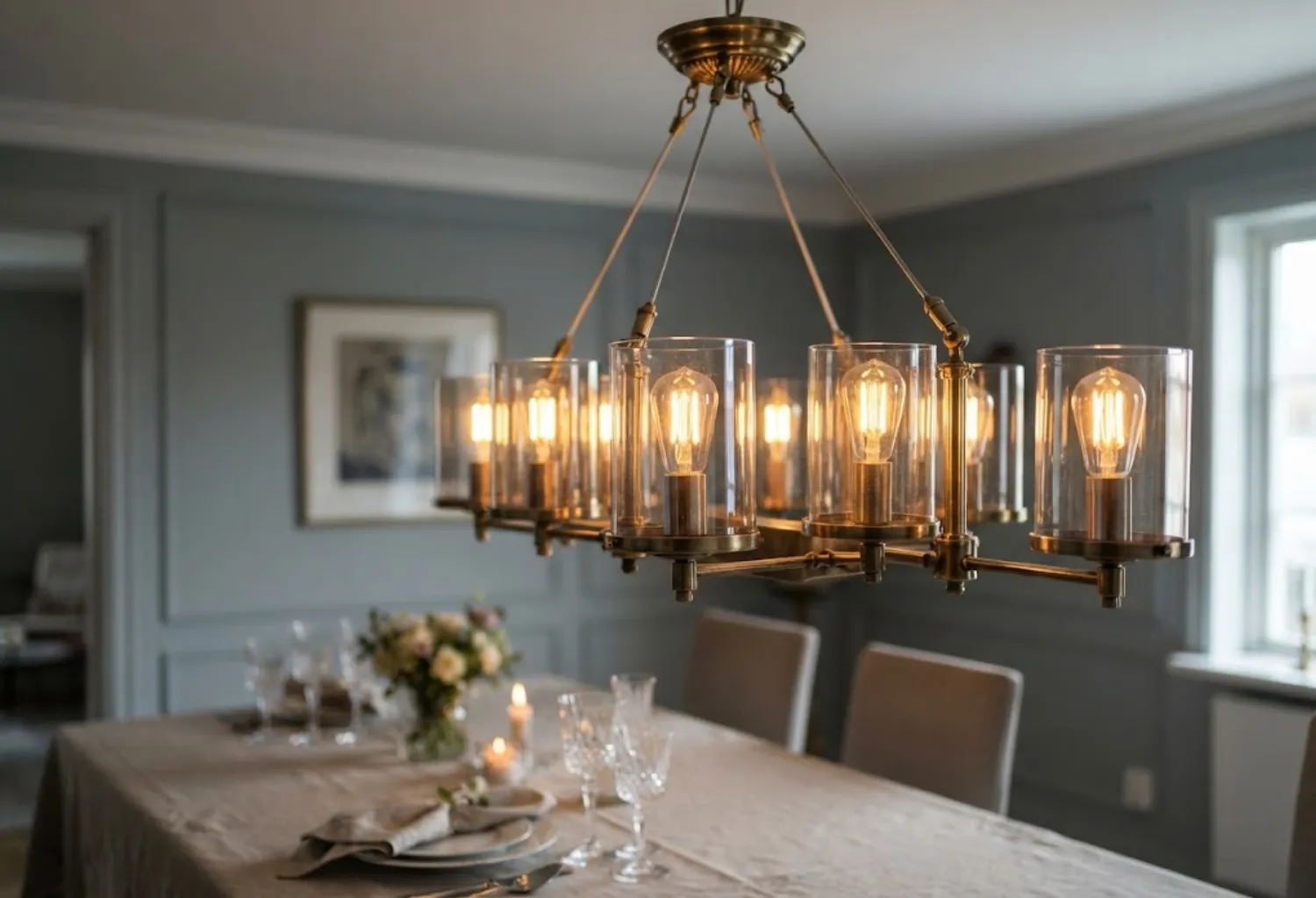
Nothing signals elegance faster than a great light fixture hanging over the table. A statement chandelier draws the eye upward and instantly makes a room feel curated rather than default. You don’t need crystal and gold to pull this off — matte black fixtures, linear designs, or even oversized paper lanterns can read as sophisticated depending on your room’s style. The key is scale: a fixture that’s too small will look like an afterthought, while one that’s properly sized (generally about half to two-thirds the width of your table) becomes the focal point the whole room builds around. Hang it low enough to feel intimate, roughly 30 to 34 inches above the tabletop, and dim it with a dimmer switch so you can shift the mood between casual dinners and formal gatherings.
2. Layered Table Linens

A bare table can look unfinished no matter how nice the furniture is, and this is where layering makes a real difference. Start with a base tablecloth or table runner in a neutral linen or cotton, then add texture with woven placemats or a contrasting runner on top. Cloth napkins folded simply and tucked under a napkin ring add a small touch that feels surprisingly formal without extra effort. Stick to a tight color palette — two or three tones max — so the layers feel cohesive instead of cluttered. This is one of the easiest and most affordable dining room decor updates you can make, and it’s fully reversible if your taste changes.
3. Upholstered Dining Chairs
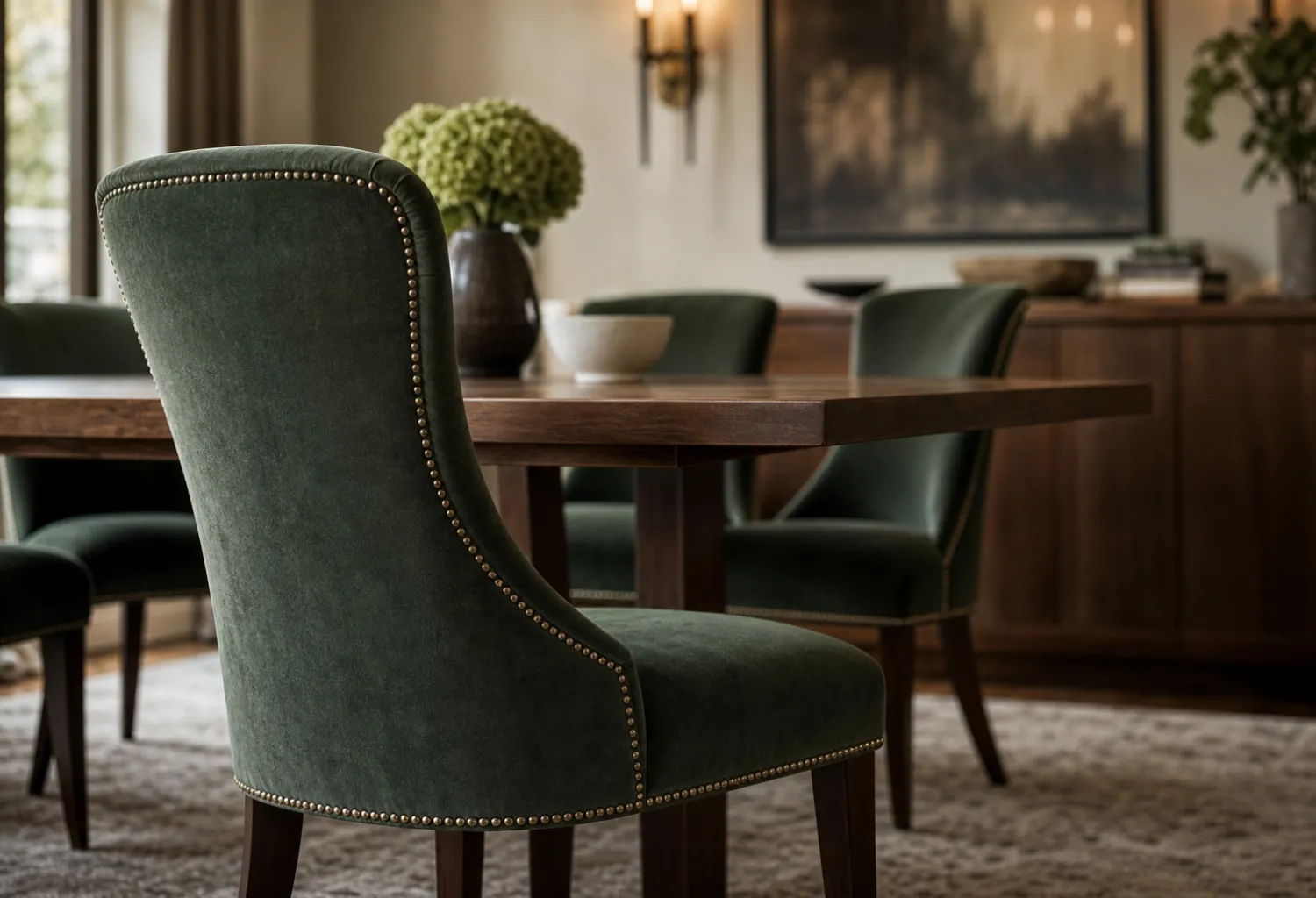
Wooden chairs are practical, but upholstered seating adds a softness that immediately elevates the room. Velvet, linen, and boucle fabrics all bring a tactile richness that wood alone can’t match, and they’re comfortable enough to keep guests lingering after dessert. If reupholstering an entire set feels like too much, consider mixing upholstered head chairs with wooden side chairs for contrast — this is a popular approach in higher-end interior design because it adds visual interest without doubling the cost. Choose a durable, stain-resistant fabric if you have kids or frequently host, since dining chairs take more wear than almost any other seat in the house.
4. Statement Wall Art

Large-scale art above a sideboard or centered on the main wall gives the room a gallery-like presence. A single oversized piece often looks more elegant than a cluster of small frames, especially in smaller dining rooms where too many elements can feel busy. Abstract paintings, botanical prints, or black-and-white photography all pair well with a range of styles, so pick something that reflects the room’s existing color scheme rather than fighting against it. If you’re working with a budget, a well-framed print can look just as intentional as an original piece — the framing matters more than most people expect.
5. Mirror Placement
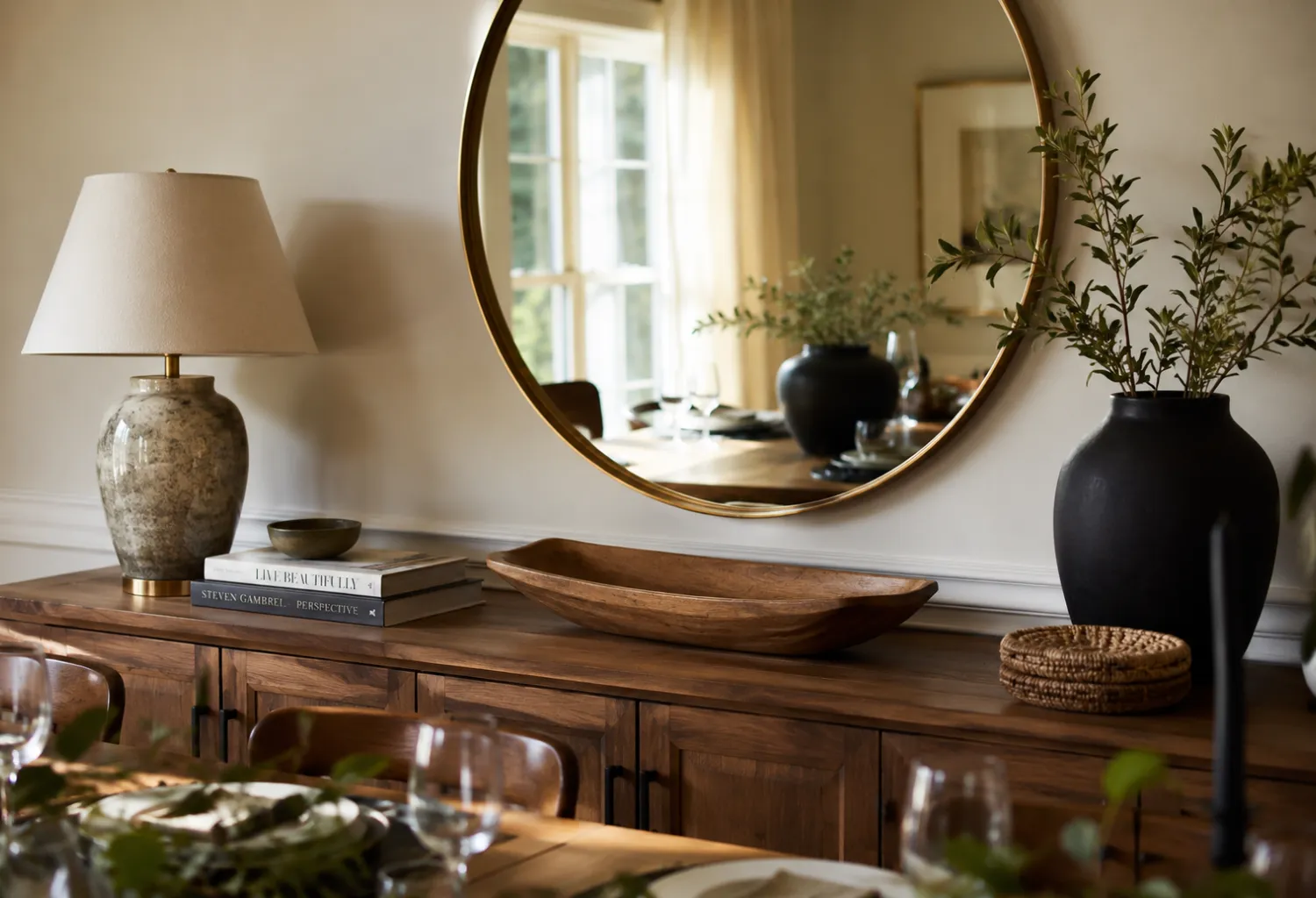
A well-placed mirror does double duty: it bounces light around the room and creates the illusion of more space, which is especially useful in dining rooms that don’t get much natural light. Position it opposite a window when possible so it reflects daylight back into the room, or hang it above a sideboard to add depth and dimension. Oversized round or arched mirrors tend to feel more elegant than small rectangular ones, since they soften the room’s straight lines. This is a small change that photographs beautifully and makes the whole space feel brighter and more open almost instantly.
6. Rich Wall Color

Dining rooms are one of the few spaces in the house where you can get away with a bold, saturated wall color, since they’re used for shorter stretches of time compared to living rooms or bedrooms. Deep greens, navy blues, and warm terracottas all create a cozy, enveloping feeling that reads as sophisticated rather than dated. If a full paint job feels risky, try it on a single accent wall or pair a rich tone with white trim to keep things balanced. Darker walls also make gold, brass, and wood tones pop more, which ties nicely into other elegant touches like a chandelier or wooden furniture.
7. Sideboard Styling

An empty sideboard or buffet is a missed opportunity — it’s one of the best spots in the room to build a curated vignette. Group items in odd numbers (three or five tends to look more natural than even numbers), and vary the heights using a stack of books, a vase, and a piece of sculptural decor. Leave some breathing room between objects instead of crowding the surface, since negative space is part of what makes a display feel elegant rather than cluttered. A sideboard also adds practical storage for linens, extra dishware, or serving pieces, so the styling doubles as function.
8. Fresh Greenery or Florals

Nothing brings warmth and life into a dining room quite like fresh greenery, and it’s one of the simplest elegant dining room decor updates you can rotate seasonally. A low, wide centerpiece works best on dining tables since tall arrangements block sightlines across the table during meals. If fresh flowers aren’t practical for your budget or schedule, a well-made faux eucalyptus garland or a potted plant in the corner adds the same organic softness. Keep the arrangement simple — three or four stems in a good vase often look more refined than an overly full bouquet.
9. Textured Rug Underfoot
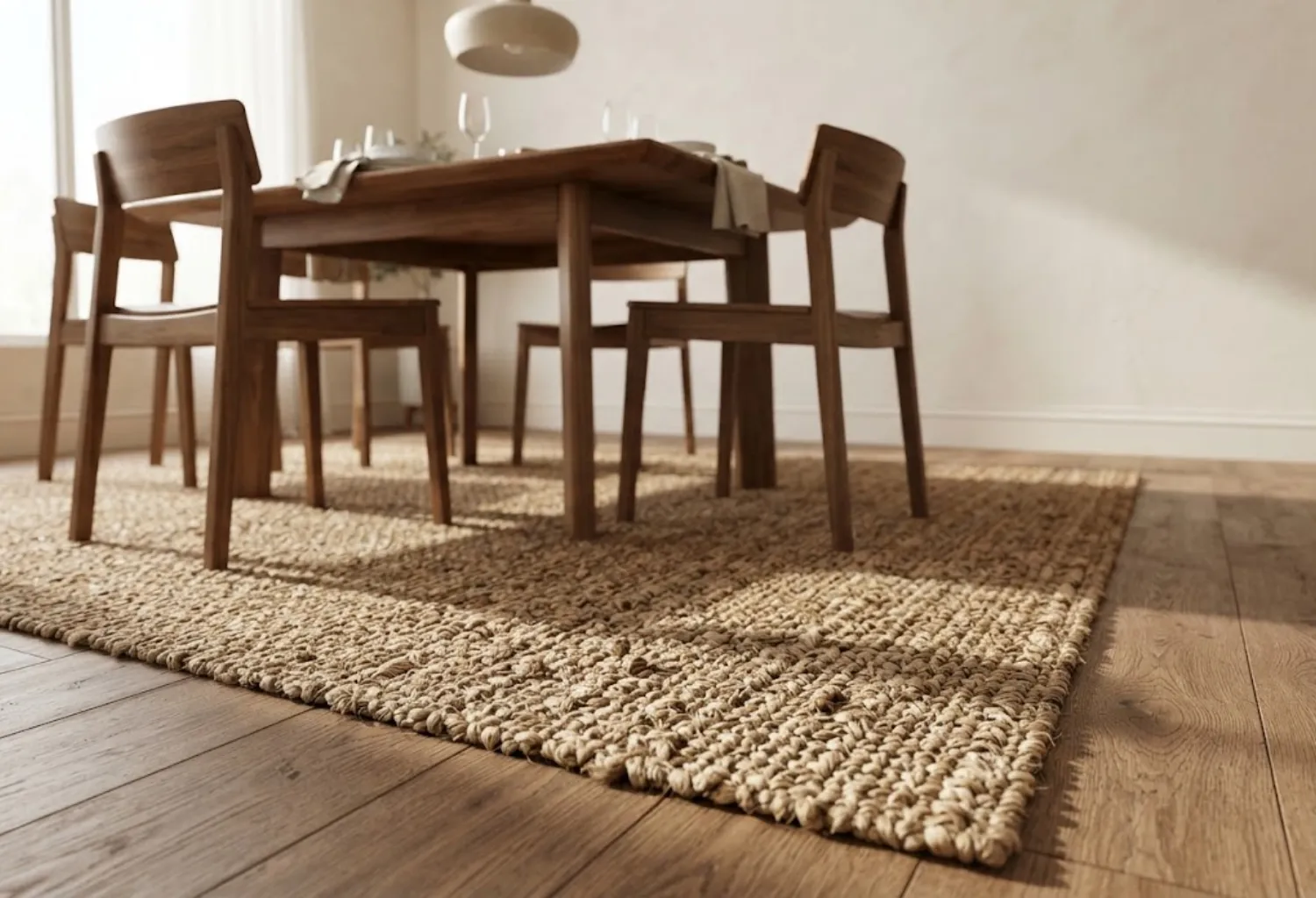
A rug grounds the entire dining set and adds warmth, especially over hardwood or tile floors. Choose a size that extends at least 24 inches beyond the table’s edge on all sides, so chairs stay on the rug even when pulled out. Low-pile or flatweave rugs work best under dining tables since they won’t catch chair legs or trap crumbs the way a plush, high-pile rug would. Natural fibers like jute or wool in neutral tones tend to feel more elegant and timeless than busy patterns, which can start to feel dated faster.
10. Curated Tableware Display

If you have a china cabinet, glass-front hutch, or open shelving in the dining room, use it to display your best dishware instead of hiding it away. Stack plates by size, angle a few decorative pieces forward, and mix in a stemware collection or a set of vintage serving pieces for visual interest. This kind of open display gives the room a collected-over-time feel that’s hard to fake with generic decor, and it makes the space feel personal rather than showroom-staged. Even a small open shelf styled this way adds a layer of sophistication that a closed cabinet can’t offer.
Final Thoughts
Elegant dining room decor isn’t about one big splurge — it’s about layering small, thoughtful details that work together, from the chandelier overhead to the rug underfoot. Start with one or two changes, like updating your table linens or adding a statement mirror, and build from there as your budget and time allow. The goal is a room that feels warm, intentional, and ready for real life around the table, not just a photo. Whichever ideas you choose, the payoff is a dining room that guests actually notice and enjoy spending time in.
