
12 Formal Dining Room Decor Ideas That Feel Elegant, Not Stiff
A formal dining room can go one of two ways: it either feels like a warm space you actually want to gather in, or it feels like a museum exhibit nobody’s allowed to touch. The difference usually comes down to a handful of design choices, not a total overhaul. If you’re planning a holiday dinner, hosting more often, or just tired of a dining room that feels like an afterthought, these formal dining room decor ideas will help you strike that balance.
Below are twelve practical ways to bring polish and personality into your dining space, without making it feel cold or off-limits for everyday life. Each idea works on its own, but combined, they create a room that looks intentional from every angle. Let’s start with the piece that sets the tone for everything else.
1. Statement Chandelier

Nothing signals “formal dining room” faster than a chandelier that actually commands attention above the table. Aim for a fixture that’s roughly two-thirds the width of your table, hung about 30 to 34 inches above the surface so it doesn’t block sightlines during conversation. Crystal and glass fixtures read as classically elegant, while a mixed-metal or linear design gives the room a slightly more contemporary formal feel. If your ceilings are lower than eight feet, a flush or semi-flush mount chandelier keeps the proportions right without making the room feel cramped.
2. Rich Wood Dining Table

A solid wood table anchors the entire room and instantly adds a sense of craftsmanship that laminate or veneer just can’t match. Darker woods like mahogany, walnut, or cherry lean traditional and pair beautifully with formal upholstered chairs, while lighter oak tables can feel formal too when paired with the right linens and lighting. Look for details like turned legs, inlays, or a substantial pedestal base, since these small touches communicate quality even before anyone sits down. A table with some age or patina often works in your favor here, since a few honest imperfections make the room feel collected rather than staged.
3. Upholstered Dining Chairs

Swapping plain wood chairs for upholstered ones is one of the fastest ways to elevate a dining room’s formality and comfort at the same time. Fabrics like velvet, linen, or a subtle damask pattern add texture and softness against all that hard wood and glass in the room. Nailhead trim along the seat or back adds a tailored, custom-furniture look without the custom price tag. If reupholstering the whole set feels like too much, even swapping in two upholstered host chairs at the ends of the table creates a nice visual contrast.
4. Layered Table Linens

A bare table, even a beautiful one, can feel unfinished in a formal setting, which is where layered linens come in. Start with a base tablecloth or table runner in a neutral or jewel tone, then add cloth napkins, placemats, or a table topper for texture. Linen and cotton blends drape well and photograph beautifully, while silk or satin runners add a bit of shine for special occasions. Layering doesn’t mean overdoing it; two or three coordinated pieces are usually enough to look intentional without competing for attention.
5. Formal China and Glassware Display

A china cabinet or hutch filled with your good dishes does double duty: it’s storage, and it’s decor. Arrange plates by size and color rather than just stacking them randomly, and turn a few pieces face-out so the pattern is visible through the glass doors. Stemware looks especially elegant when hung from a rack or lined up by height, catching light from the chandelier above. Even if you don’t use this china often, having it visibly displayed reinforces the formal dining room theme every time someone walks past.
6. Bold Wall Color or Wallpaper

Formal dining rooms are one of the few spaces in the house where a bold, saturated color actually works in your favor, since you’re not spending all day in there. Deep tones like navy, forest green, or burgundy create a cocooned, intimate feeling once the lights are dimmed for dinner. If solid color feels too heavy, a patterned wallpaper with botanical, damask, or trellis motifs adds depth without darkening the whole room. Just make sure whatever you choose plays well with your table and chair finishes, since dining rooms tend to have fewer large furniture pieces to balance out a busy wall.
7. Statement Rug

A well-placed area rug grounds the dining set and adds a layer of texture underfoot that hardwood or tile alone can’t provide. The rug should extend at least 24 inches beyond the table on all sides, so chairs stay on the rug even when pulled out for guests to sit down. Traditional Persian or Oriental-style rugs are classic choices for formal spaces, but a solid wool rug in a rich color works just as well if you want something more understated. Avoid anything too plush here, since thick pile can make chairs wobbly and harder to slide in and out.
8. Mirror or Art Above the Buffet

The wall above a buffet or sideboard is prime real estate that often gets overlooked in dining room decor. A large mirror bounces light around the room and makes the space feel bigger, which is especially useful in dining rooms that don’t get much natural light. If you’d rather go with art, choose a piece with some scale to it, since a small frame can look lost above a wide piece of furniture. Still life paintings, botanical prints, or abstract pieces with colors pulled from your rug or linens all work well in a formal setting.
9. Buffet or Sideboard Styling

Speaking of the buffet, how you style its surface matters just as much as what’s hanging above it. A pair of matching lamps or candlesticks on either end creates symmetry, which reads as formal almost automatically. Fill the middle space with a low centerpiece, a stack of serving pieces, or a small collection of decorative objects, but leave some breathing room so it doesn’t look cluttered. This surface is also functional during dinner parties, so keep it practical enough to actually hold serving dishes when you’re entertaining.
10. Centerpiece with Height Variation

The table centerpiece is often the first thing guests notice, so it’s worth getting the proportions right. A single tall arrangement can block conversation across the table, so consider a low, wide centerpiece instead, or a grouping of varied-height candlesticks and small vases. Fresh flowers add color and life, but dried arrangements, greenery, or a bowl of seasonal fruit work well too and require far less upkeep. Keep the centerpiece under 14 inches tall if you want guests to actually see each other while they eat.
11. Curtains or Drapery

Floor-length drapes add softness to a room full of hard surfaces like wood, glass, and china, and they help formalize the windows the same way linens formalize the table. Hang curtain rods close to the ceiling rather than right above the window frame, since this makes the ceiling feel taller and the whole room feel more grand. Heavier fabrics like velvet or a lined linen block more light and add a sense of weight to the space, which suits a formal dining room’s mood in the evening. If you entertain often, consider blackout lining so you can control the ambiance for both daytime lunches and candlelit dinners.
12. Coordinated Metal Finishes
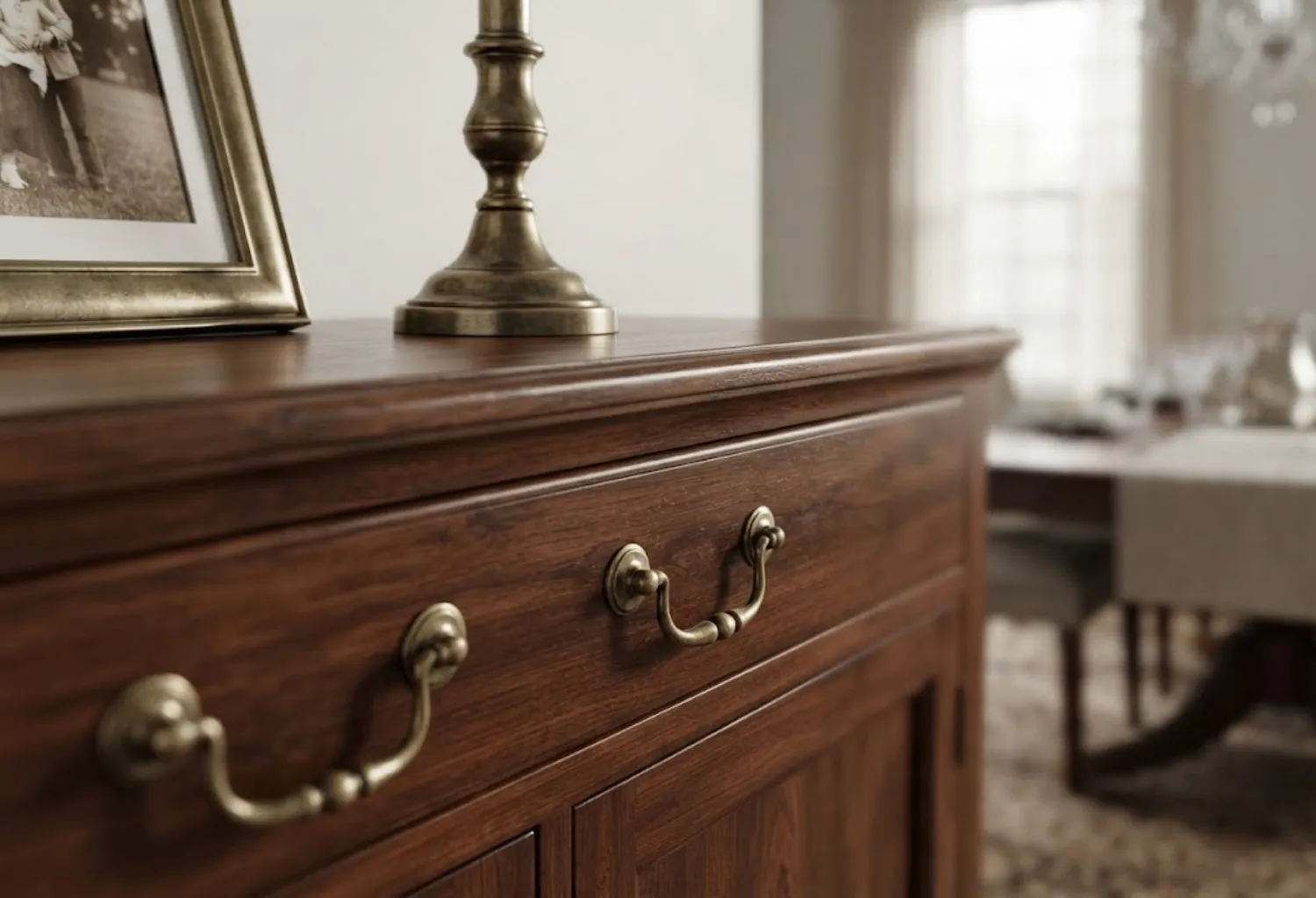
Small details like drawer pulls, chandelier fixtures, candlesticks, and picture frames all carry more visual weight than people expect, especially in a room with fewer large furniture pieces. Sticking to one or two metal tones, like brass paired with black, or nickel paired with chrome, keeps the room from feeling scattered. This doesn’t mean every single item has to match exactly, but a consistent undertone across your hardware and accessories pulls the whole formal dining room decor scheme together. It’s a subtle detail, but it’s often what separates a room that feels curated from one that feels randomly assembled.
Conclusion
A formal dining room doesn’t need a complete renovation to feel elevated; it just needs a few deliberate choices working together. Lighting, texture, color, and thoughtful styling on surfaces like the buffet and table all play a part in creating that polished, gather-worthy atmosphere. Try picking two or three ideas from this list to start, whether that’s a new chandelier, layered linens, or a bolder wall color, and build from there as your space and budget allow. However you approach it, these formal dining room decor ideas prove that elegant doesn’t have to mean untouchable.
