
15 Modern Dining Room Decor Ideas That Feel Fresh
Your dining room shouldn’t feel like a room you only use twice a year. If your space still looks stuck in 2015, or you’re staring at a blank room wondering where to even start, you’re not alone. Modern dining room decor is about clean lines, purposeful pieces, and a layout that actually gets used for weeknight dinners, not just holidays.
The good news? You don’t need a full renovation to pull this off. Small, intentional changes make the biggest difference, and that’s exactly what this list covers. Below are 15 practical ways to bring your dining space into the present, one idea at a time.
1. Statement Lighting

Nothing dates a dining room faster than a builder-grade light fixture stuck in the middle of the ceiling. Swap it out for something with personality, like a sculptural pendant, a linear chandelier, or a cluster of glass globes hung at staggered heights. Aim to hang the fixture about 30 to 34 inches above the tabletop so it lights the food without blocking sightlines across the table. This one change tends to have the biggest visual impact for the least effort.
2. Mixed Seating Styles

Matching chair sets feel formal and a little stiff. Modern dining rooms mix it up instead: pair upholstered chairs at the head of the table with simpler wood or metal chairs along the sides, or add a bench on one side for a casual, collected look. The trick is keeping one consistent element, like color or leg style, so the mix reads as intentional rather than mismatched. This approach also makes it easier to add seating later without hunting down an exact match.
3. Natural Wood Tones

Warm wood tones are replacing the heavy dark stains that dominated dining rooms for years. Think light oak, walnut, or ash finishes on the table itself, or introduce wood through a sideboard, shelving, or even wall paneling. Natural wood softens a room that’s otherwise full of hard surfaces like glass, metal, and tile. It also pairs easily with almost any color palette, which makes it a safer long-term investment than a heavily trending finish.
4. Bold Accent Walls

A single statement wall gives a dining room instant personality without overwhelming the space. Textured wallpaper, a deep moody paint color, or even wood slat paneling behind the table creates a focal point that photographs well and grounds the whole room. Keep the rest of the walls neutral so the accent doesn’t compete with itself. This is one of the easiest updates for renters too, since peel-and-stick wallpaper options make it fully reversible.
5. Open Shelving Display

Built-in cabinets can feel bulky and dated, while open shelving keeps things airy and lets you show off what you actually love. Style shelves with a mix of ceramics, small art pieces, and a few well-chosen books rather than cramming every shelf full. Leave some negative space between objects so the display doesn’t feel cluttered. Open shelving also makes everyday dishware easier to reach, which is a practical bonus beyond the aesthetic.
6. Sculptural Table Base

The table base has become just as important as the tabletop in modern dining room decor. Pedestal bases, curved wood legs, and geometric metal frames add visual interest from every angle, especially in open-concept homes where the table is seen from multiple rooms. A sculptural base also frees up legroom compared to a traditional four-leg design. If you’re working with a smaller space, this detail helps the table feel less bulky.
7. Layered Textiles

A bare table can feel cold, even when the furniture itself is beautiful. Layering in a linen runner, textured placemats, or cloth napkins adds warmth and softness to counter all the hard surfaces in the room. Stick to natural fibers like linen, cotton, or jute for a look that feels current rather than fussy. These textiles are also inexpensive to swap seasonally, so you can refresh the room without buying new furniture.
8. Curved Furniture Lines

Sharp, boxy furniture is giving way to softer, curved silhouettes across dining rooms. A rounded table edge, a curved-back chair, or an oval tabletop instead of a rectangle all soften the room’s overall feel. Curves also improve flow in tighter spaces, since there are no sharp corners to navigate around. This shift toward organic shapes is one of the clearest signals of a modern dining room versus a traditional one.
9. Gallery Wall Art
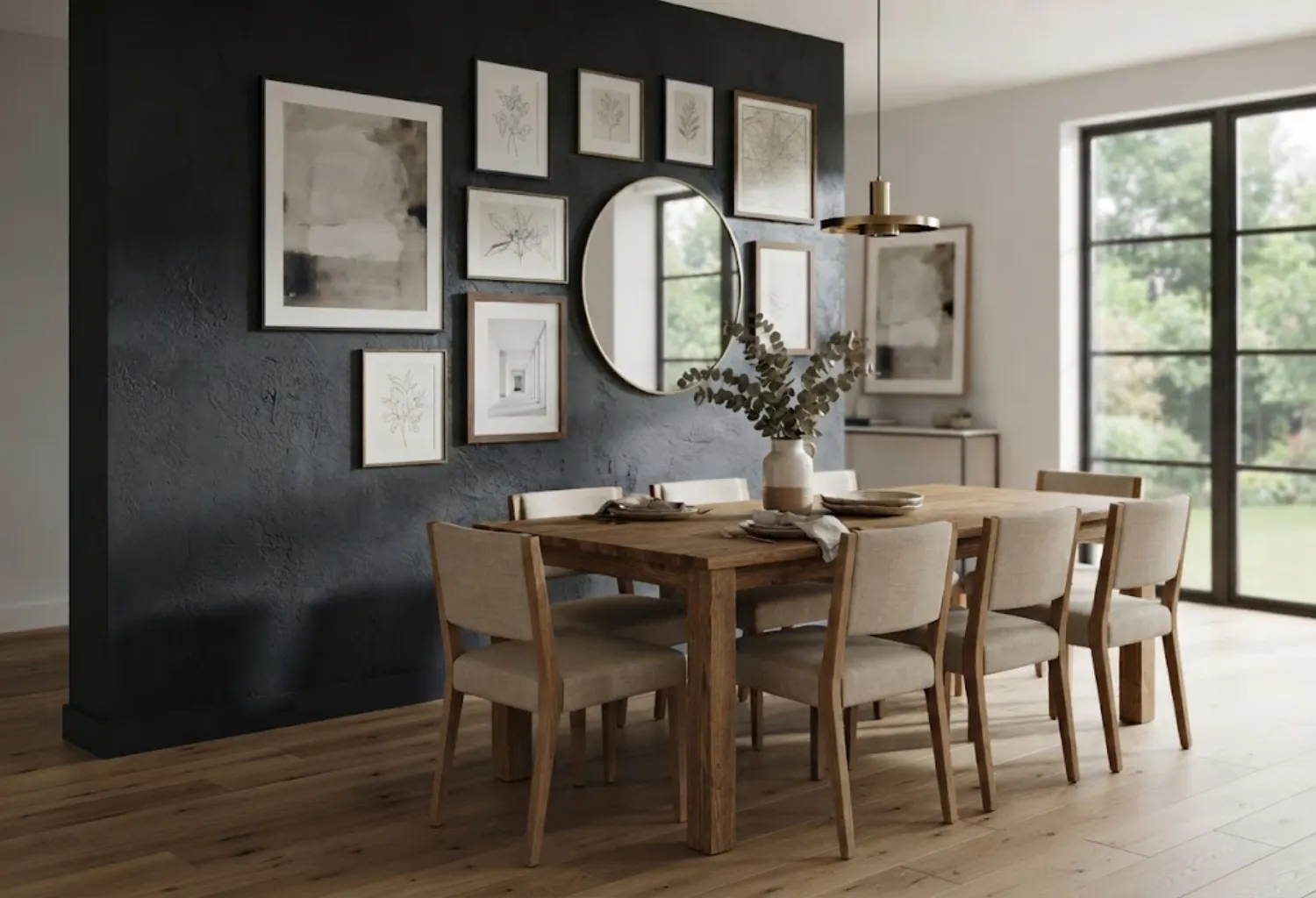
An empty wall next to the dining table is wasted potential. A gallery wall of mixed-size frames, art prints, and even a mirror adds depth and personality without requiring a huge budget. Keep a consistent color story across the pieces so the wall feels curated instead of random. Hang the lowest row roughly 8 inches above the chair backs so nothing feels cramped when people push their chairs out.
10. Multi-Functional Furniture

Dining rooms rarely get used exclusively for dining anymore. An extendable table that expands for guests, a sideboard that doubles as a bar cart, or chairs that slide neatly under the table for extra floor space all make the room work harder. This is especially useful in smaller homes where the dining area might also serve as a home office or homework station during the day. Flexibility is quickly becoming a defining trait of modern dining room decor.
11. Statement Rug

A rug under the dining table anchors the whole arrangement and adds a layer of texture underfoot. Choose a size that extends at least 24 inches beyond the table edge on all sides, so chairs stay on the rug even when pulled out. Low-pile options work best here since they won’t snag on chair legs. A patterned or textured rug also helps hide crumbs and daily wear better than a flat solid color.
12. Greenery and Botanicals

A dining room without any greenery tends to feel flat, no matter how nice the furniture is. A tall floor plant in the corner, a trailing vine on the sideboard, or a simple vase of fresh stems on the table all bring life into the space. Low-maintenance options like snake plants or pothos work well if natural light is limited. Even a small centerpiece of greenery makes the table feel more finished for everyday meals, not just special occasions.
13. Mirror Placement

Mirrors do double duty in a dining room: they bounce light around and make the space feel larger than it is. Position a large mirror opposite a window to reflect natural light back into the room, or hang one above a sideboard to add height and depth. A round or organically shaped mirror softens the room’s lines, complementing the curved furniture trend. In smaller dining areas especially, a well-placed mirror can make a real difference in how open the room feels.
14. Minimalist Centerpieces

Overloaded centerpieces block conversation and eat up table space you need for actual meals. Modern dining rooms favor low, simple arrangements instead, a single ceramic bowl, a cluster of candles, or a low vase of greenery that doesn’t require guests to peer around it. Keep the height under 12 inches if you want people to see each other across the table. Simplicity here also means less to move every time you actually use the table.
15. Neutral Color Palette With Texture

A neutral base of whites, warm beiges, and soft grays gives a dining room a calm, cohesive backdrop, but texture is what keeps it from feeling boring. Mix matte and glossy finishes, smooth wood against woven textiles, or a matte wall paint against a glass light fixture. This layered-neutral approach is a hallmark of modern dining room decor because it stays timeless while still feeling current. It’s also the easiest palette to build around when you’re adding new pieces over time.
Final Thoughts
Updating your dining room doesn’t require starting from scratch. Small swaps like better lighting, a textured rug, or a sculptural table base can shift the whole feel of the space without a major renovation budget. The common thread across modern dining room decor is intention: every piece earns its place, whether that’s for function, comfort, or simply how it makes the room feel. Start with one or two ideas from this list, live with them for a bit, and build from there. Your dining room will end up looking put-together and, more importantly, like a space you actually want to spend time in.
