
20 Gray Living Room Ideas That Feel Warm, Not Cold
Gray living rooms have a reputation problem. Done wrong, they feel flat, sterile, or straight out of a builder-grade showroom. Done right, gray becomes the most flexible backdrop in your entire home — quietly sophisticated, endlessly adaptable, and easy to live with year after year.
If you’re searching for gray living room ideas, you’re probably trying to avoid that “cold and boring” trap while still keeping things calm and cohesive. The good news is that gray works with nearly every style, from cozy farmhouse to sleek modern, as long as you know how to layer it. Below are 20 practical ways to bring gray into your living room without losing warmth or personality.
1. Warm Greige Walls
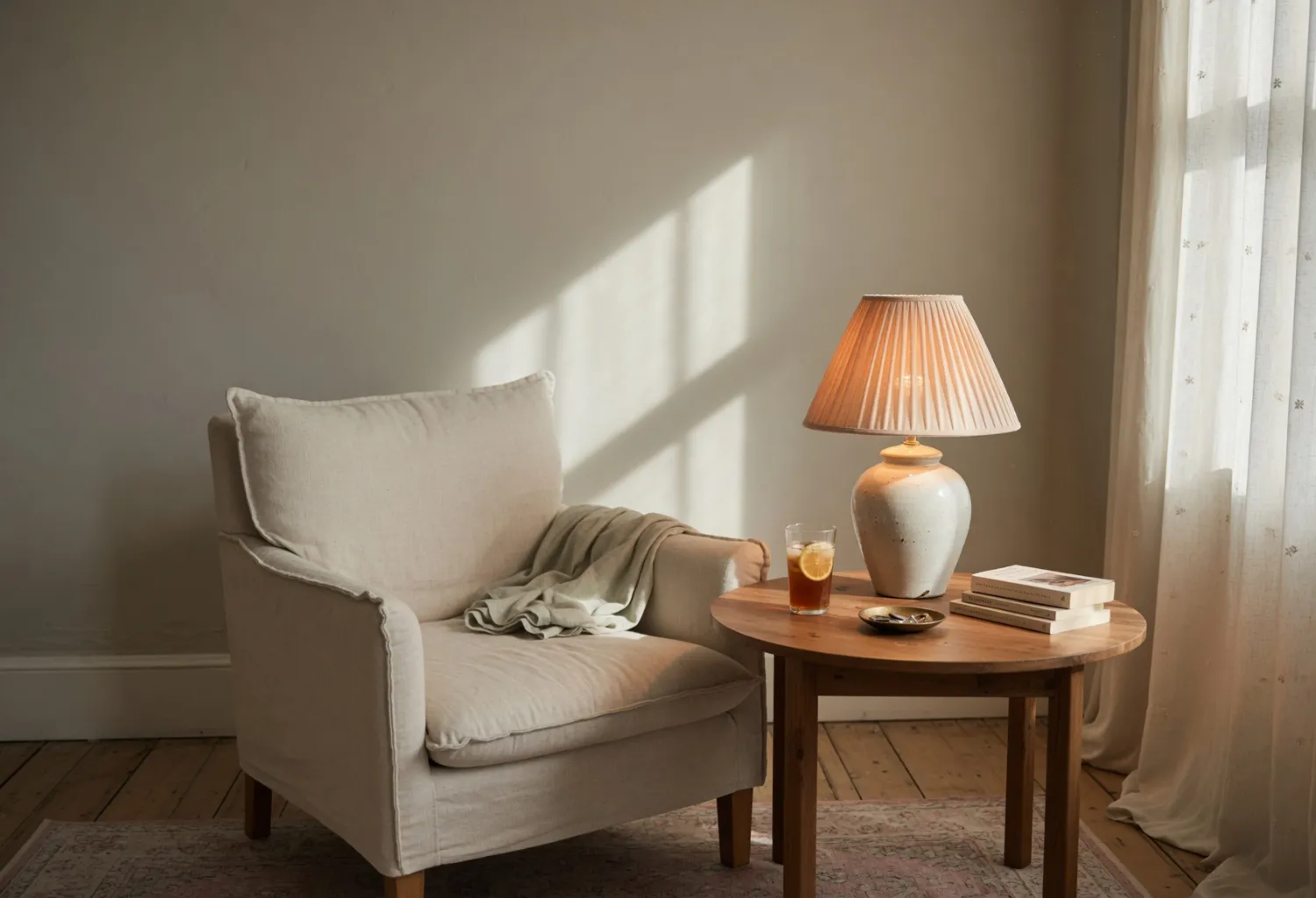
Greige — that in-between shade of gray and beige — solves the “too cold” problem before it starts. It has enough brown undertone to feel inviting under both daylight and lamplight, which is why it’s become a go-to for living rooms that get mixed lighting throughout the day. If you’ve ever painted a room gray and had it turn blue or purple at night, greige is usually the fix, since warm undertones hold up better once the sun goes down.
2. Charcoal Accent Wall
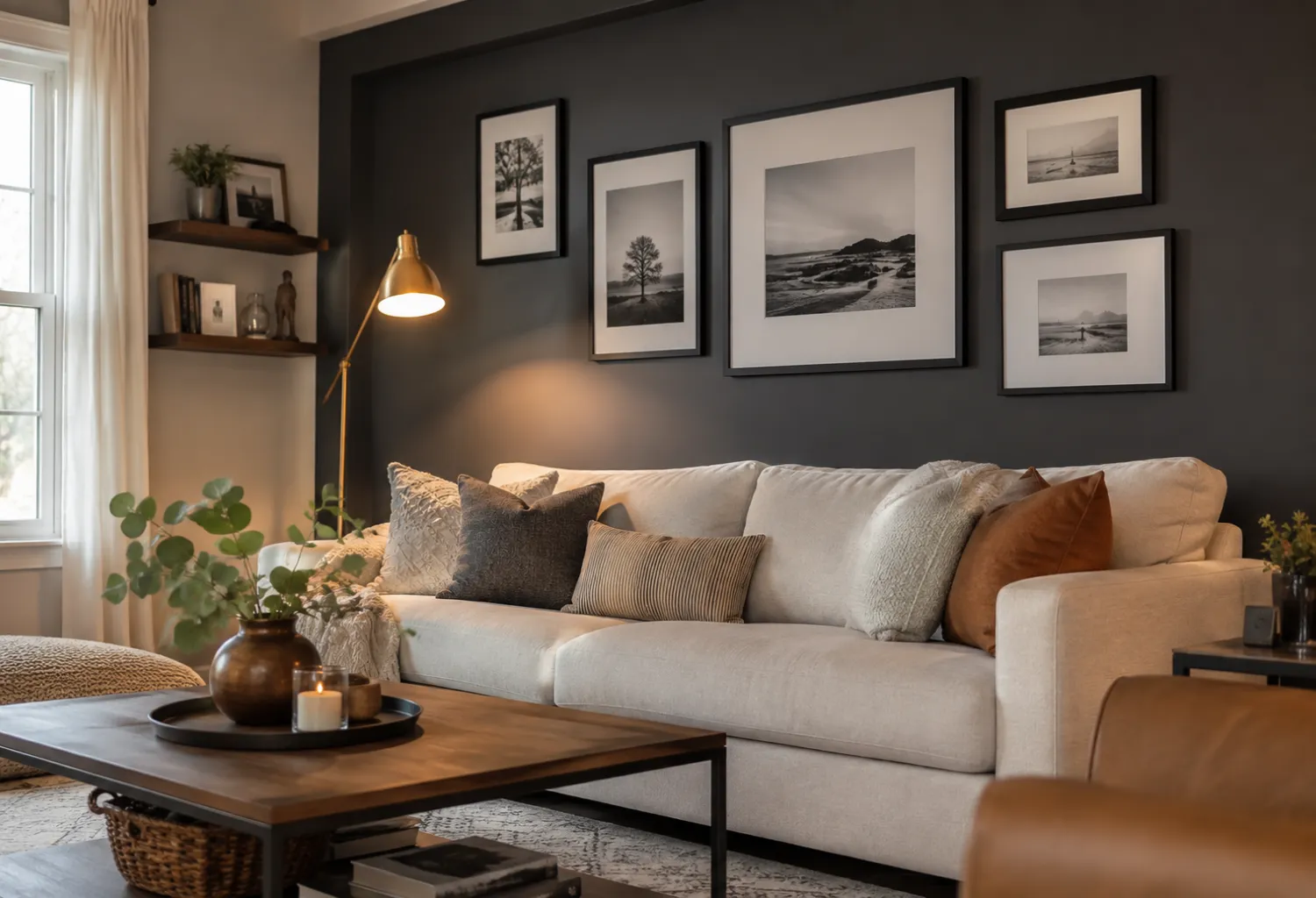
A single charcoal wall behind the sofa or fireplace adds drama without overwhelming the room the way four dark walls might. It works especially well in living rooms with good natural light, since the darker tone won’t make the space feel closed in. Pair it with lighter furniture and metallic accents like brass or matte black to keep the contrast feeling intentional rather than heavy.
3. Light Gray Sectional
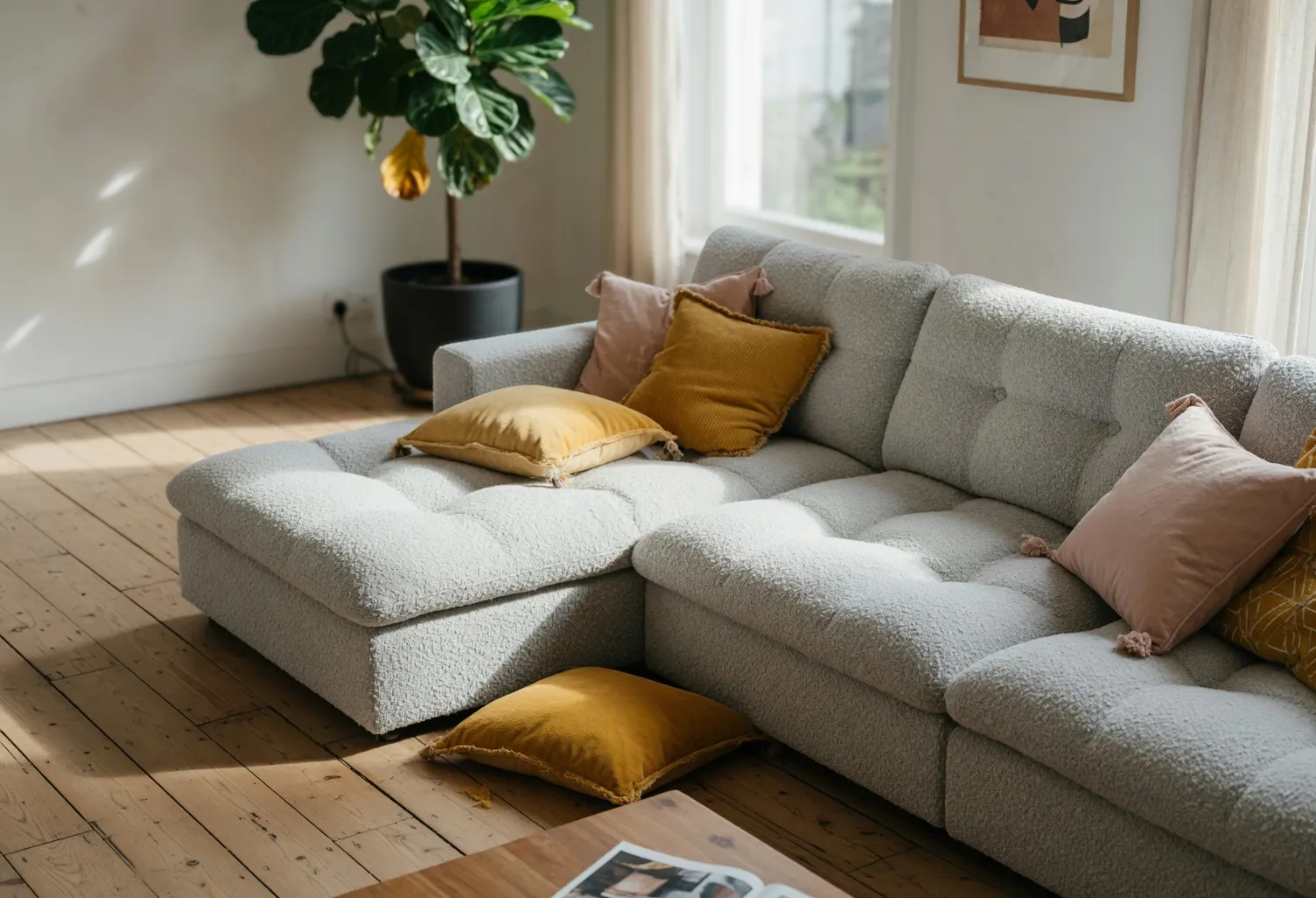
A light gray sectional is one of the easiest ways to anchor a room without committing to a bold statement piece. It reads neutral enough to restyle every season — swap in mustard pillows for fall, blush for spring — without ever clashing. Look for a fabric with a slight texture, like a bouclé or chenille weave, so the sofa doesn’t disappear into flatness against gray walls.
4. Layered Gray Rug
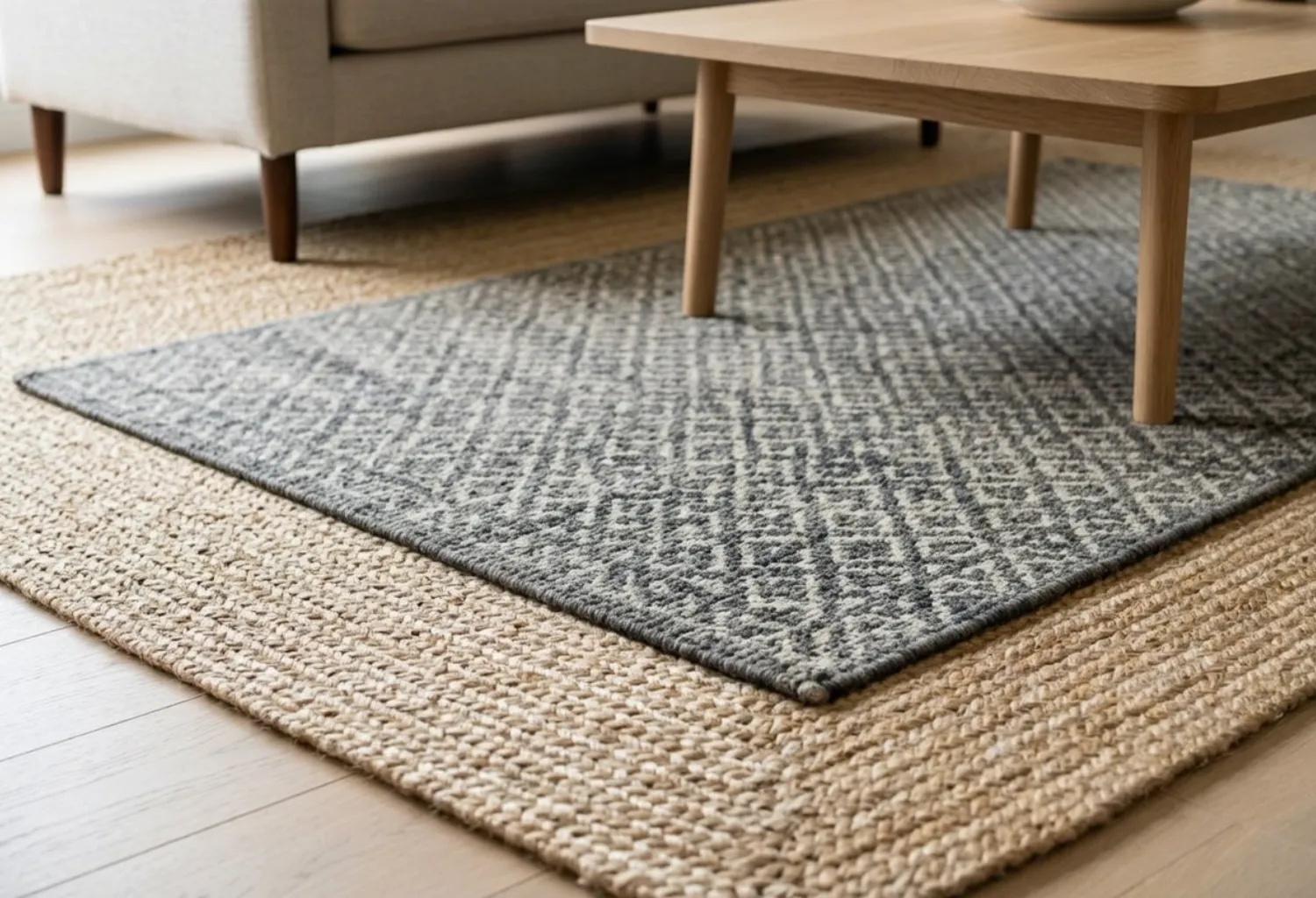
Layering two rugs — a larger jute or sisal base with a smaller patterned gray rug on top — adds texture underfoot and breaks up an all-gray palette visually. This trick works particularly well in living rooms where the walls and sofa are already gray, since the natural fiber rug introduces warmth and grounding without adding another color. It also helps define a seating area in open-concept layouts.
5. Wood Coffee Table
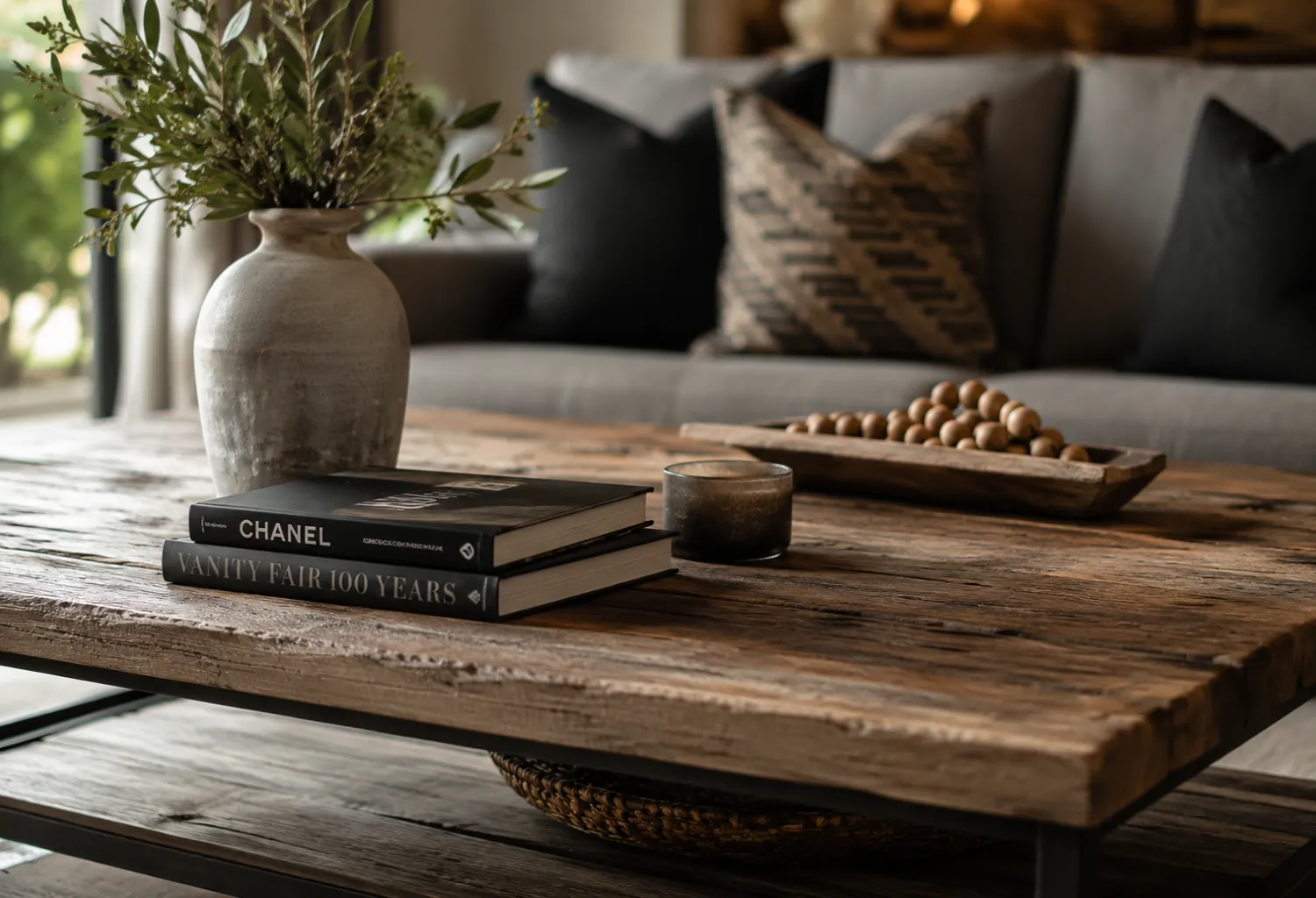
Nothing softens a gray living room faster than raw or stained wood. A wood coffee table breaks up the coolness of gray walls and upholstery while adding an organic, lived-in feel. Live-edge or reclaimed wood styles work especially well here, since their texture contrasts nicely with gray’s smoothness and keeps the room from feeling too polished or showroom-like.
6. Black-and-White Gallery Wall
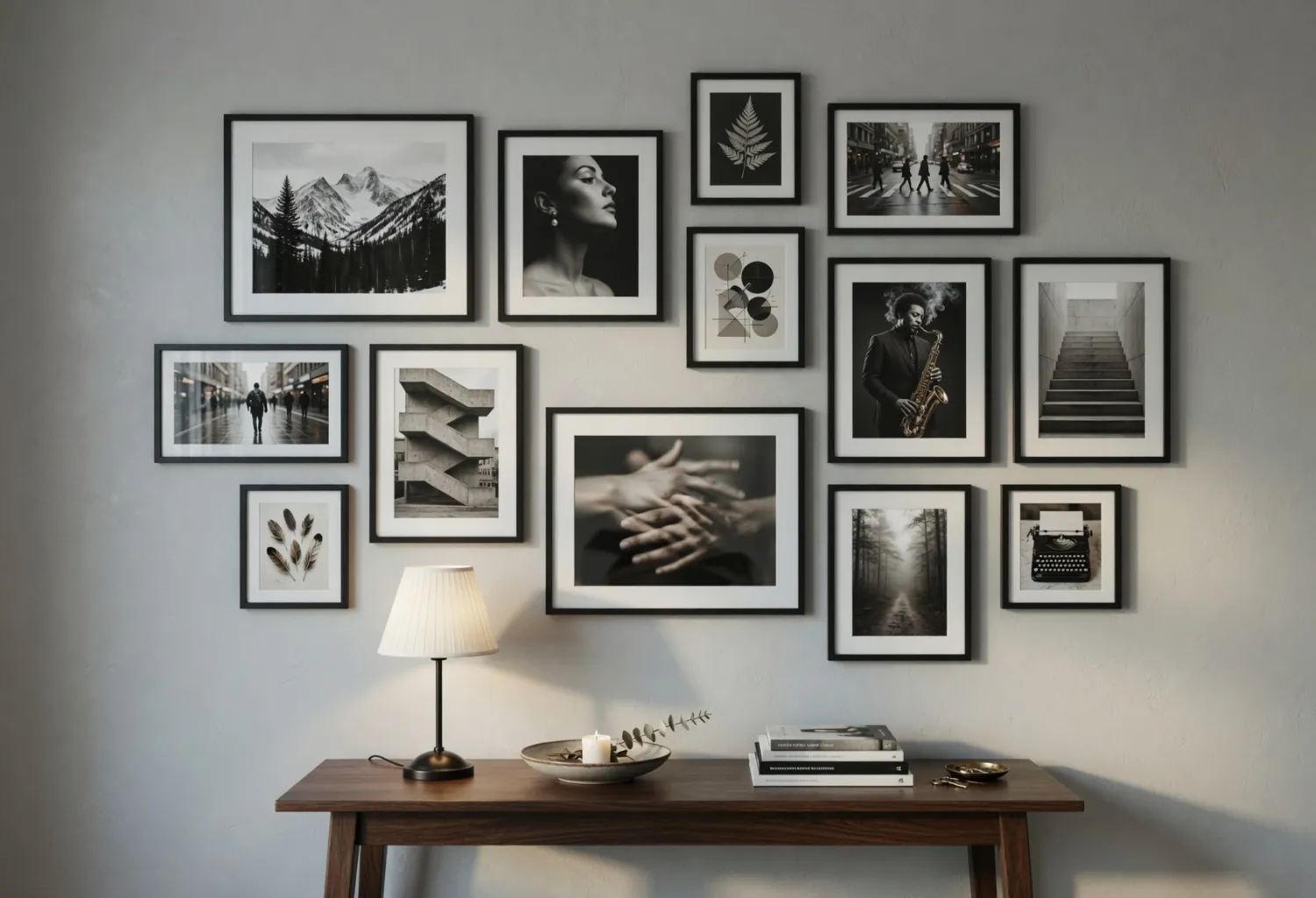
Gray is essentially the midpoint between black and white, which makes a black-and-white gallery wall feel like a natural extension of the palette rather than an add-on. Mix photography, line drawings, and a few graphic prints in varied frame sizes for visual interest. Keep frames in a single finish — all black or all white — so the wall reads as one curated collection instead of a random assortment.
7. Brass or Gold Accents
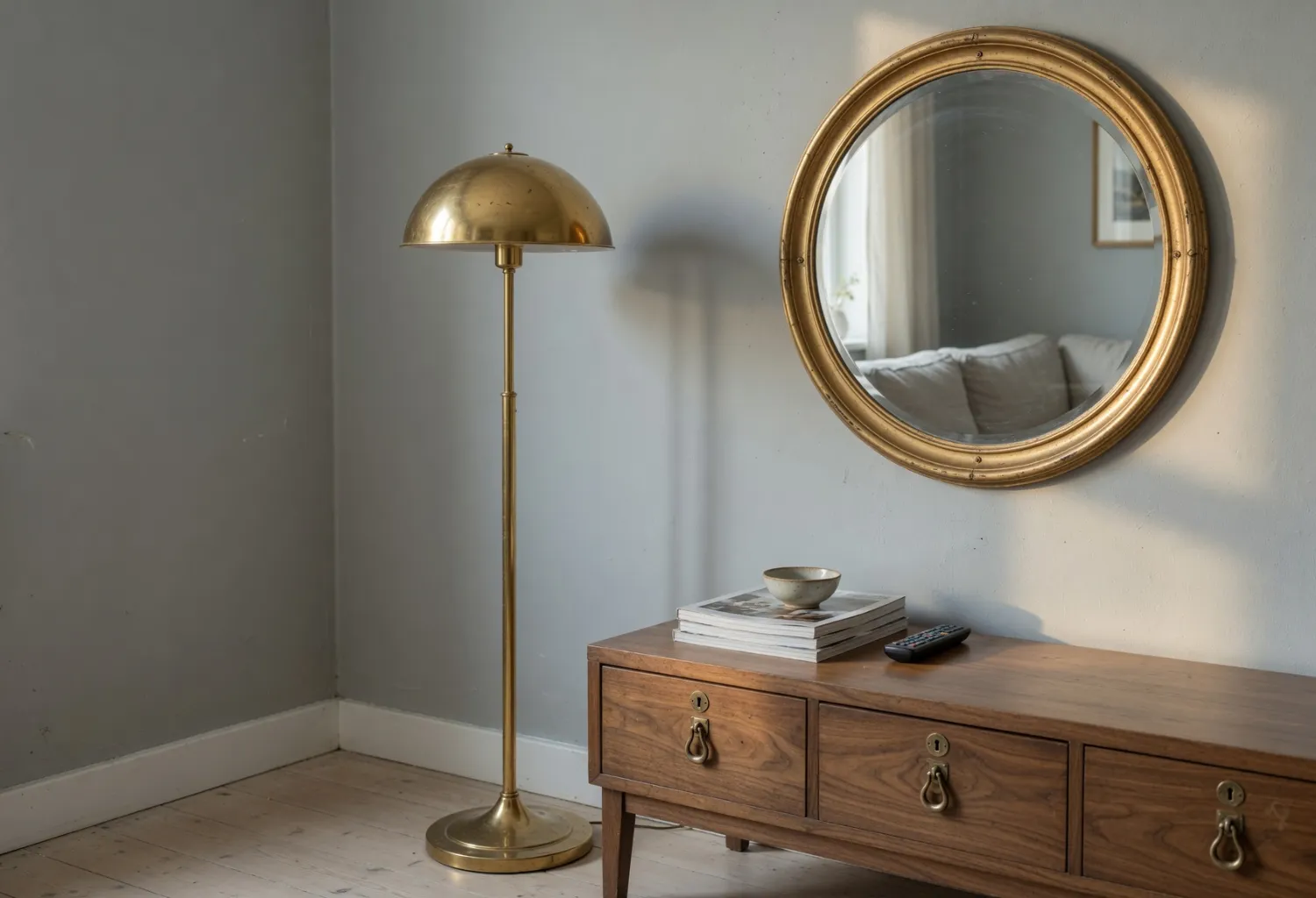
Metallics are what keep gray from feeling flat, and brass or gold do this better than chrome or silver. A brass floor lamp, gold-rimmed mirror, or antique brass drawer pulls on a media console instantly add warmth and a touch of glamour. Because gray is such a neutral base, even small metallic touches stand out more than they would against a busier color scheme.
8. Textured Throw Pillows
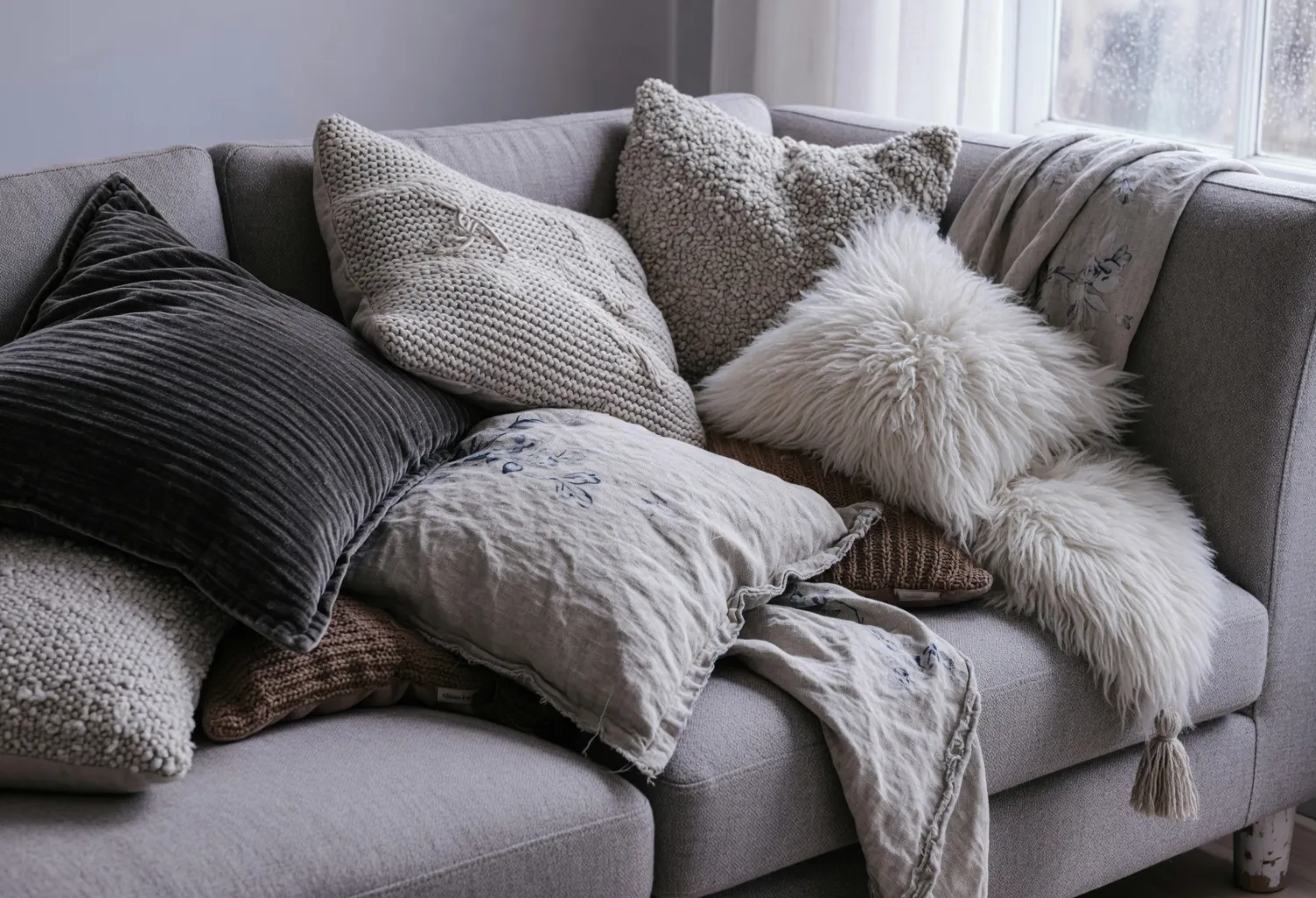
Flat gray fabric can look one-dimensional in photos and in person. Mixing pillow textures — velvet, linen, knit, faux fur — gives the eye more to explore even when everything stays in the same color family. This is one of the cheapest gray living room ideas to test out, since you can swap pillow covers seasonally without touching furniture or paint.
9. Statement Fireplace Surround
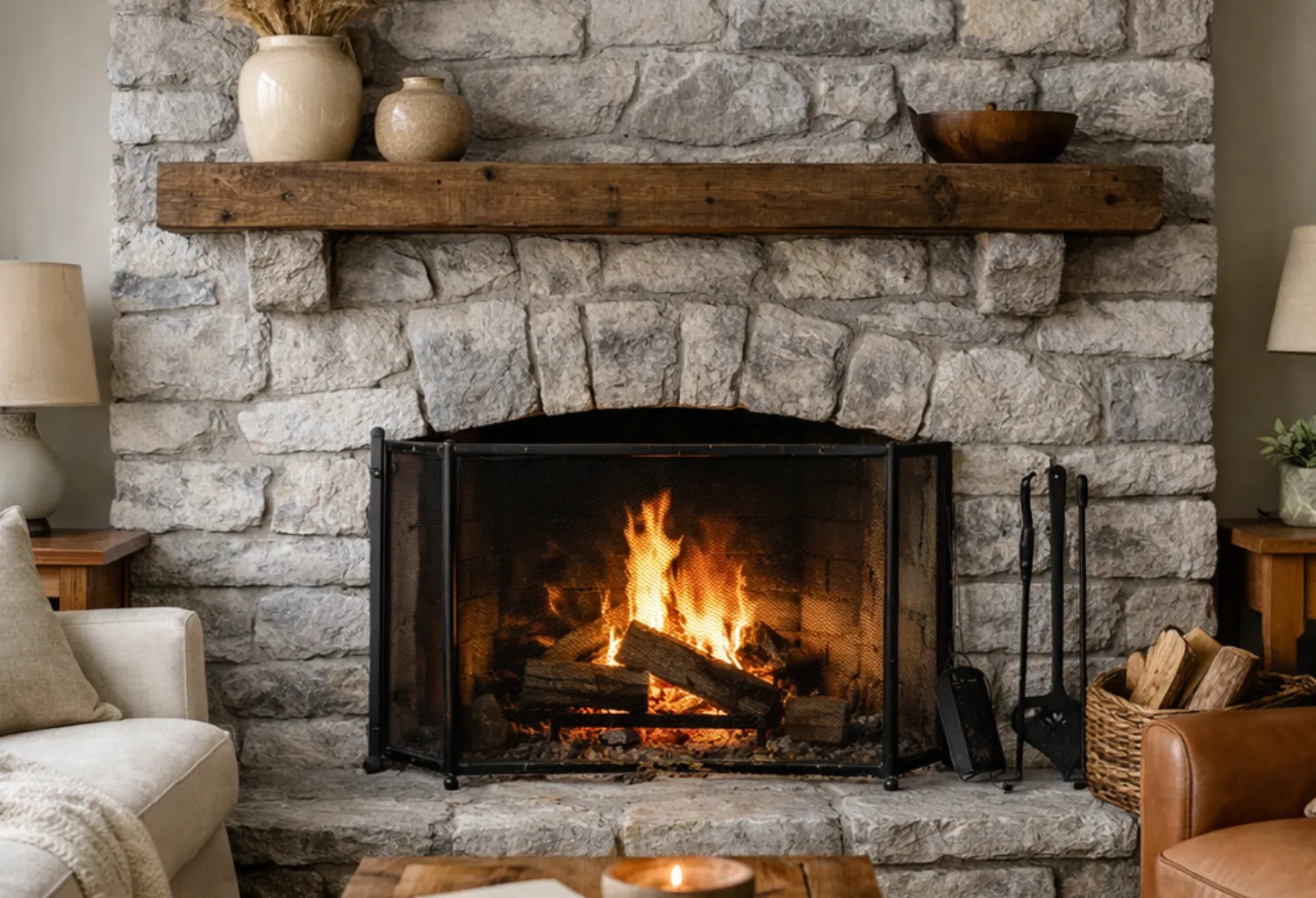
A gray stone or shiplap fireplace surround turns a functional feature into the room’s visual anchor. Whitewashed or weathered gray stone tends to look less stark than smooth painted surfaces, giving the fireplace an aged, collected feel rather than a manufactured one. This works well as the room’s one bold gesture, letting everything else — furniture, walls, decor — stay simpler by comparison.
10. Two-Tone Wall Treatment
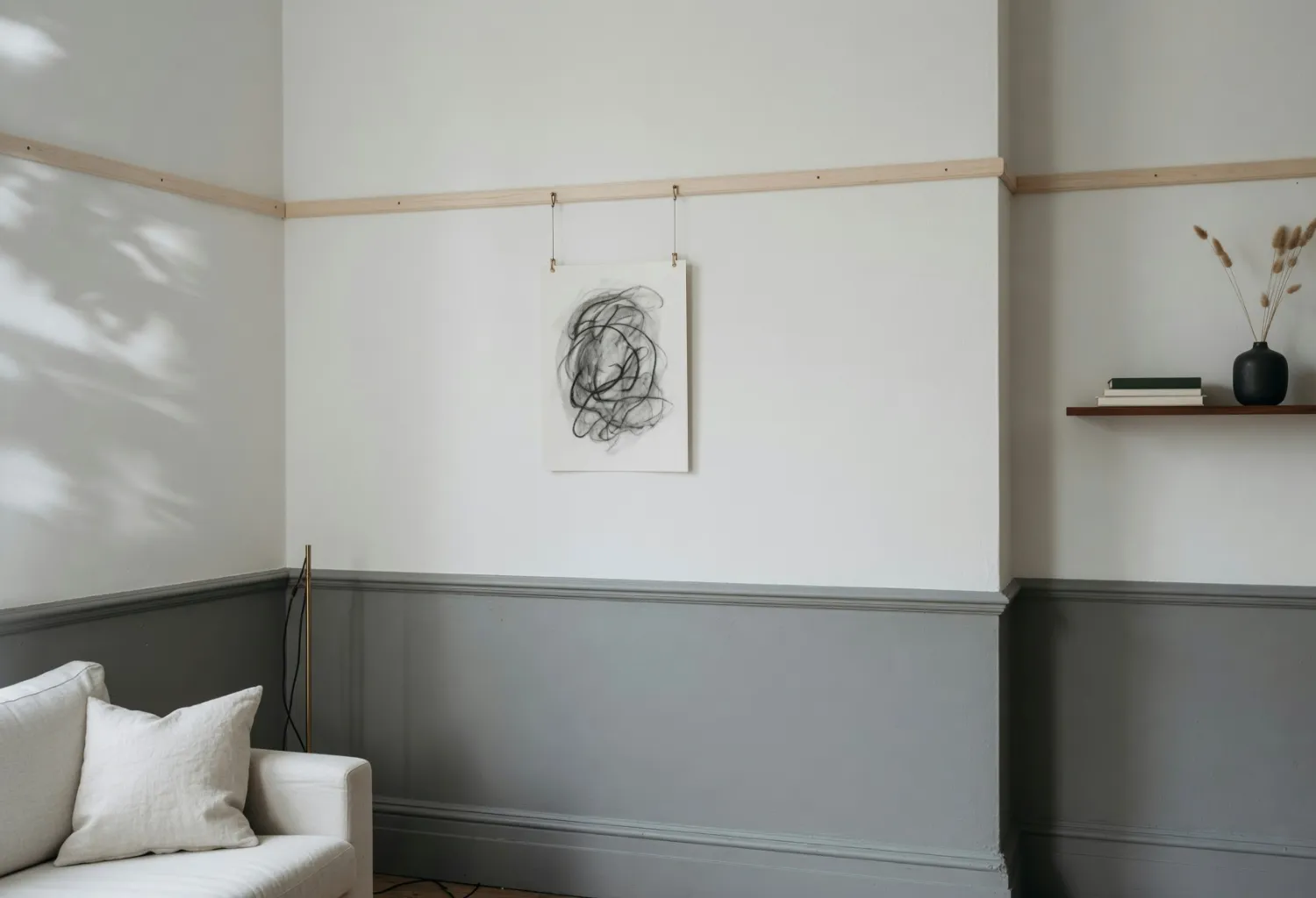
Painting the lower half of the wall a darker gray and the upper half a lighter shade (or white) adds architectural interest to a plain room, especially one without much trim or molding. A thin wood or picture-rail strip at the transition line makes the look feel intentional rather than accidental. This is a smart option for rental living rooms too, since it reads as a design choice even in a simple box-shaped space.
11. Gray Built-In Shelving
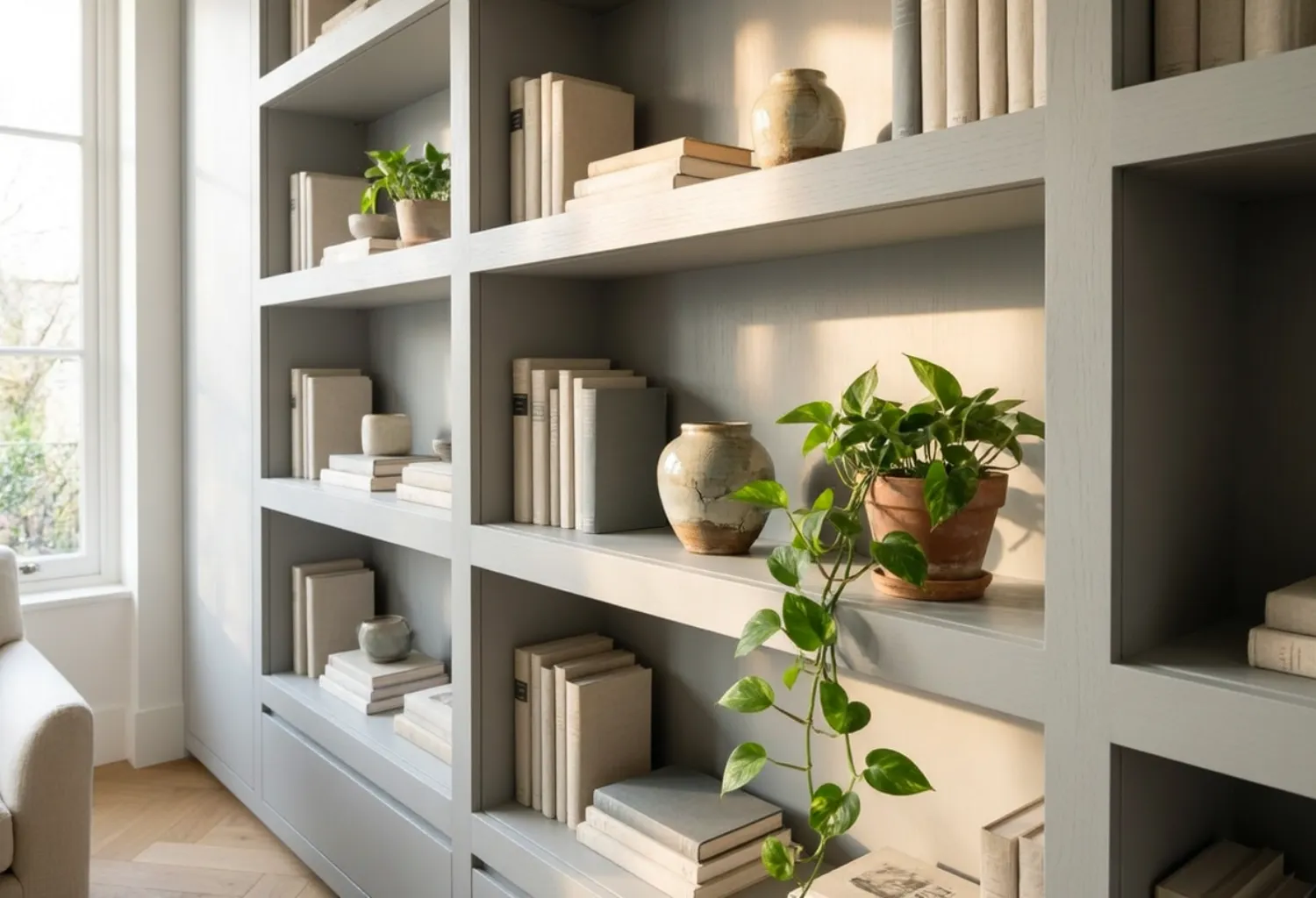
Built-in shelving painted in a soft gray creates a custom, tailored look without the cost of full millwork elsewhere in the room. It’s especially useful for displaying books, plants, and personal objects, since the muted gray backdrop lets colorful spines and greenery pop instead of competing with a bright wall color. Open shelving also keeps a small living room from feeling boxed in the way solid cabinetry can.
12. Patterned Curtains
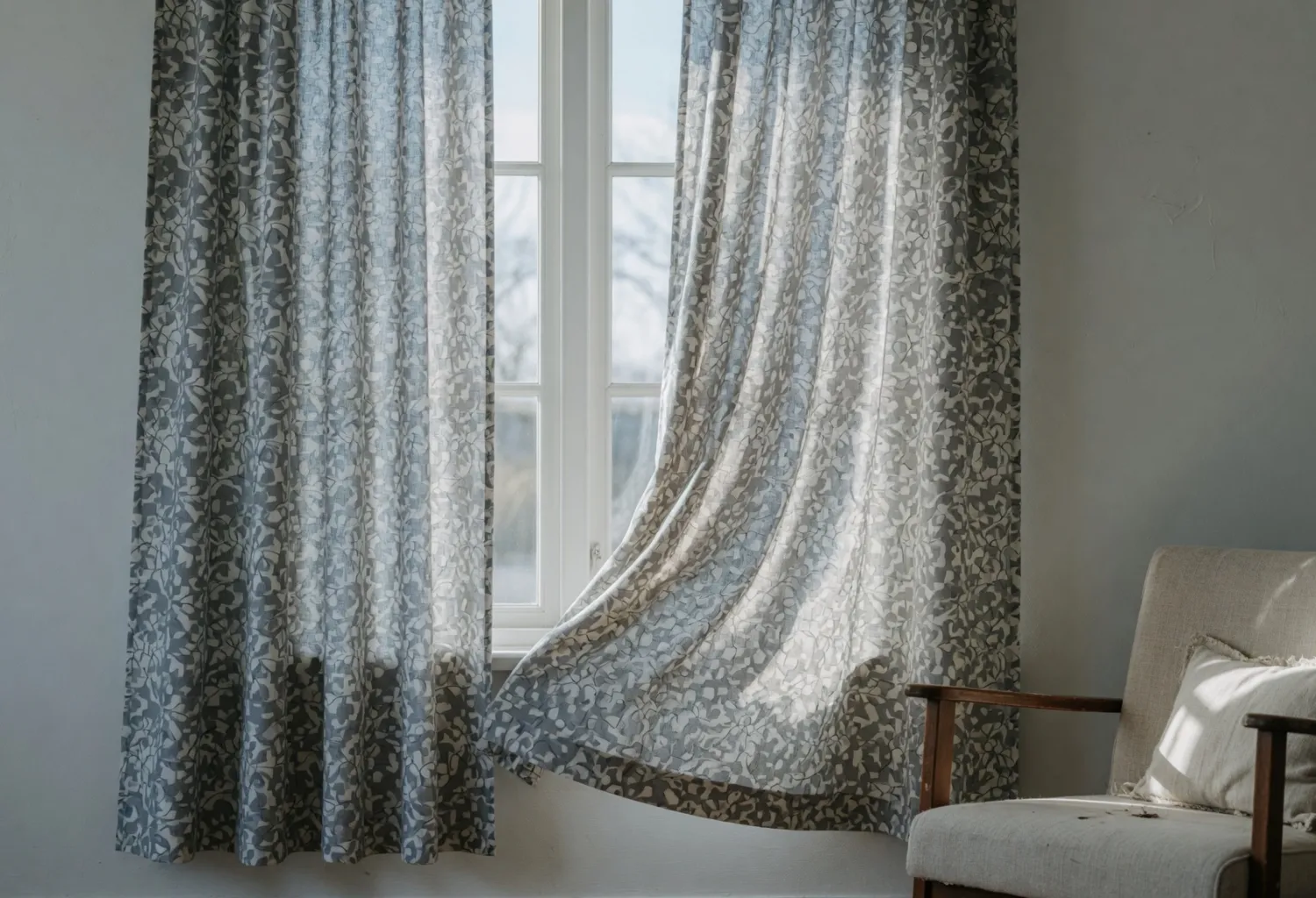
Solid gray curtains can make windows disappear into the wall. Swapping in a subtle pattern — stripes, a soft geometric print, or a botanical design in gray-and-white tones — adds movement to the room without breaking the color scheme. Longer curtains that graze the floor also make ceilings feel taller, which is a nice bonus in living rooms with standard 8-foot ceilings.
13. Green Plants Against Gray
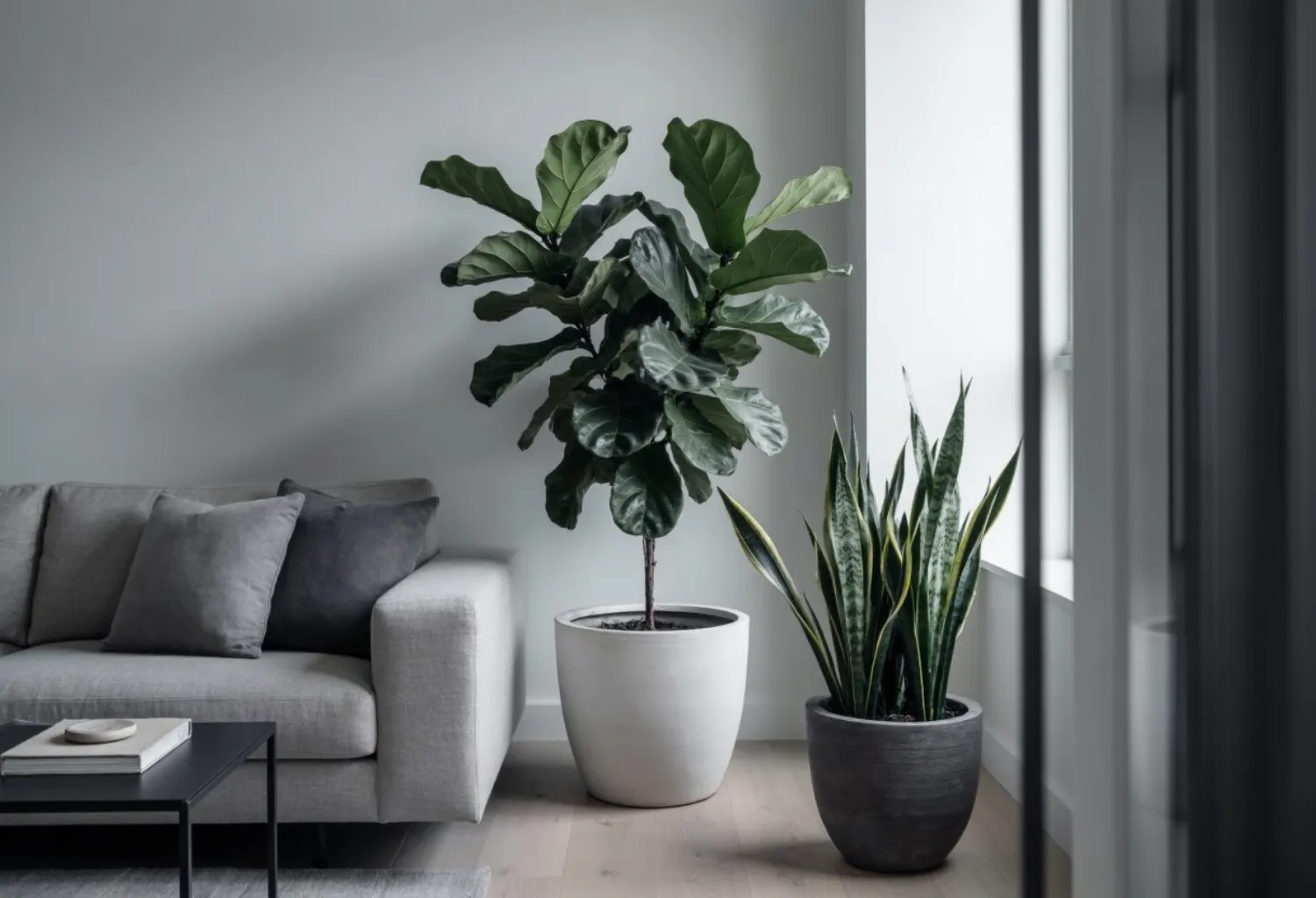
Green and gray is one of the most reliable color pairings in interior design, mostly because green appears in almost every gray undertone naturally. A few large plants — a fiddle leaf fig, snake plant, or monstera — bring life and softness into an otherwise neutral room. Even faux plants work here if natural light is limited, since the goal is visual contrast as much as it is actual greenery.
14. Gray Ottoman as Coffee Table
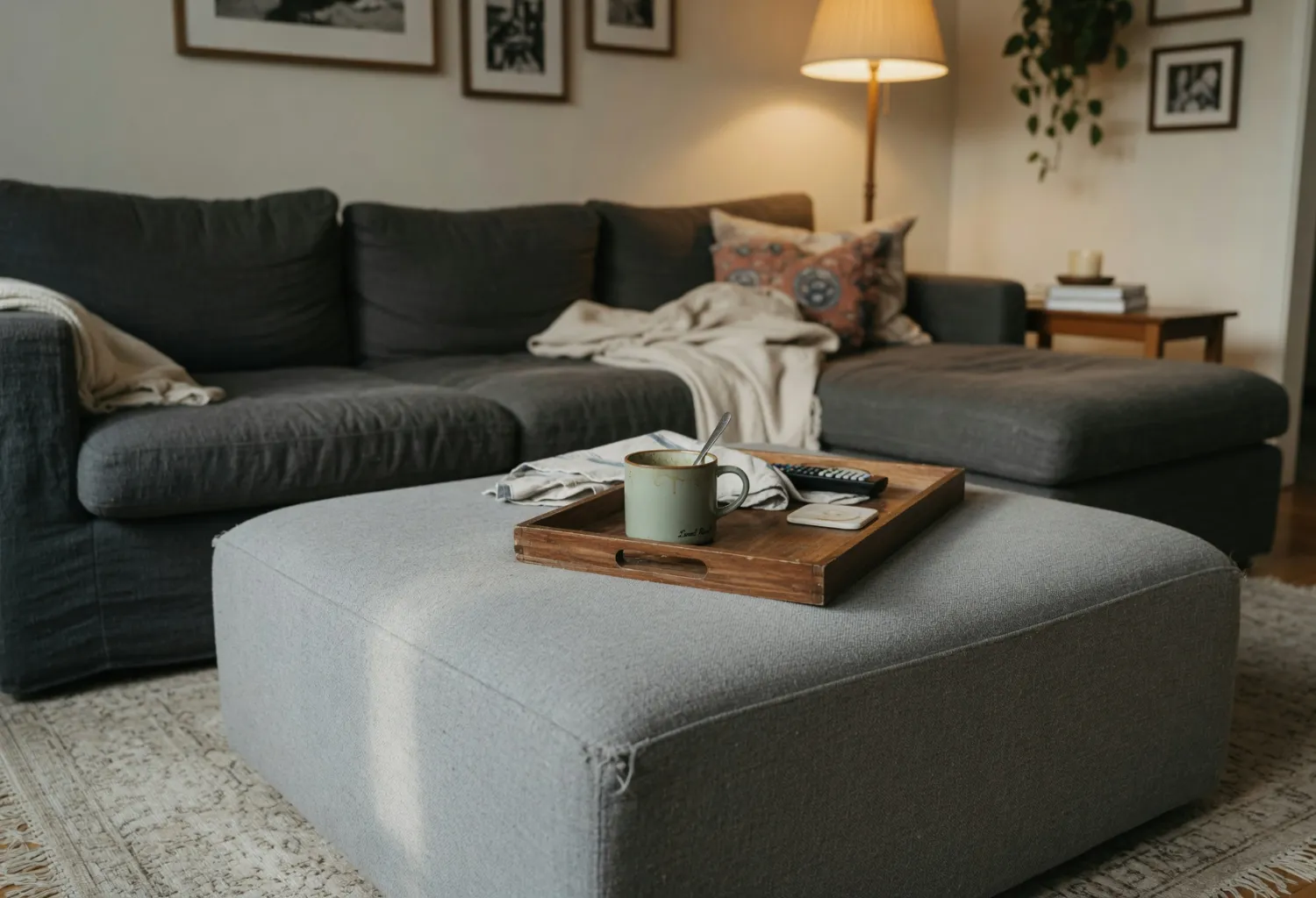
Swapping a hard coffee table for an upholstered gray ottoman softens the room’s overall silhouette and makes the space feel more casual and family-friendly. It’s a particularly good option for living rooms that double as a spot for kids or guests, since there are no sharp corners to work around. Add a large wooden tray on top to bring back some functional surface space for drinks or remotes.
15. Herringbone or Chevron Flooring
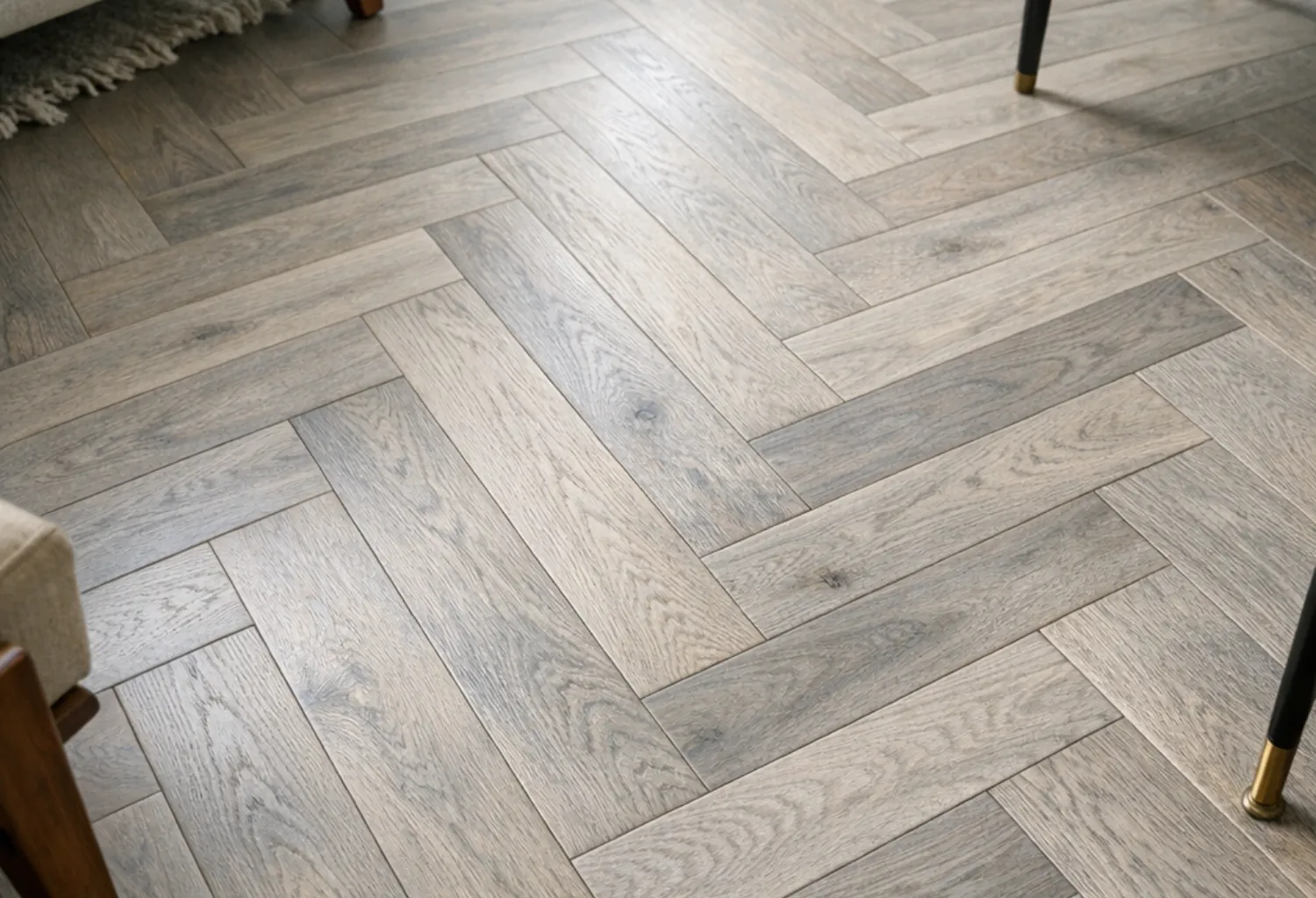
If you’re updating flooring, a herringbone or chevron pattern in a light gray-washed wood adds subtle movement underfoot that plain planks don’t offer. This works especially well in gray living rooms because the flooring pattern becomes a quiet focal point rather than relying on color to do that job. It photographs beautifully too, which matters if you’re planning to sell the home eventually.
16. Gray-and-Navy Combination
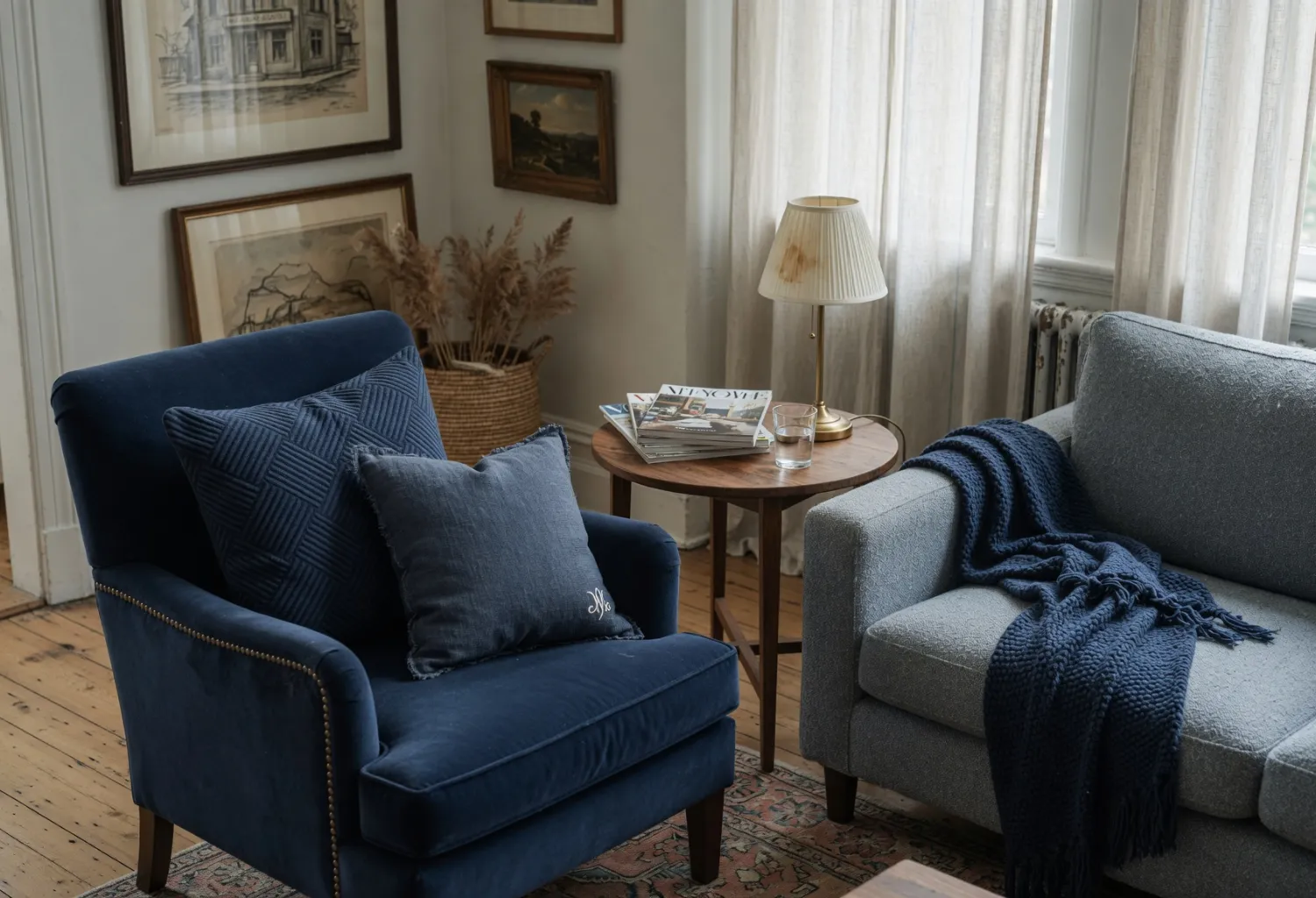
Navy blue is gray’s most underrated partner — it’s deep enough to add contrast but calm enough to keep the room feeling relaxed rather than busy. Try a navy accent chair, a set of navy throw pillows, or navy built-in cabinetry against gray walls. This combination tends to read as more sophisticated than gray-and-black, since navy has a softer, less severe presence in a room people actually spend time in.
17. Woven or Rattan Accents
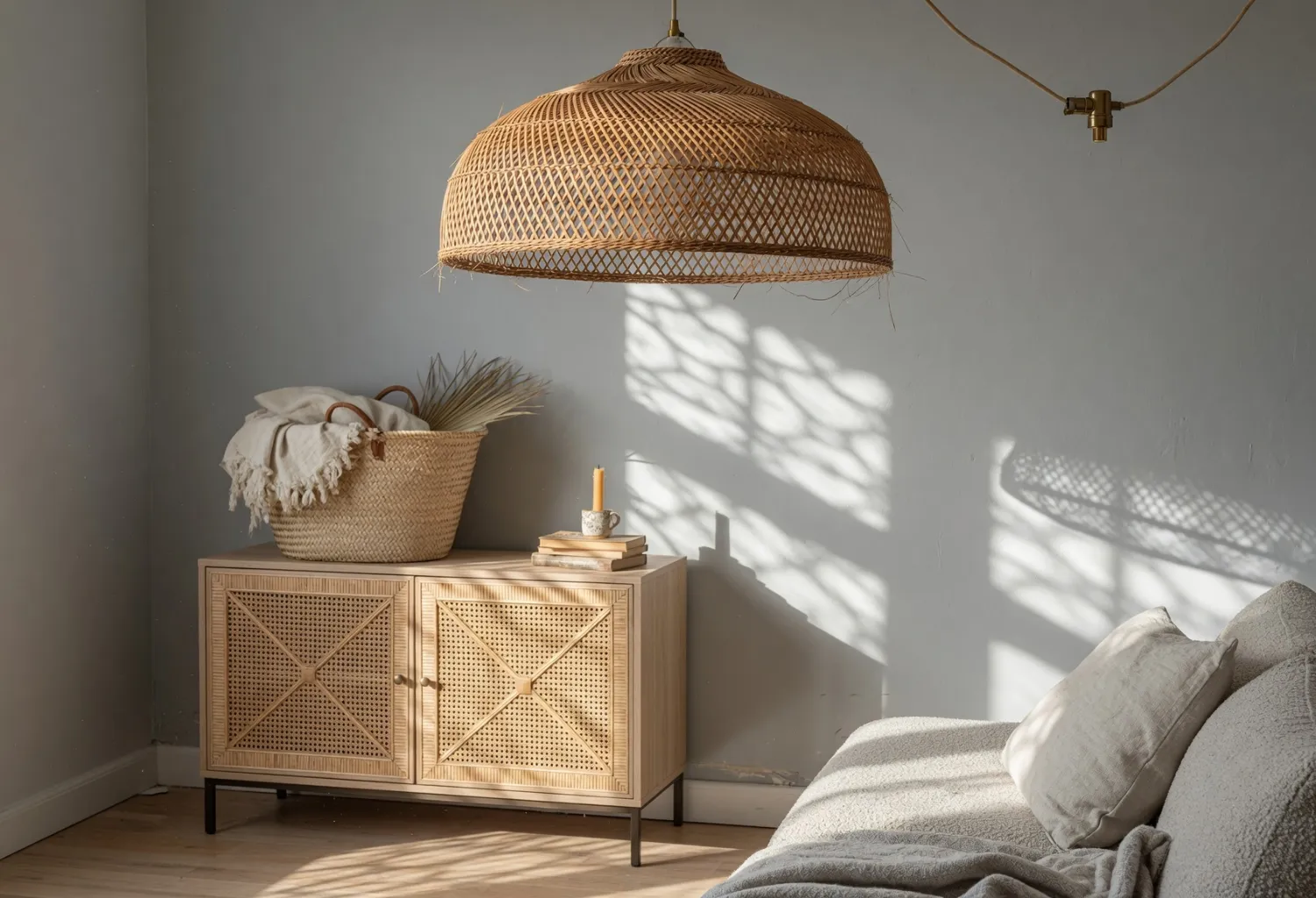
Rattan and woven textures — think a rattan pendant light, a wicker basket for blankets, or a cane-front cabinet — add a natural, slightly bohemian element that keeps an all-gray room from feeling too formal. These materials pair especially well with light gray palettes, since their warm tan tones create the same contrast that wood furniture does but in a lighter, airier way.
18. Layered Lighting
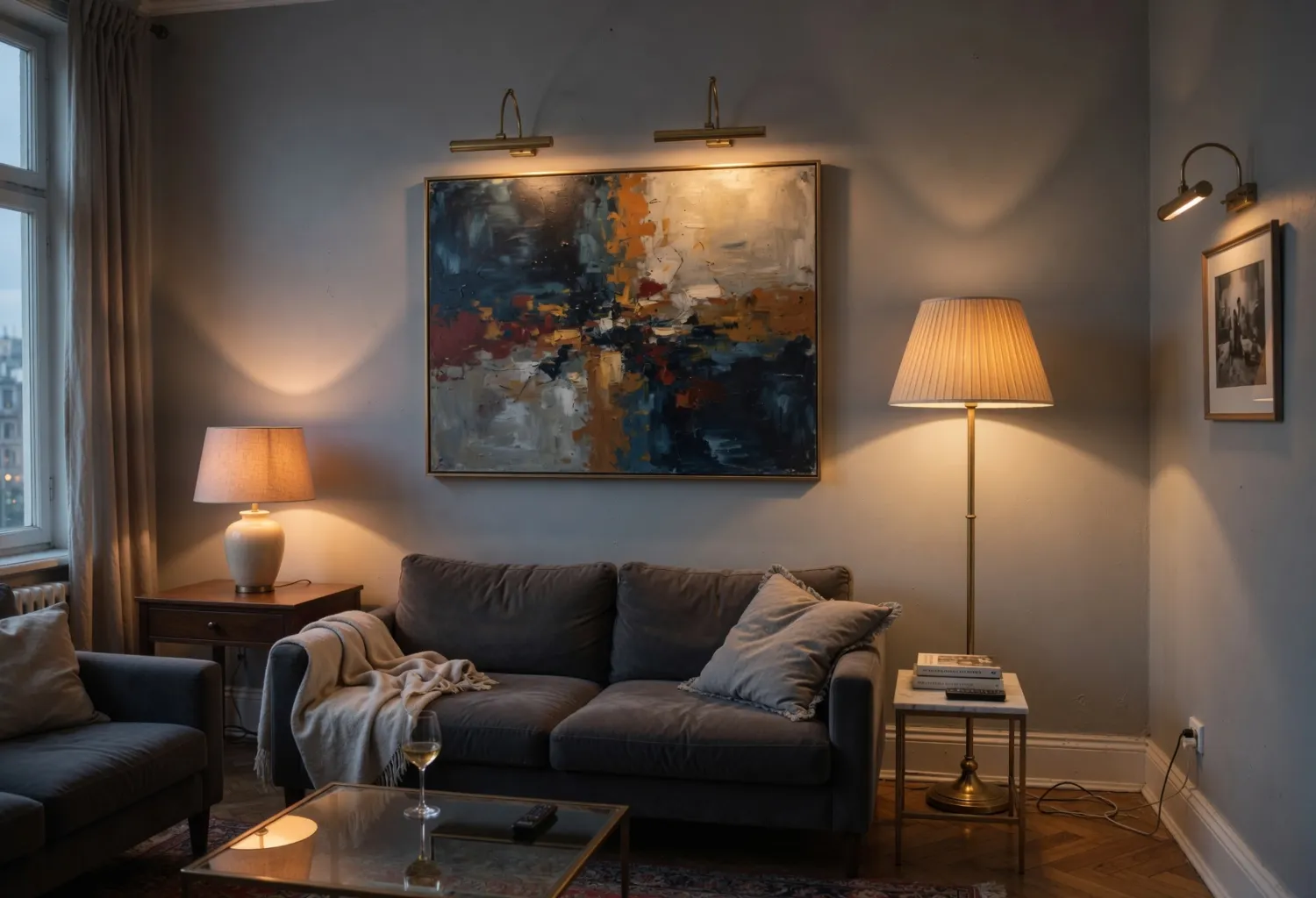
Relying on one overhead light in a gray living room tends to flatten the whole space and make gray tones look duller than they are. Layering lighting — a floor lamp, a table lamp, and maybe picture lights over artwork — creates pockets of warmth throughout the room, especially in the evening. Warm-toned bulbs (around 2700K) also help counteract any coolness in the gray paint or fabric.
19. Gray Accent Chair in a Neutral Room
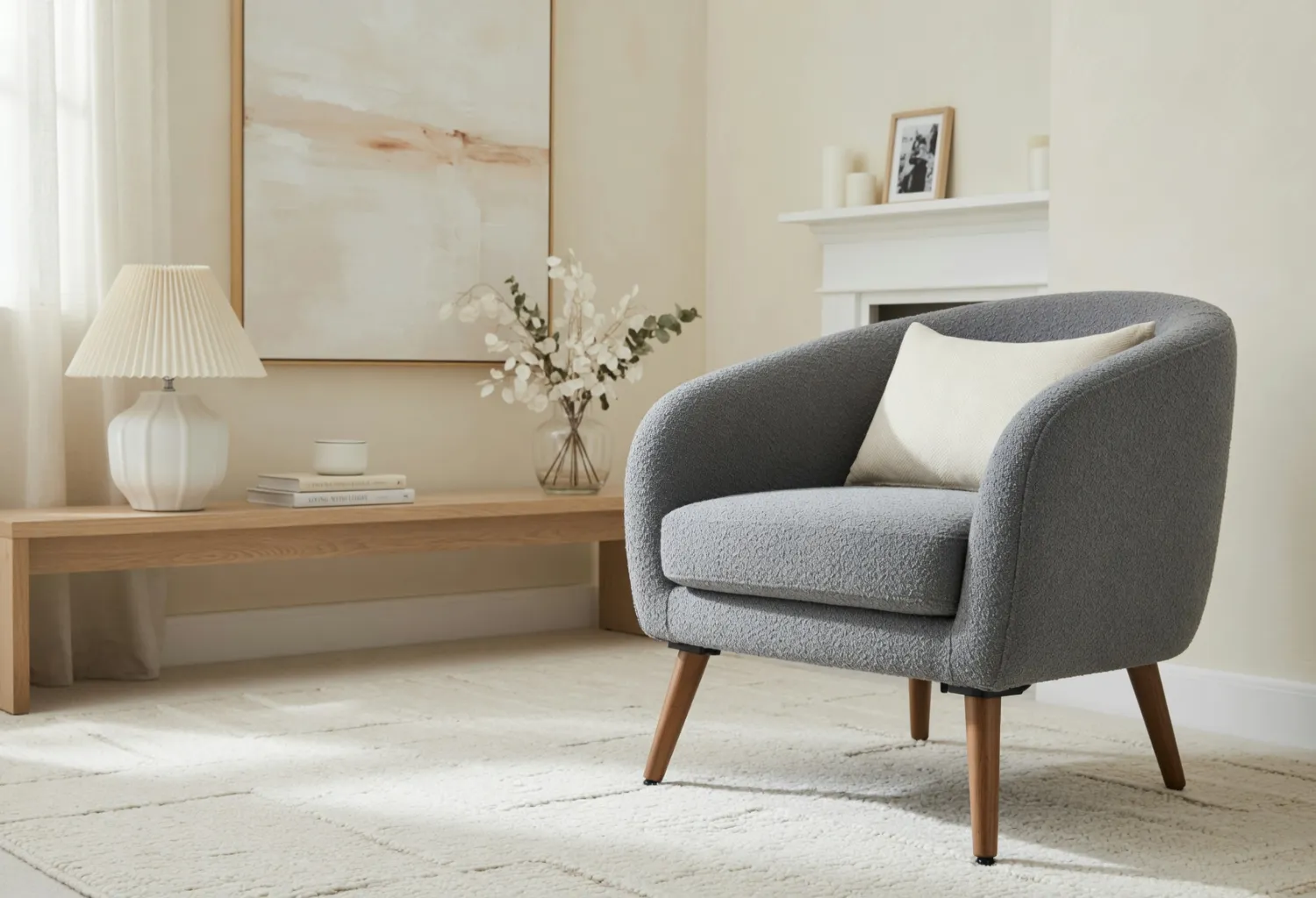
If your living room is mostly white, cream, or beige, a single gray accent chair introduces the color without a full redesign. This is one of the easiest gray living room ideas for renters or anyone hesitant to commit to gray walls or a gray sofa. Choose a chair with a distinct shape — a curved barrel chair or a chair with visible wood legs — so it reads as a design choice rather than a leftover piece.
20. Gray with Warm Terracotta Accents
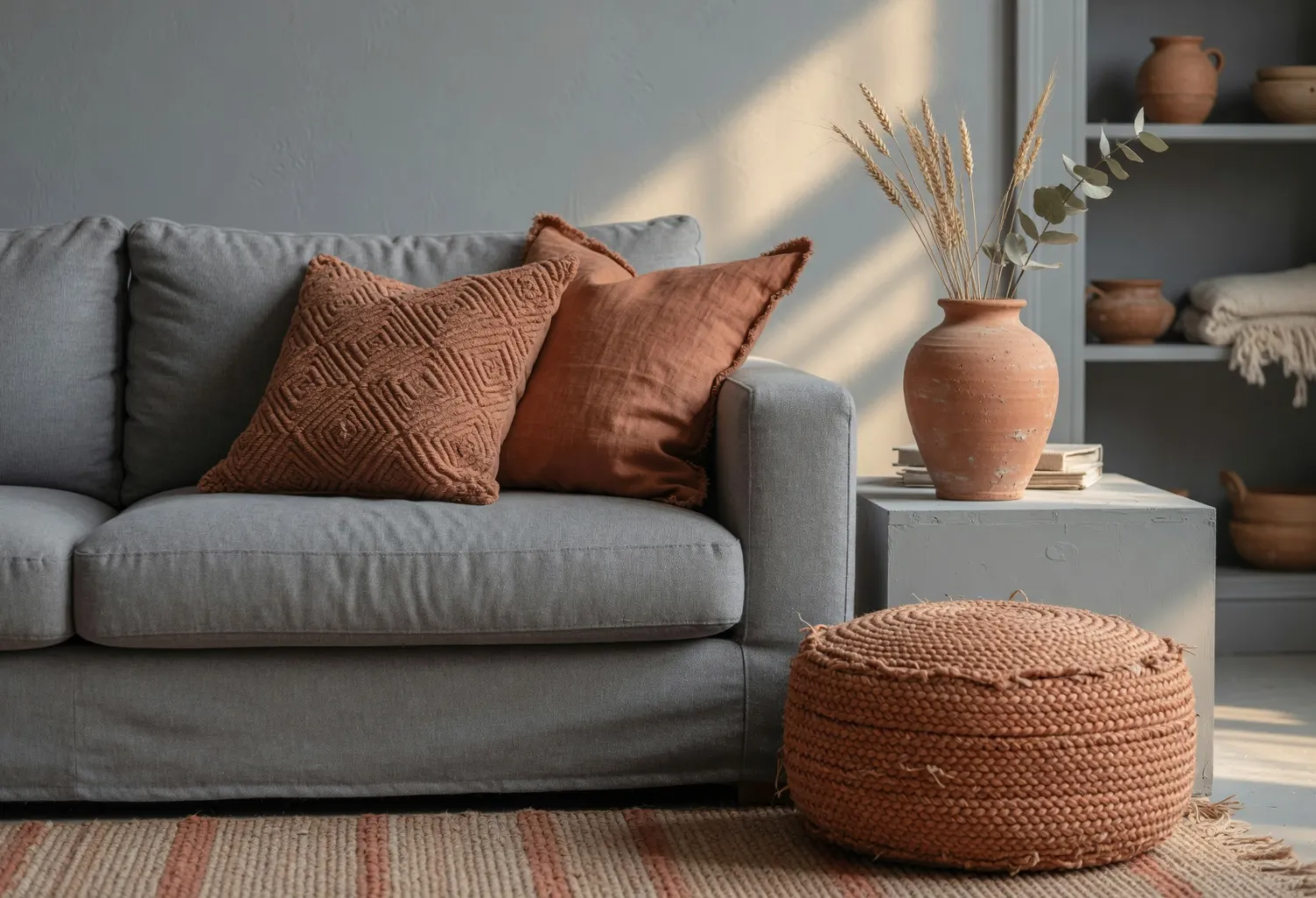
Terracotta and gray might sound like an unlikely pairing, but the earthy, clay-like warmth of terracotta balances gray’s coolness almost perfectly. A few terracotta pillows, a ceramic vase, or a woven terracotta pouf can shift the entire mood of the room from clinical to cozy. This combination has become increasingly popular in modern living rooms that want warmth without leaning into an all-wood or all-beige look.
Conclusion
Gray living rooms only feel cold when gray is left to do all the work on its own. The moment you bring in wood tones, metallics, greenery, or a contrasting color like navy or terracotta, the whole room shifts from flat to genuinely inviting. Whether you’re repainting walls, adding a single accent chair, or rethinking your lighting layout, these gray living room ideas are meant to be mixed and matched rather than followed all at once — pick two or three that fit your space and your budget, and build from there.