Small Living Room Storage Ideas That Actually Free Up Space
A cramped living room doesn’t have to mean piles of remotes, blankets, and mail everywhere you look. If you’ve been searching for small living room storage ideas, chances are you’re dealing with a room that looks cluttered no matter how many times you tidy up. The problem usually isn’t that you own too much stuff — it’s that your furniture isn’t pulling its weight.
The good news is that a small space actually forces smarter decisions, and that’s a win. Every idea below focuses on furniture and layout tricks that hide clutter, use vertical space, and make the room feel bigger instead of busier. Let’s get into the options that work best for real, lived-in rooms.
1. Multi-Purpose Ottomans with Hidden Storage
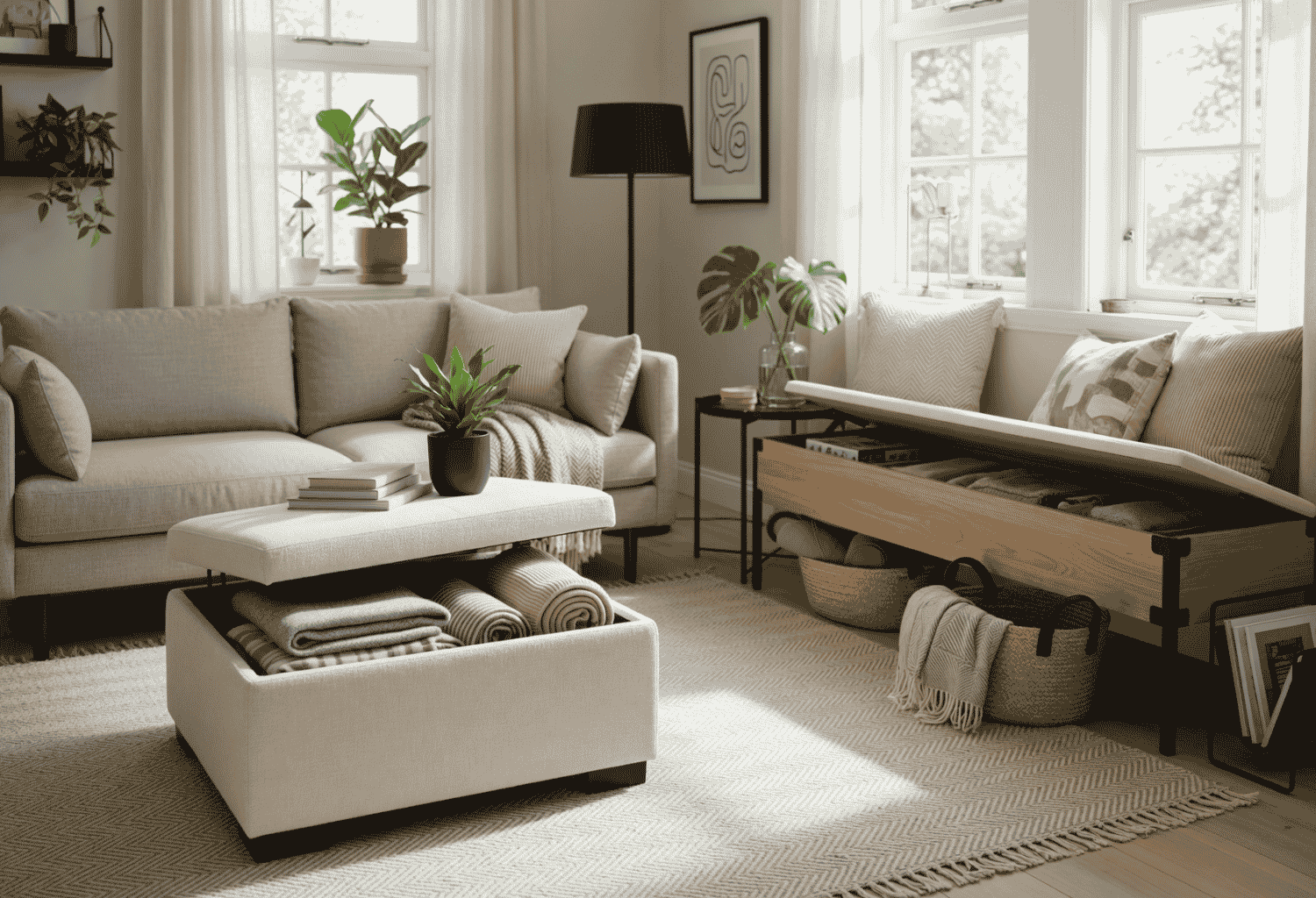
An ottoman that opens up is one of the easiest upgrades you can make. Instead of a coffee table that just holds a candle and a coaster, you get a lid that lifts to reveal space for blankets, board games, or extra pillows. Many of these double as extra seating when you have guests over, which matters a lot in a room that can’t fit a second couch.
Look for one with a sturdy hinge and a flat top so it can still function as a footrest or a spot to set down a drink.
Best for: People who need extra seating and blanket storage without adding another piece of furniture.
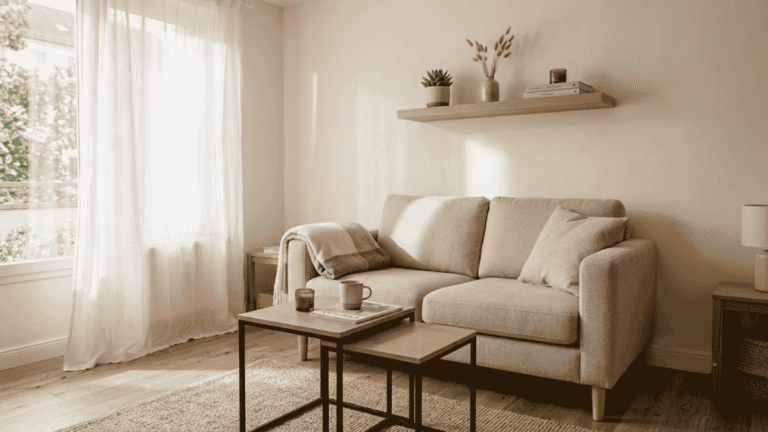
2. Floating Wall Shelves Above Eye Level
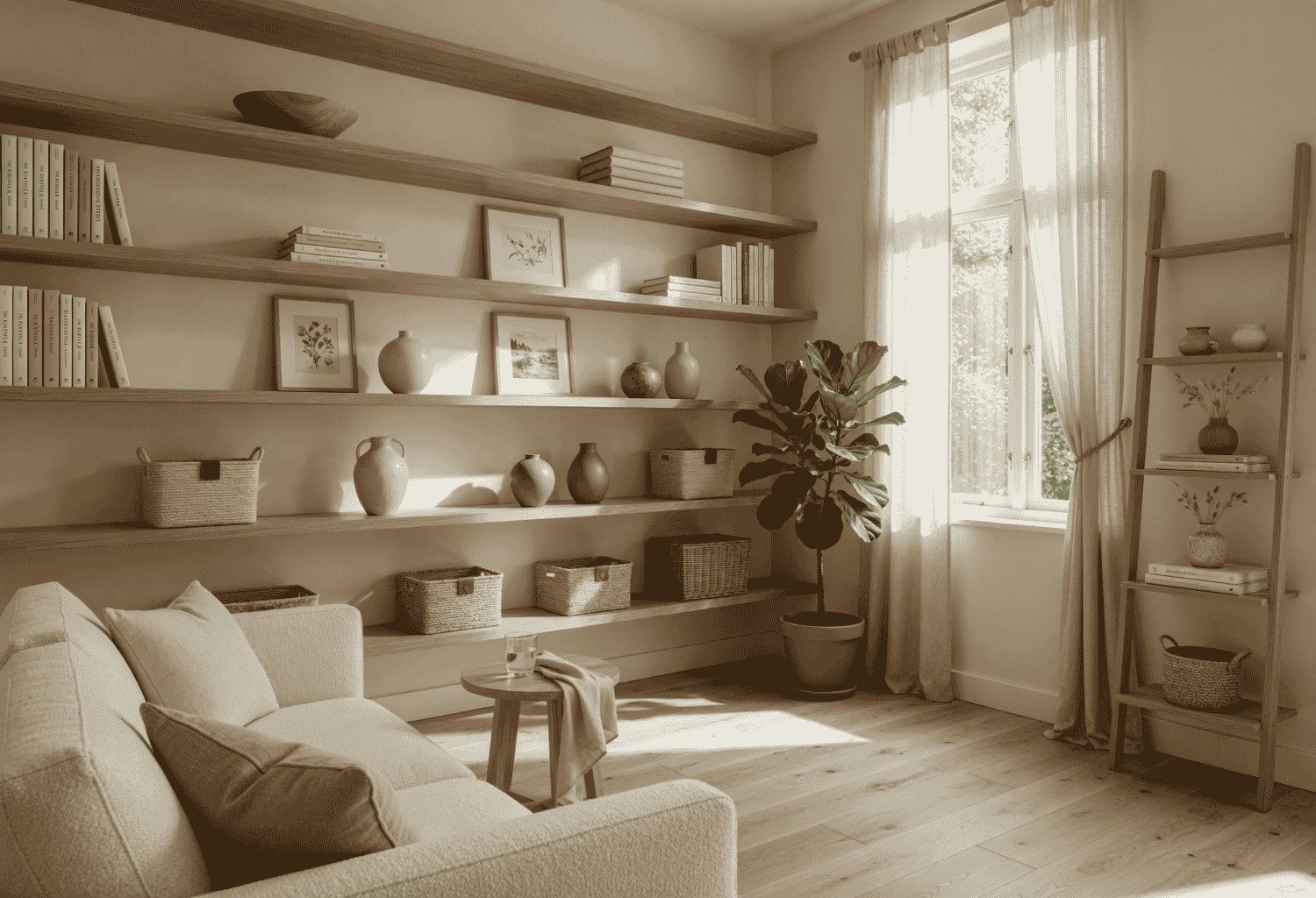
Floor space is precious in a small living room, but wall space above head height is usually empty. Floating shelves mounted near the ceiling give you a place for books, framed photos, or decorative bins without eating into your walking room. Because they’re mounted flush to the wall, they don’t create the bulky look that a bookcase would.
Group them in odd numbers and vary the spacing slightly so the wall doesn’t look like a rigid grid.
Best for: Renters and small-space dwellers who want display storage without sacrificing floor area.
3. A TV Console with Closed Cabinets
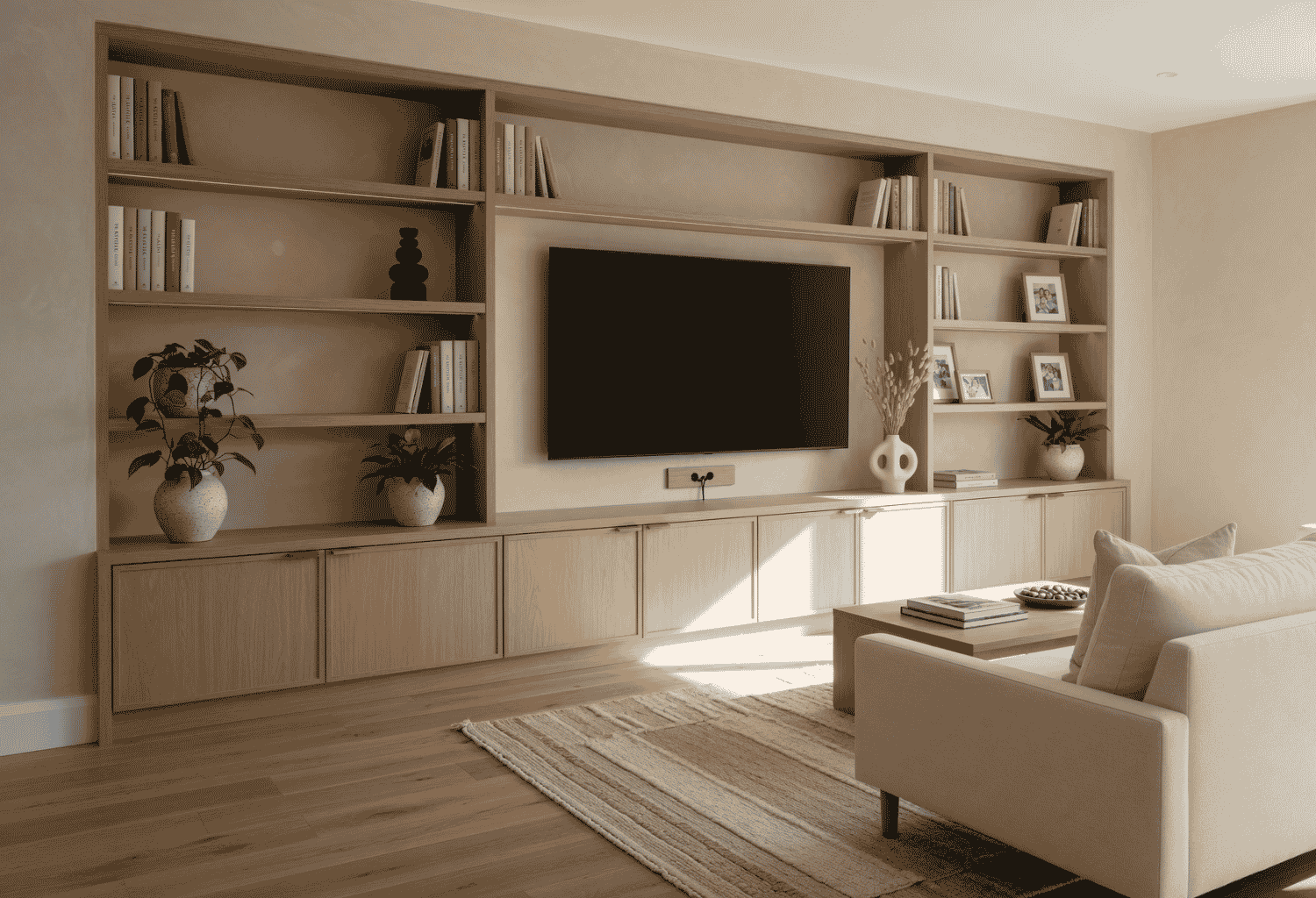
Open shelving looks nice in photos, but it’s hard to keep tidy in real life. A TV console with a mix of closed cabinets and a drawer or two lets you stash remotes, cables, gaming controllers, and streaming boxes out of sight. This keeps the visual clutter down, which makes a small room feel noticeably calmer.
Pick one with cord-management holes in the back panel so your cable mess doesn’t become the new eyesore.
Best for: Households with kids or multiple streaming devices and a tangle of cords to hide.
4. Vertical Bookshelves Instead of Wide Ones
A tall, narrow bookshelf uses far less floor footprint than a wide one, and it draws the eye upward, which makes ceilings feel higher. Tuck one into a corner or beside a window where a wider piece simply wouldn’t fit. Ladder-style shelves work especially well here since their angled frame takes up even less visual space.
Fill the bottom shelves with heavier items and the top with lighter decor so the whole thing feels balanced.
Best for: Book lovers and plant collectors who need vertical storage in a tight corner.
5. Built-In Alcove Shelving Around a Fireplace or TV
If your living room has an alcove—the recessed space beside a chimney breast or a mounted TV—that’s wasted potential if it’s empty. Custom or ready-made alcove shelving fills those awkward gaps with cabinets below and open shelves above, giving you storage that looks intentional rather than bolted on.
This is a bigger project than most items on this list, but it adds real, permanent storage that blends into the room’s architecture.
Best for: Homeowners ready for a semi-permanent upgrade who want built-in-style storage without a full renovation.
6. A Storage Bench Along a Wall or Under a Window
A bench with a lift-up seat or built-in cubbies gives you a spot to sit while doubling as a place to store shoes, throws, or seasonal items. Placed under a window or against an empty wall, it fills dead space that would otherwise go unused. It’s an especially smart pick if your entryway opens directly into the living room.
Add a cushion on top and a couple of baskets underneath for even more organized storage.
Best for: Small living rooms that double as a landing zone for shoes, bags, or outerwear.
7. Nesting Tables That Tuck Away When Not in Use
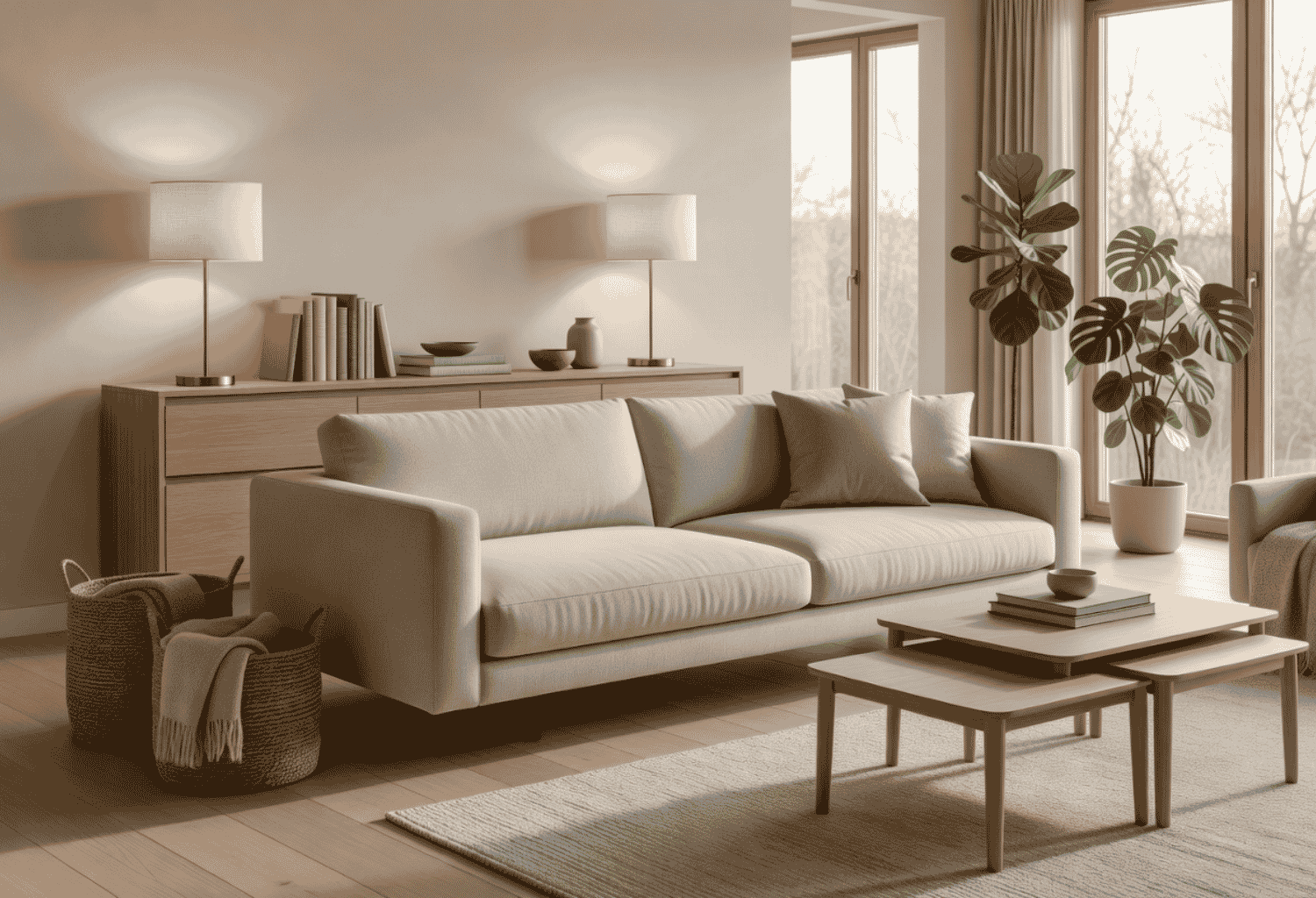
Nesting tables are a small-space classic for a reason. You get two or three surfaces for drinks, laptops, or snacks, but when you don’t need them, they slide together and take up the footprint of a single table. This is far more flexible than one bulky coffee table that’s either in the way or not big enough.
Choose a set with a mix of materials, like wood and metal, so they don’t look like a matching furniture set that’s trying too hard.
Best for: Anyone who hosts occasionally but doesn’t want permanent bulky furniture taking up space daily.
8. Wall-Mounted Media Storage Instead of a TV Stand
Skipping the traditional TV stand altogether and mounting your television directly on the wall frees up an entire strip of floor space. Pair it with a slim floating shelf or a wall-mounted cabinet for your media box and cables, and you’ve eliminated a bulky furniture piece completely.
This works especially well in narrow rooms where every extra inch of floor space matters.
Best for: Narrow living rooms where a traditional TV console would block walking paths.
9. Baskets and Bins for Soft, Loose Items
Not everything needs a cabinet. Blankets, toys, magazines, and throw pillows are often easier to store in open woven baskets that slide under a console table or sit beside the couch. They’re inexpensive, easy to move, and add texture to the room instead of looking like a storage solution.
Stick to two or three sizes so the look stays cohesive instead of cluttered.
Best for: Families with kids’ toys or anyone who wants a low-cost, no-installation storage fix.
10. A Daybed or Sofa with Storage Underneath
If your living room also functions as a guest room or a reading nook, a daybed with drawers underneath solves two problems at once. You get seating, sleeping space, and hidden storage for linens or off-season clothes, all in one footprint. Some sofas now come with the same lift-up storage feature built into the base.
Measure the drawer height before buying if you plan to store bulkier items like pillows or duvets.
Best for: Studio apartments or multi-purpose rooms that need to work double duty.
11. Corner Shelving Units
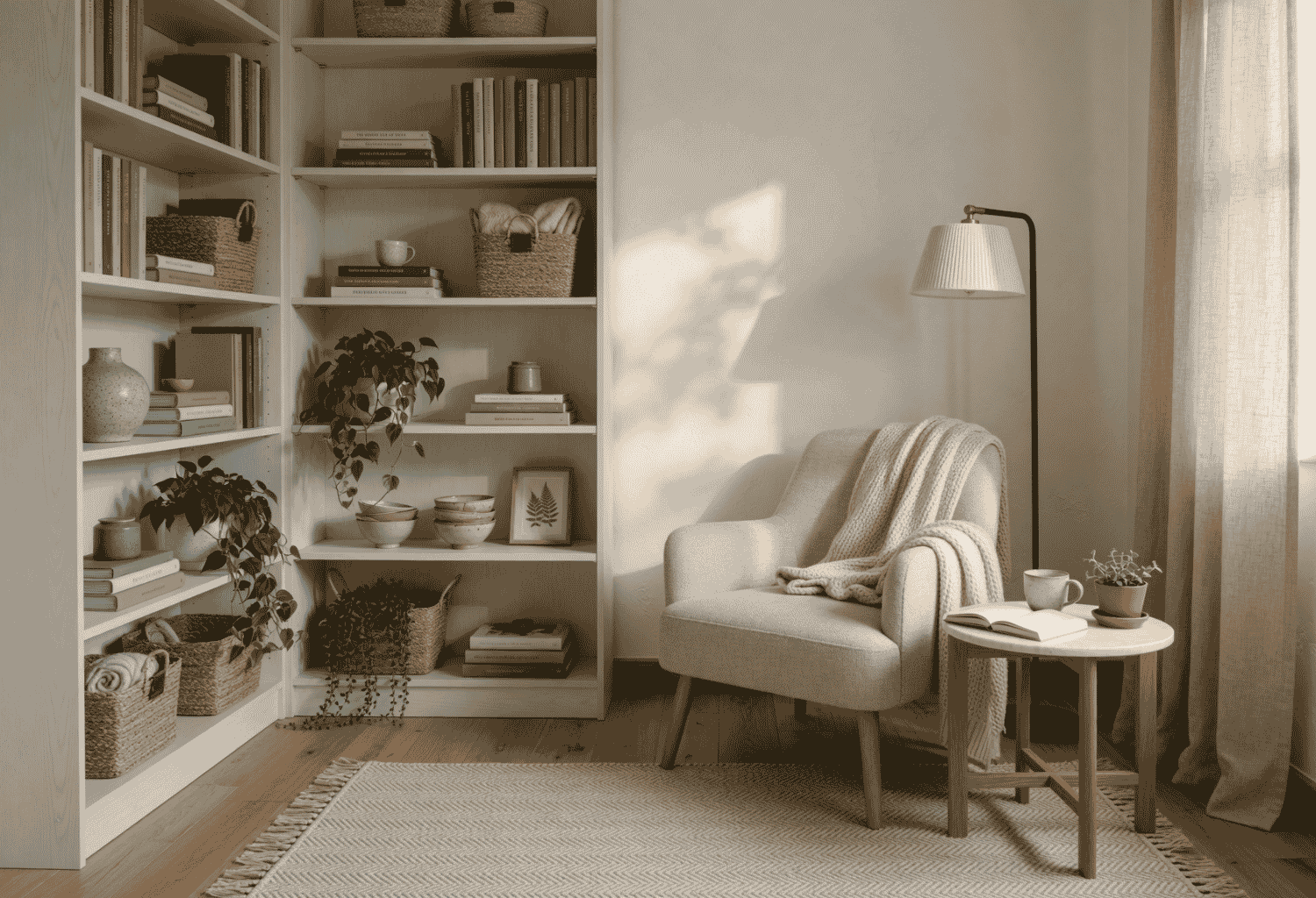
Corners are the most underused real estate in almost every living room. A corner shelf or corner cabinet fits into that dead triangle of space that regular furniture can’t use efficiently. You can find them in freestanding or wall-mounted styles, both of which add storage without narrowing your walking paths.
They’re particularly useful for stashing board games, remotes, or a small speaker system.
Best for: Awkward L-shaped rooms with unused corners near windows or doorways.
12. A Console Table Behind the Sofa
If your couch sits in the middle of the room or floats away from the wall, the space behind it is often wasted. A slim console table fits neatly there, giving you a surface for lamps, decor, and a drawer or shelf underneath for extra storage. It also visually anchors the sofa, so the room feels more intentional.
Keep the table’s depth under 12 inches so it doesn’t crowd the walkway behind the couch.
Best for: Open-concept living rooms where the sofa doesn’t back up against a wall.
13. Over-the-Door Storage Racks
If your living room has a closet or connects to a hallway with a door, over-the-door racks are an easy win. They hang on the existing door frame and hold anything from board games to remote controls to extra throw blankets, all without drilling a single hole. It’s one of the simplest storage options to install and remove.
This is a great rental-friendly fix since it requires no permanent changes to the wall or door.
Best for: Renters who need extra storage without violating a no-drill lease policy.
14. Modular Sectionals with Built-In Storage Chaise
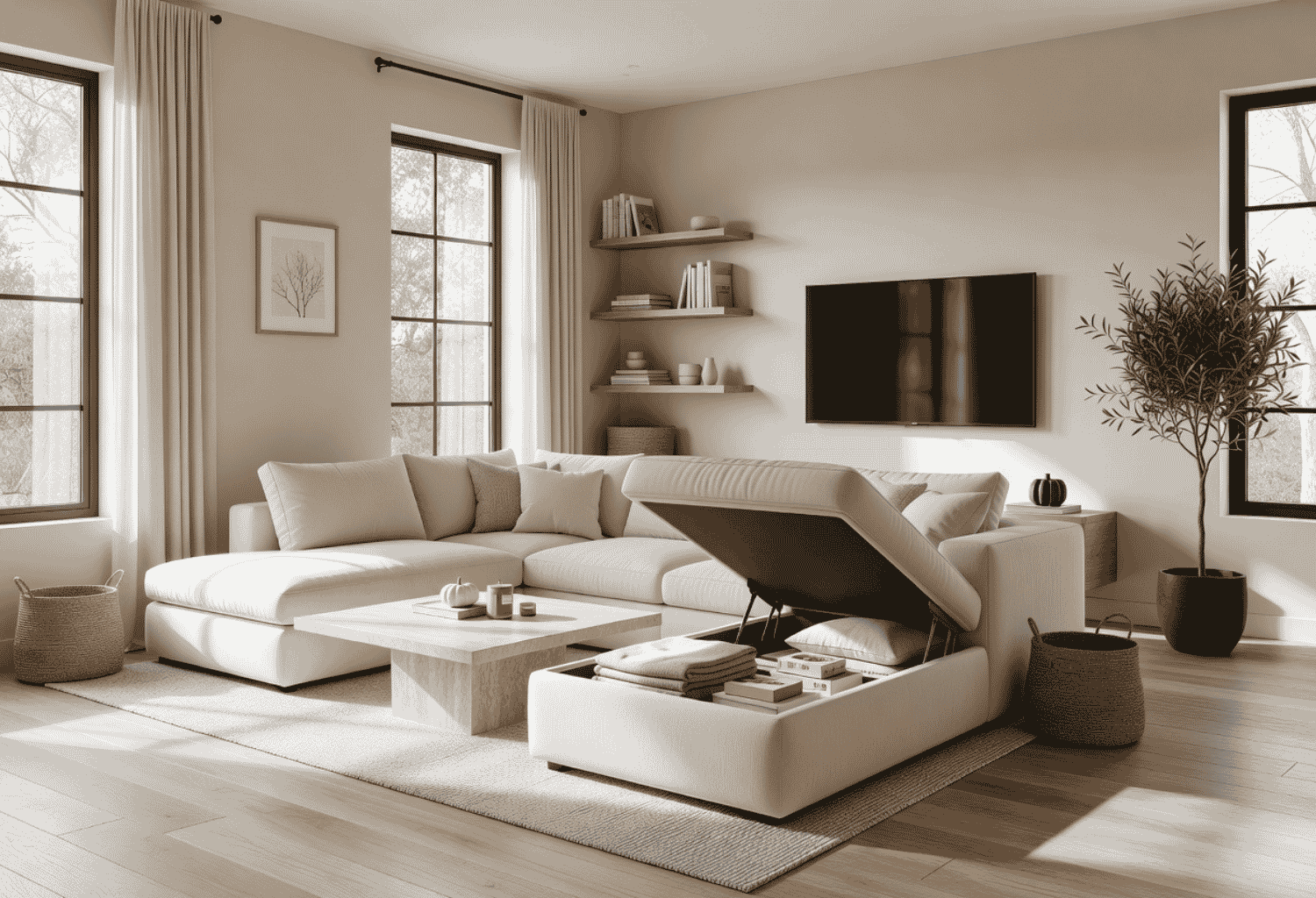
Some sectional sofas come with a chaise section that lifts open, functioning almost like a giant ottoman with a couch attached. You get generous seating for movie nights along with a hidden compartment big enough for bedding, board games, or seasonal decor. It’s a smart pick if you’re furnishing the room from scratch.
Because sectionals are modular, you can also rearrange the pieces later if your layout changes.
Best for: New apartments or first-time furniture buyers who want seating and storage combined.
15. Slim Rolling Carts for Flexible Storage
A narrow rolling cart, the kind often used in kitchens, works surprisingly well in a living room too. Roll it beside the couch to hold remotes and snacks during movie night, then tuck it into a corner or behind furniture when you need the space back. Its wheels make it one of the few storage pieces you can actually relocate on demand.
Look for one with two or three tiers so you can separate items by category.
Best for: Small living rooms where flexibility matters more than a fixed storage spot.
Final Thoughts
Storage in a small living room comes down to using space that’s usually ignored — walls, corners, and the area under and behind furniture. You don’t need to gut the room or buy an entirely new furniture set to make it work. Start with one or two small living room storage ideas from this list, like a storage ottoman or floating shelves, and build from there as you figure out what your daily routine actually needs.
The goal isn’t to hide every single item you own. It’s to give everything a home so the room feels calm the moment you walk in instead of like a space you’re constantly fighting to keep tidy.