
30 Green Living Room Ideas That Feel Fresh
Green is having a real moment in home design, and it’s easy to see why. It’s the one color that works in almost any room because it’s borrowed straight from nature — and your living room is no exception. If you’ve been scrolling through inspiration boards wondering how to bring green living room ideas into your own space without it feeling like a themed room, you’re in the right place.
This list covers everything from bold emerald accent walls to soft sage furniture, plant-heavy corners, and clever ways to mix green with wood, brass, and neutral tones. Whether you’re planning a full renovation or just want to swap a few pieces, these ideas are practical enough to actually pull off. Let’s get into it.
1. Start With a Sage Green Accent Wall
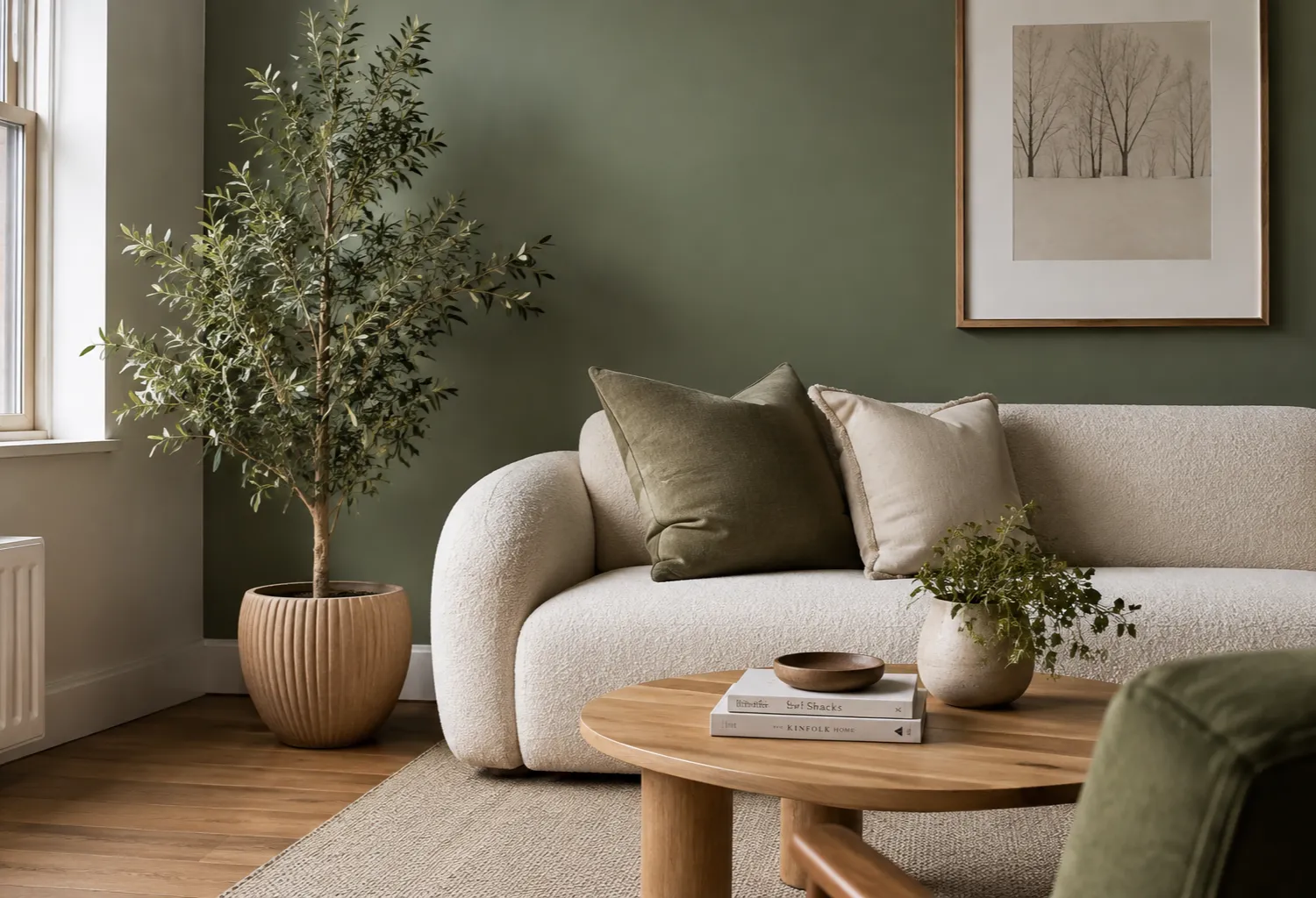
Sage green is one of the most forgiving shades you can paint a wall, mainly because it sits right between green and gray, which means it won’t clash with your existing furniture or flooring. Pick one wall — usually the one behind your sofa or the one you see first when you walk in — and paint it in a matte or eggshell finish, since flat sage tends to look chalky under artificial light. This works especially well in living rooms with lots of natural light, where the color can shift subtly throughout the day, and it pairs beautifully with cream sofas, rattan furniture, and warm wood floors.
2. Go Bold With a Deep Emerald Feature Wall
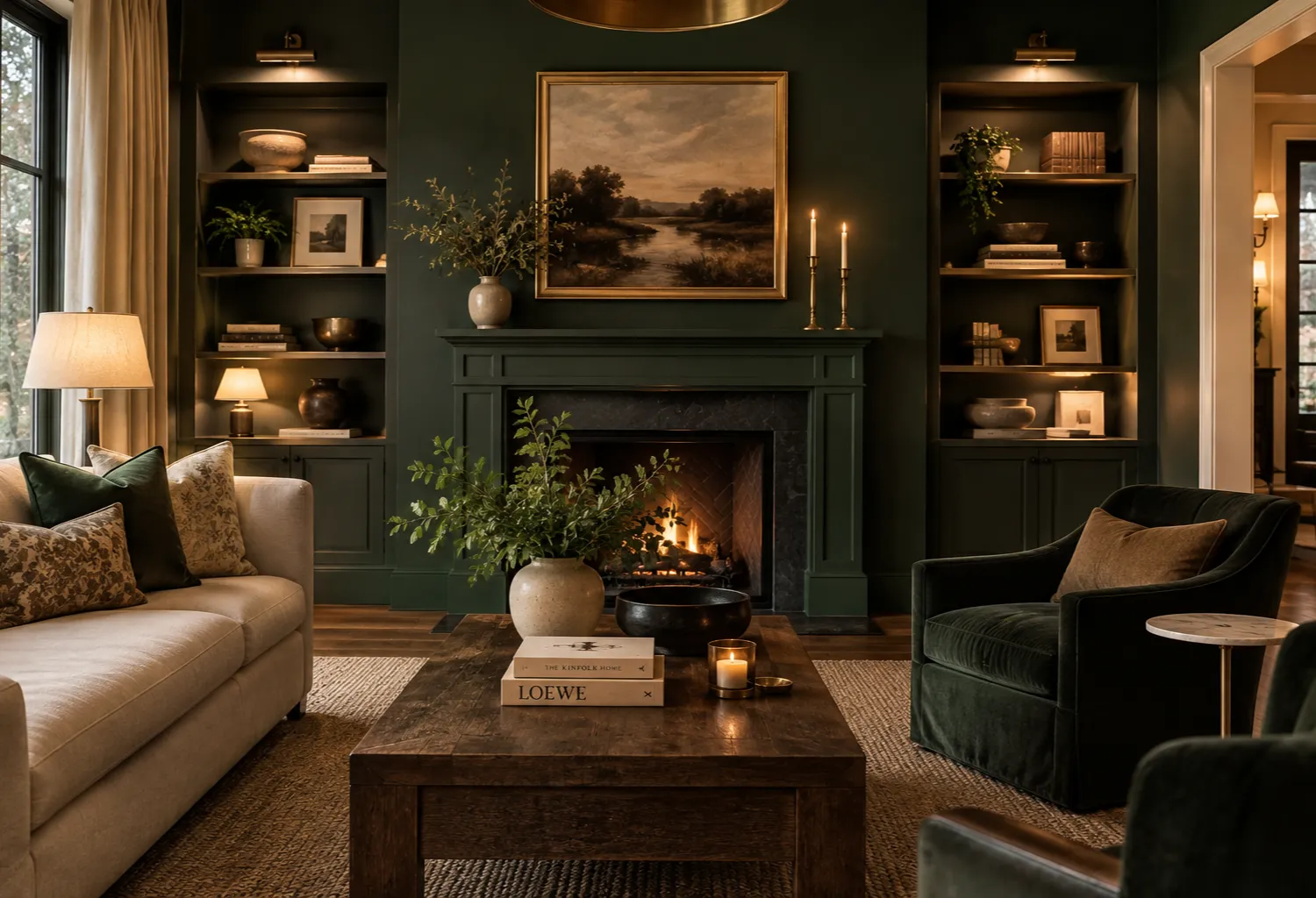
If sage feels too safe, emerald green makes a much stronger statement and instantly gives a living room a sense of depth and drama. Because it’s such a saturated color, it works best in rooms with good ceiling height or as a backdrop for a fireplace, built-in shelving, or a gallery wall, where the dark tone helps frame the objects in front of it. Balance the intensity with brass or gold hardware, warm lighting, and lighter furniture like a cream boucle sofa so the room doesn’t feel closed in. Emerald also photographs beautifully in the evening, which is worth considering if this is a room you entertain in.
3. Choose a Green Velvet Sofa as the Anchor Piece
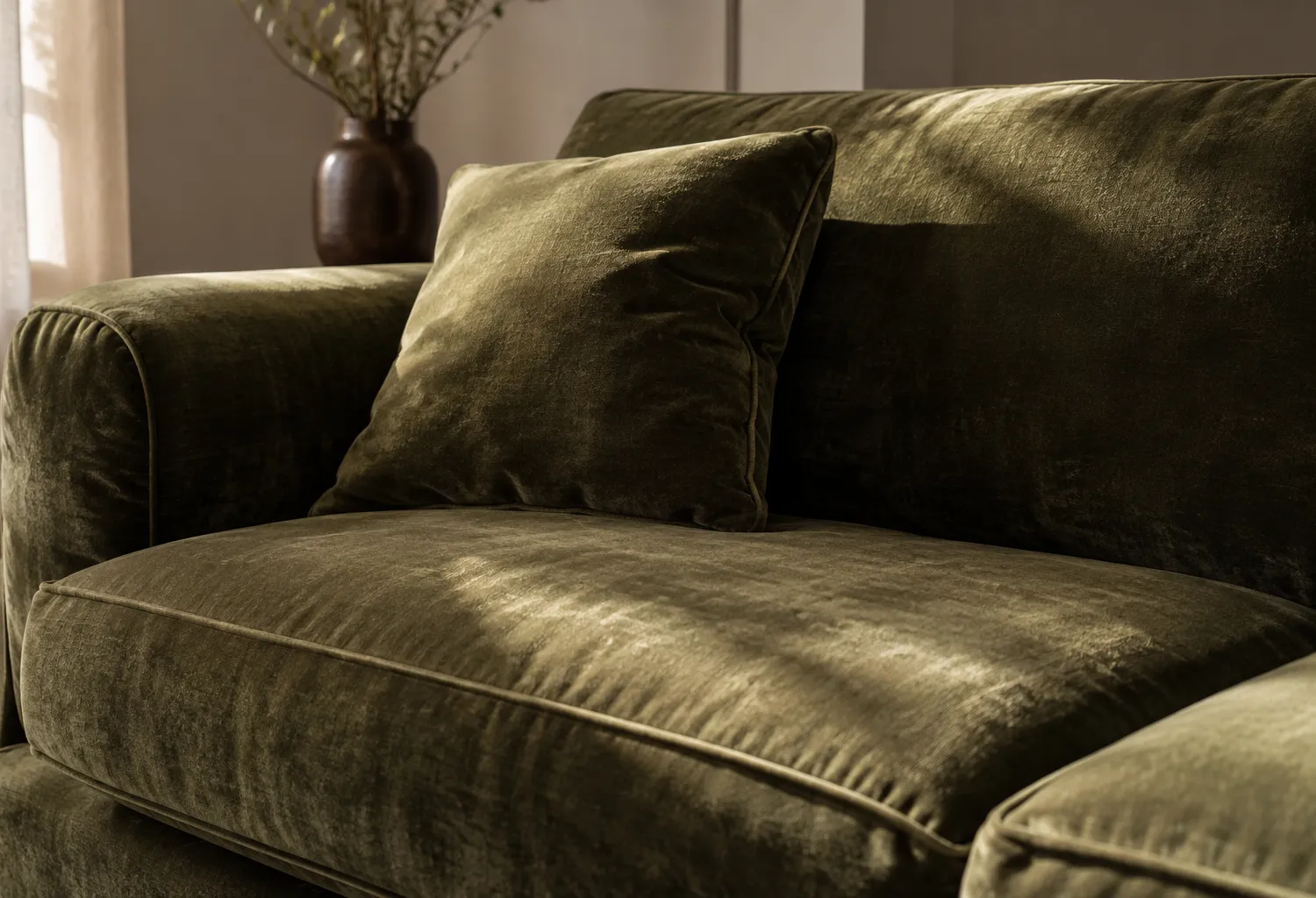
A green velvet sofa does a lot of heavy lifting in a living room because it introduces color, texture, and a slightly luxe feel all at once, without requiring you to repaint anything. Olive, forest, and bottle green are the most versatile shades since they read as neutral from a distance but still add richness up close. Velvet also catches light differently depending on the angle you’re viewing it from, which gives even a simple sofa a sense of movement. If you’re nervous about committing to a large green piece, start with a single accent chair in the same fabric family before going all in on the sofa.
4. Layer in Botanical Prints and Nature-Inspired Art
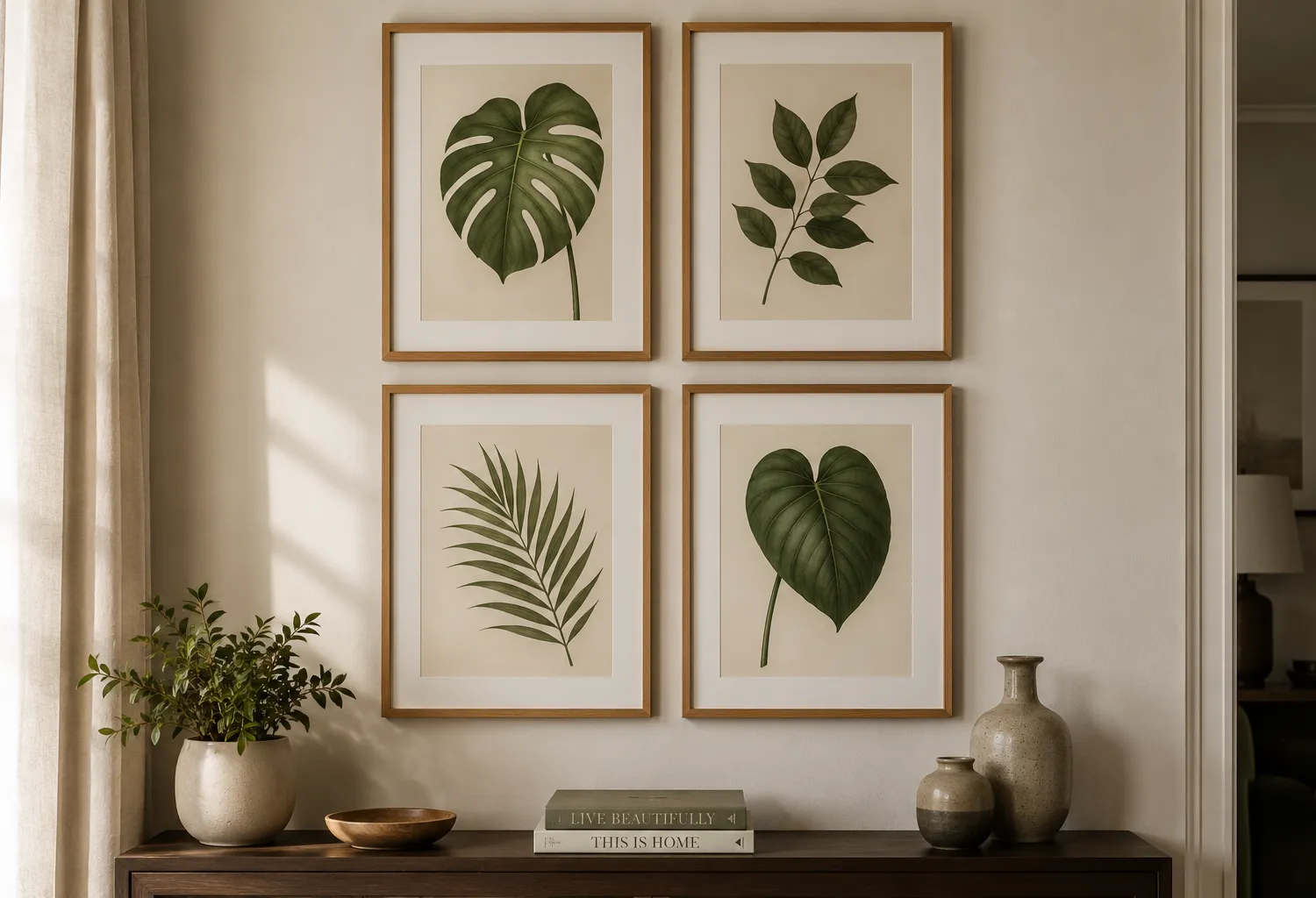
Wall art is one of the easiest ways to reinforce a green living room theme without touching paint or furniture at all. Botanical prints, leaf illustrations, and abstract landscape paintings all work well, especially when framed in natural wood or thin black metal frames that don’t compete with the artwork itself. Try grouping three or four smaller prints in a cluster rather than hanging one oversized piece, since a gallery-style layout tends to feel more curated and less like a themed decision. This is also a low-commitment way to test whether you actually like a lot of green in the room before investing in bigger pieces.
5. Mix Multiple Shades of Green Instead of Just One
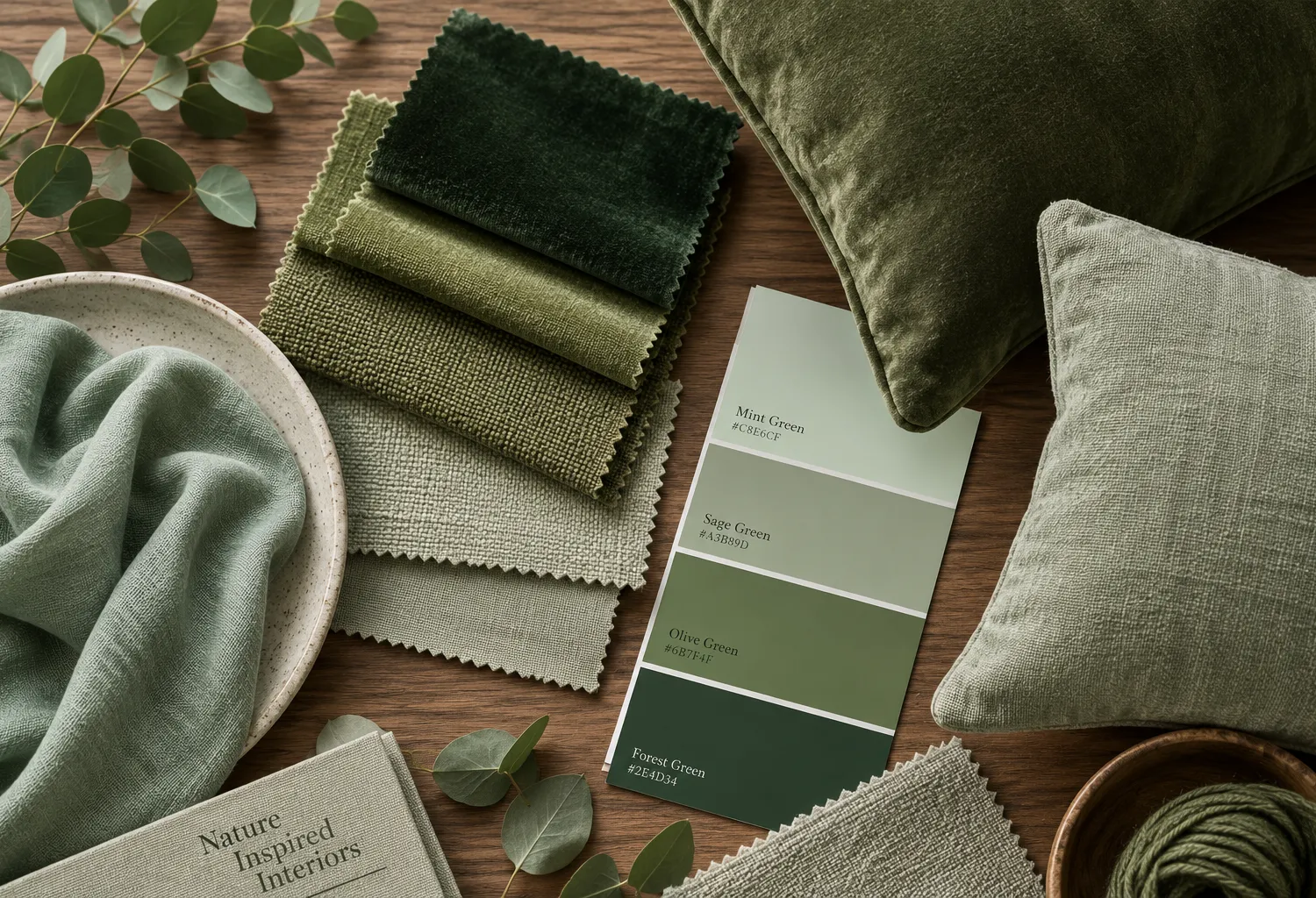
A common mistake is treating “green” as a single color when it actually spans dozens of distinct tones — sage, olive, forest, emerald, mint, and moss all behave differently in a room. Using two or three shades together, rather than matching everything exactly, creates depth and stops the space from feeling flat or overly coordinated. A good starting formula is a muted green for large surfaces like walls or sofas, a deeper green for accent pieces like throw pillows or a rug, and a brighter green for small details like books or ceramics. Think of it the same way you’d layer neutrals — no two whites in a room are usually identical either.
6. Bring in Live Plants for an Organic Layer
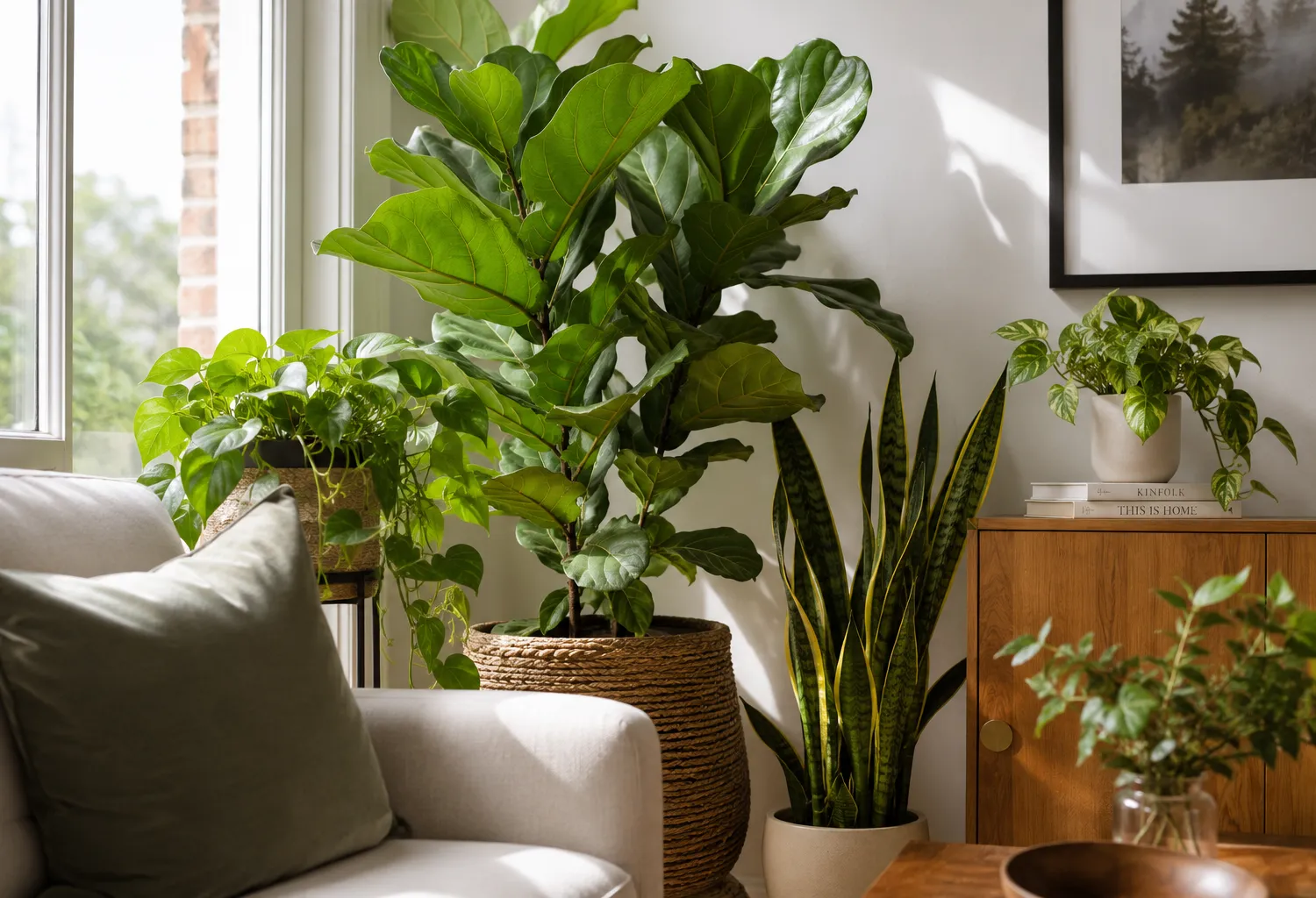
No green living room list would be complete without actual plants, and they do something paint and fabric can’t — they add life, movement, and a sense of freshness to the room. Larger floor plants like a fiddle leaf fig, rubber plant, or areca palm work well in corners that feel empty, while trailing plants like pothos or English ivy look great on shelves or hanging near a window. If you don’t have a lot of natural light, snake plants and ZZ plants are nearly impossible to kill and still deliver that lush, green presence. Grouping plants of different heights together, rather than placing them evenly around the room, tends to look far more natural.
7. Add a Green Area Rug to Ground the Space
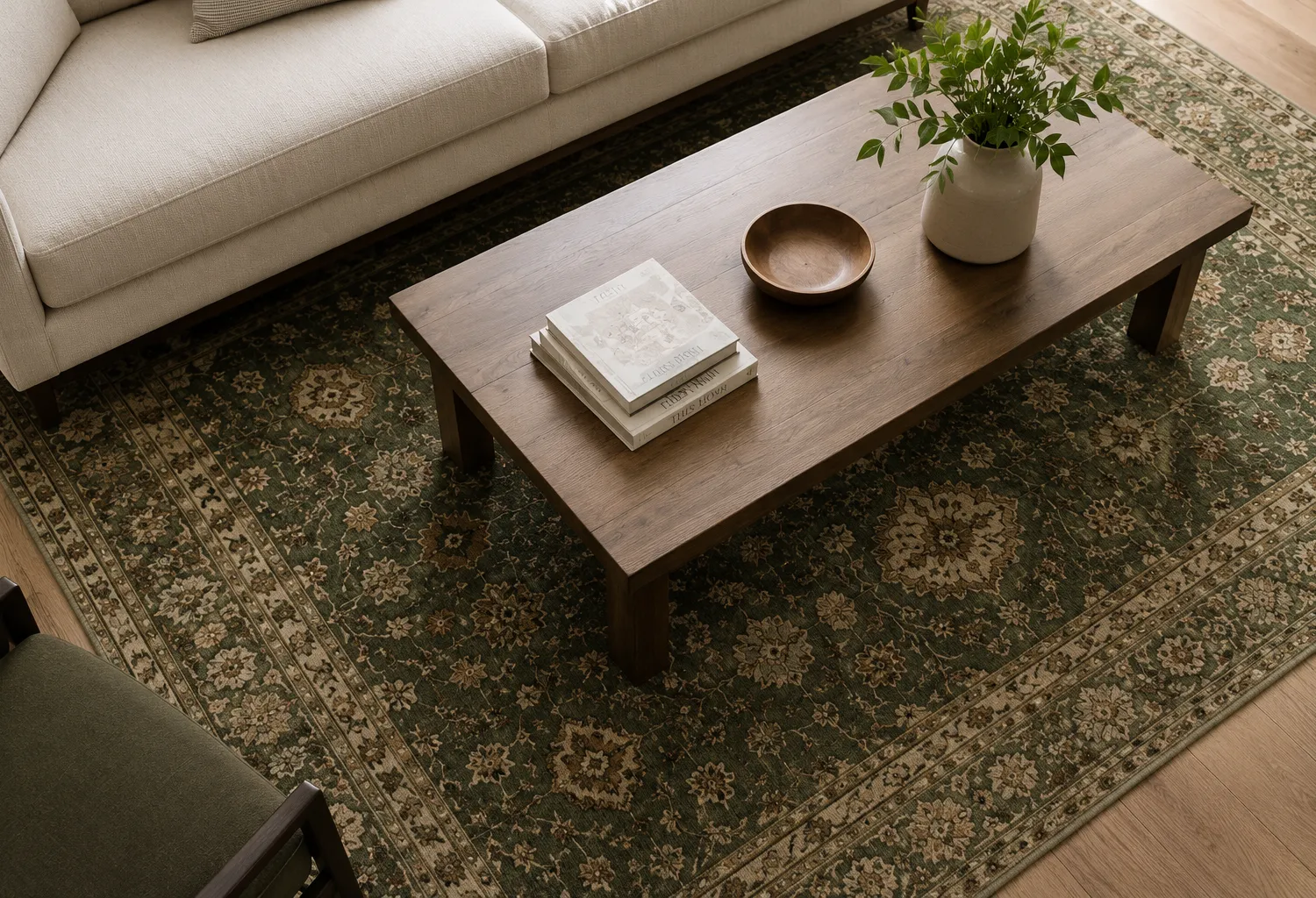
A rug is one of the fastest ways to introduce green into a living room without a major commitment, and it works especially well if your walls and furniture are already neutral. Patterned rugs in green tones—think Moroccan-style motifs or subtle botanical patterns—hide dirt better than solid colors and add texture underfoot. If your sofa or walls are already green, a solid neutral rug in cream, tan, or gray helps balance the room so it doesn’t feel like too much of one color. Wool rugs tend to hold color better over time than synthetic blends, which is worth factoring in if you’re investing in a larger size.
8. Use Green Curtains to Frame Your Windows
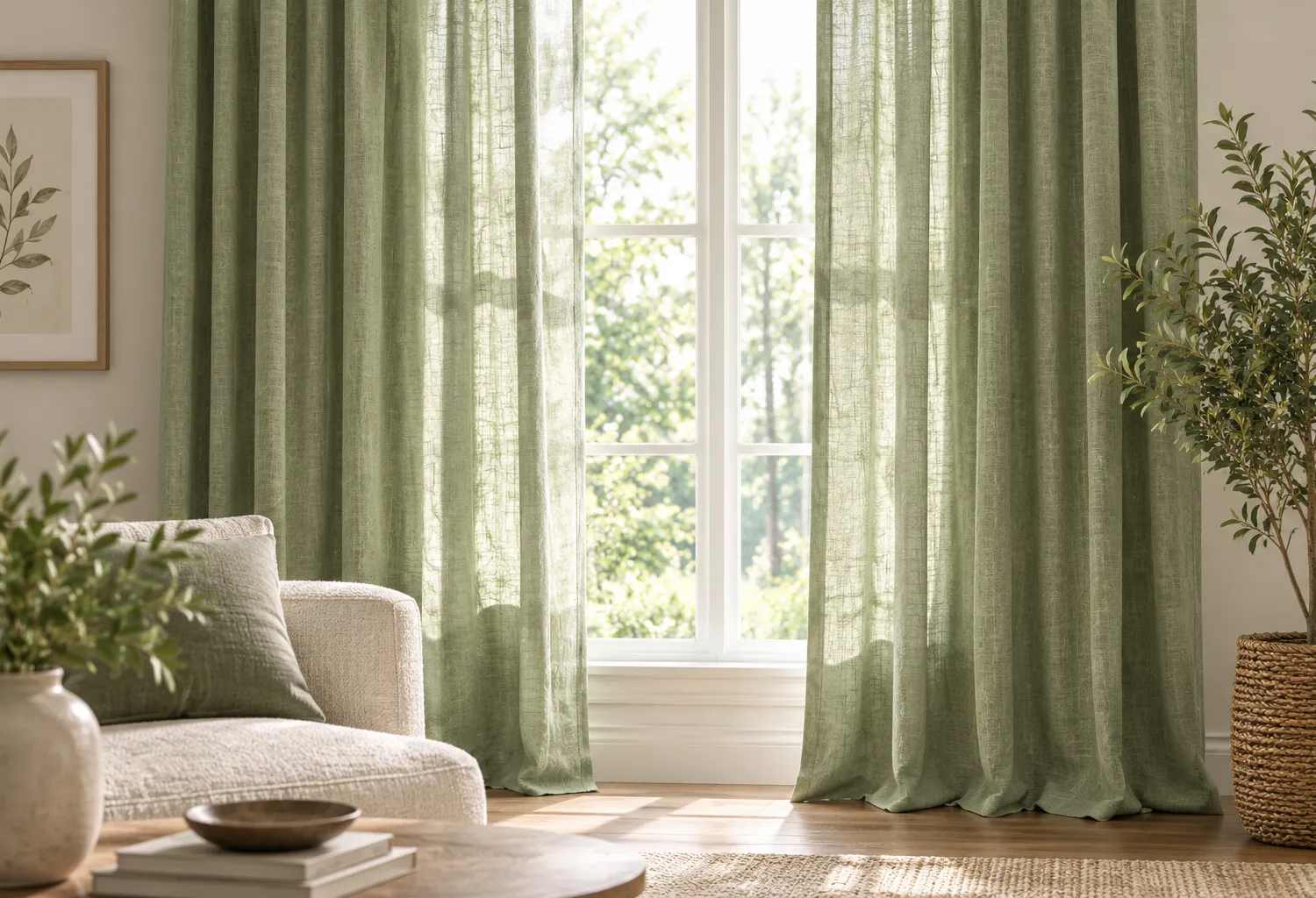
Curtains are often an afterthought, but green drapery can completely change how a living room feels, especially when it’s the same shade as an accent wall or sofa for a cohesive look. Floor-length curtains in a soft sage or olive linen add a relaxed, textural quality, while heavier velvet curtains in a deep forest green feel more formal and help with sound absorption in larger rooms. Hanging curtains close to the ceiling rather than right above the window frame makes the room feel taller, which is a simple trick that pairs well with any bold color choice. This is also one of the easier updates to reverse later if your taste changes.
9. Incorporate Green Through Throw Pillows and Blankets
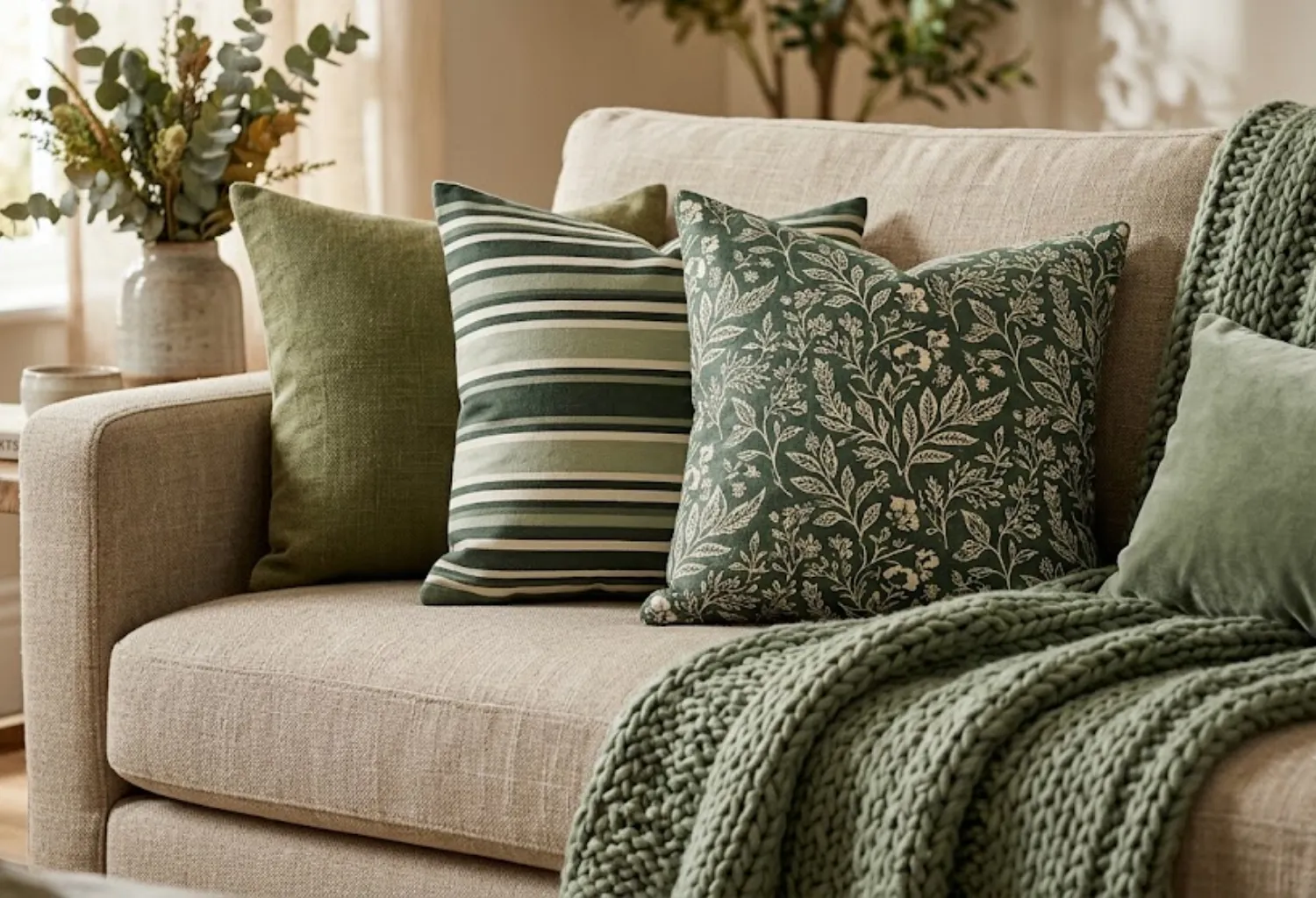
If you’re not ready to commit to green furniture or paint, textiles are the lowest-risk entry point into this color palette. Mixing two or three different green pillow covers—a solid, a stripe, and a subtle pattern—adds visual interest without overwhelming a neutral sofa. Chunky knit throws in sage or moss green also add texture and warmth, which matters if your living room leans toward cooler tones like gray or white. Because pillow covers and throws are inexpensive to swap out, this is a great way to experiment with different green shades before deciding what you actually want to live with long-term.
10. Pair Green With Warm Wood Tones
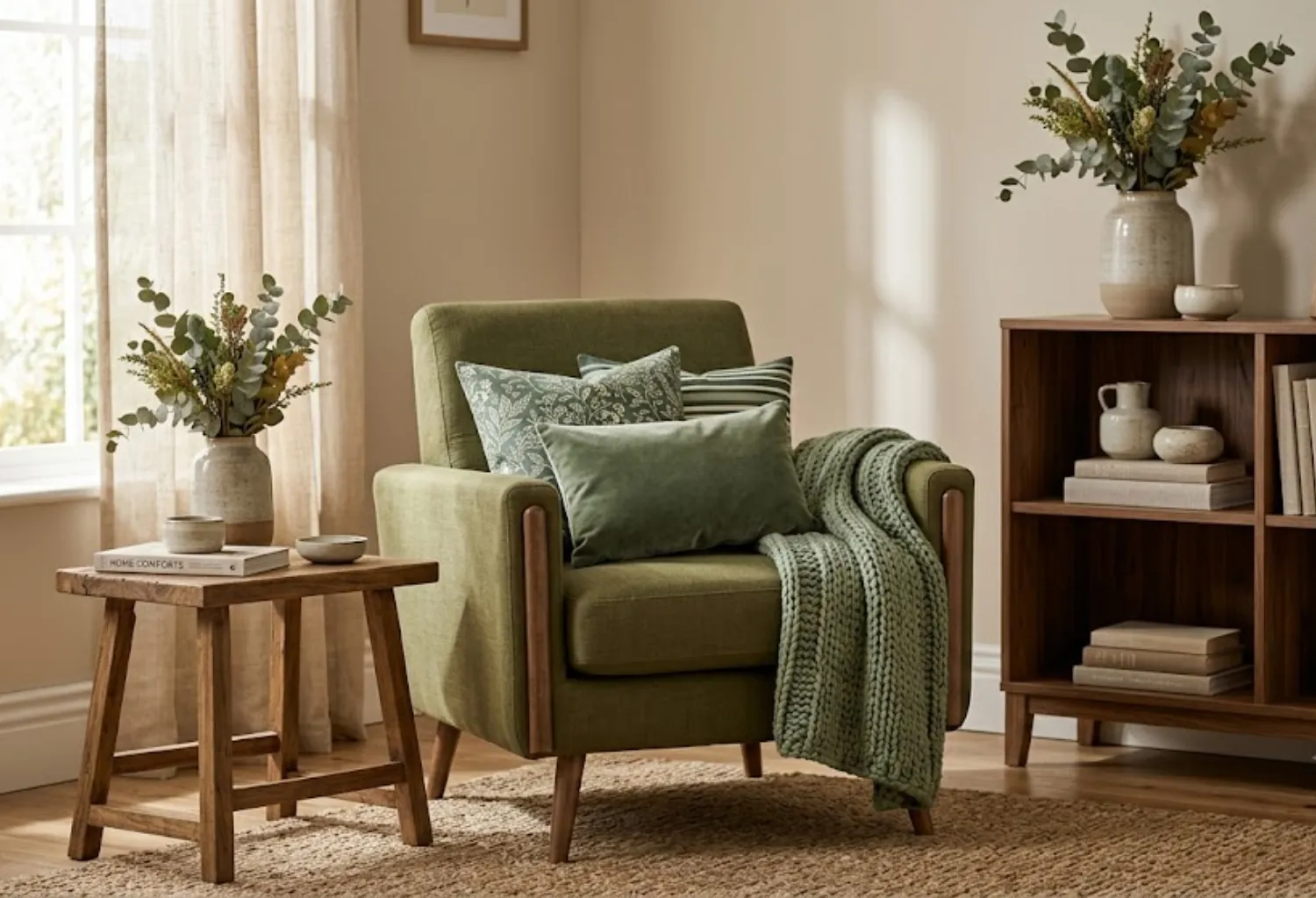
Green and wood are a natural match because they both come from the same source material — nature — and together they create a warm, grounded feeling that avoids the coldness some green rooms can have. Warm woods like oak, walnut, and teak work particularly well with olive and sage green, while lighter woods like ash or birch pair nicely with brighter, fresher greens like mint or emerald. This combination shows up in coffee tables, TV consoles, shelving units, and even wood-framed mirrors, and it’s a reliable way to keep a green room from feeling too cold or clinical. If you’re building a room from scratch, choosing your wood tone before your green shade often makes the rest of the decisions easier.
11. Add Brass or Gold Accents for Contrast
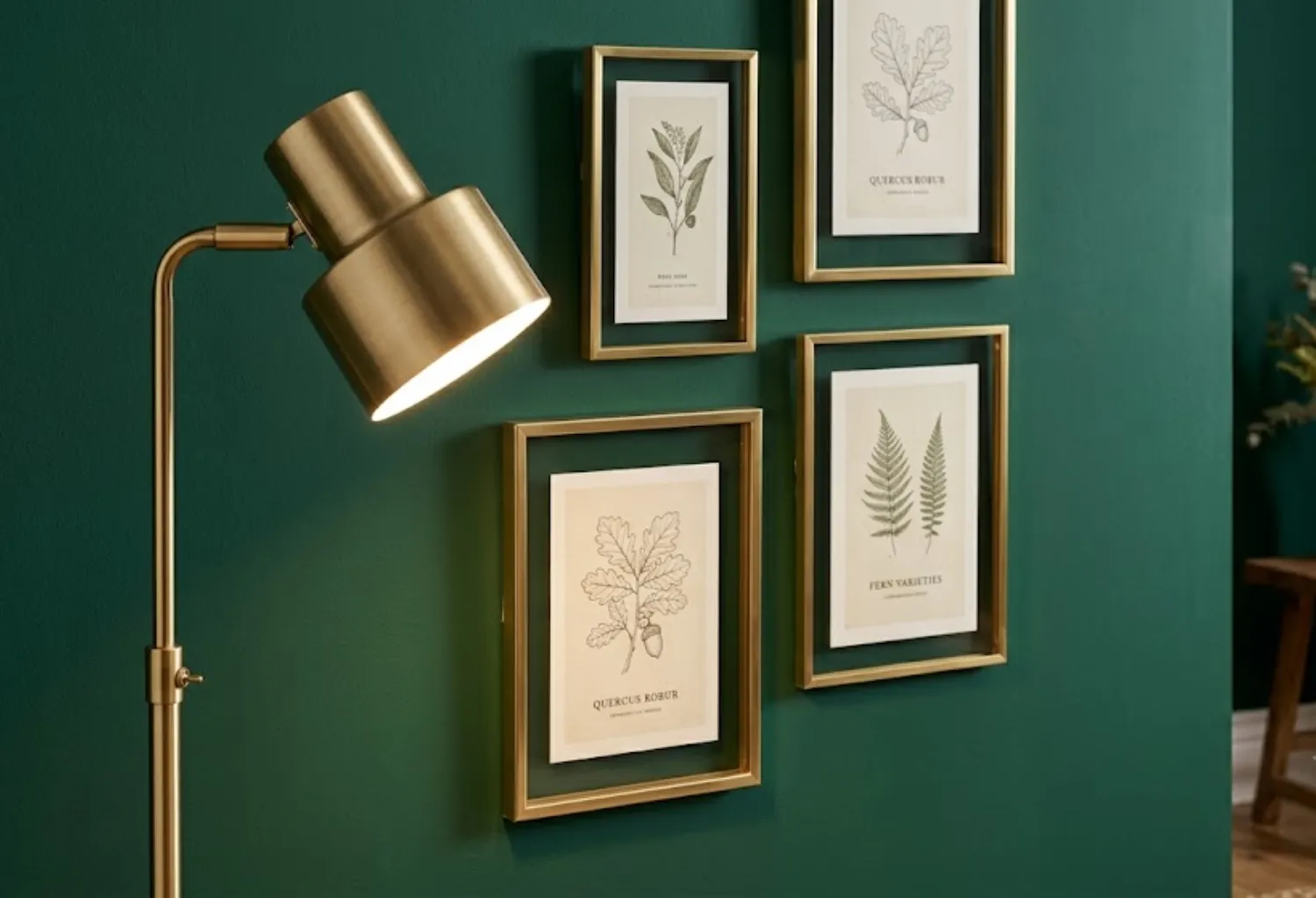
Green pairs exceptionally well with metallics, and brass or gold in particular brings out the richness in deeper greens like emerald and forest. Small touches — a brass floor lamp, picture frames, drawer pulls, or a gold-rimmed mirror — go a long way without turning the room into something that feels overly glamorous or dated. This combination works because brass has warm undertones that echo the warmth already present in most greens, unlike cooler metals like chrome or stainless steel, which can make a green room feel more clinical. If you already have silver or black hardware throughout your home, you don’t need to replace everything — even one or two brass pieces will read intentionally.
12. Try a Green Kitchen-Living Room Transition
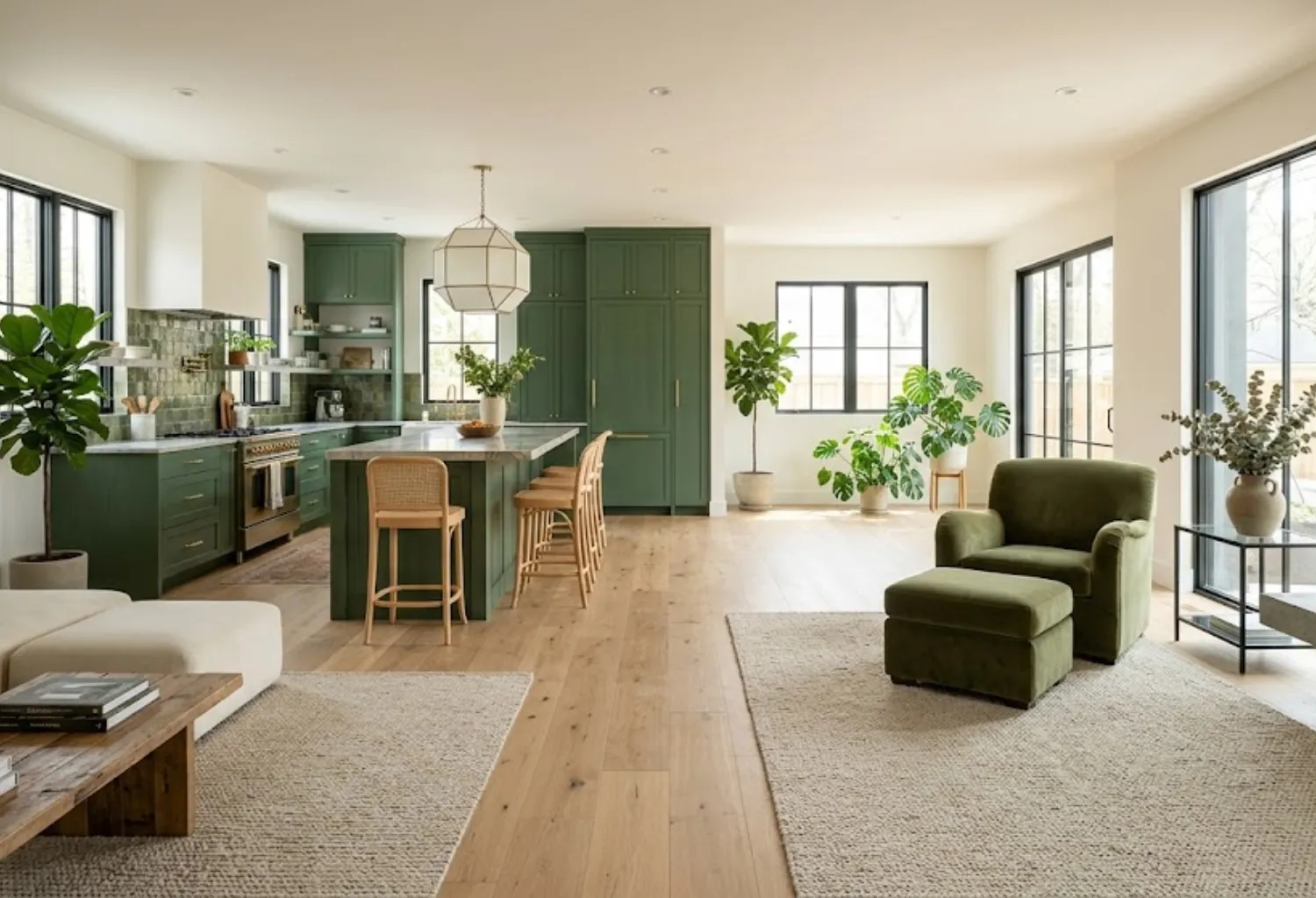
In open-concept homes, carrying green from the kitchen into the living room creates a sense of flow instead of two spaces that feel disconnected. This doesn’t mean painting everything the same shade — it could be green cabinetry in the kitchen paired with a green accent chair or plant styling in the living room, so the color feels intentional rather than accidental. A shared color palette between open spaces also makes smaller homes feel larger, since the eye isn’t stopped by an abrupt change in tone. If you’re renovating both spaces at once, this is worth planning early, since it affects everything from cabinet color to furniture selection.
13. Use Green Built-In Shelving or Cabinetry
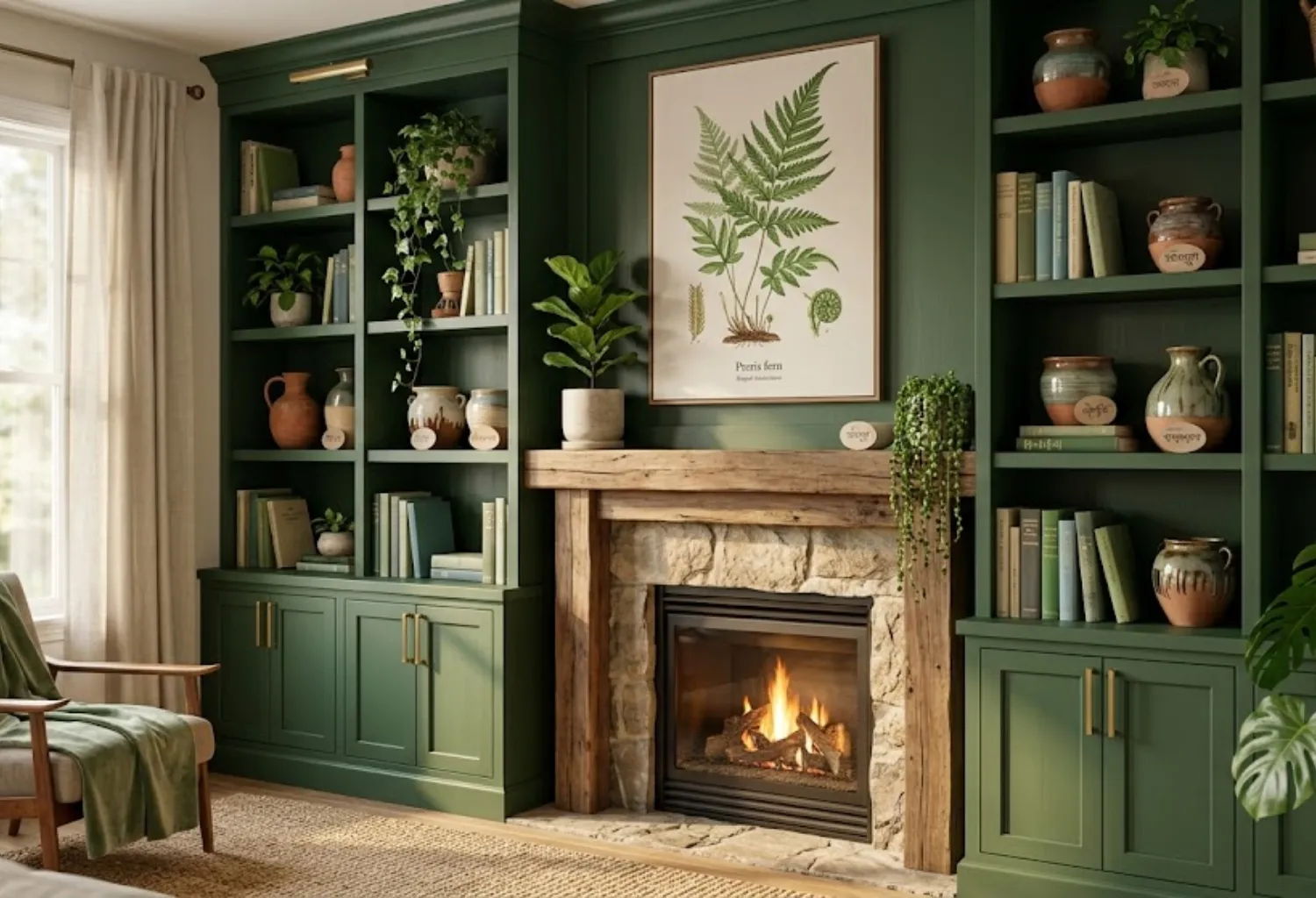
Built-in shelving painted in a deep green — think hunter or forest — instantly becomes a focal point and gives you a place to display books, art, and decorative objects against a rich backdrop. This works particularly well in living rooms with a fireplace, where flanking shelves in green create symmetry and visual weight on either side. Unlike an accent wall, painted built-ins are more forgiving because they’re broken up by shelves, objects, and negative space, so the color feels less overwhelming even in a smaller room. If you’re not ready to commit to custom millwork, a single green bookshelf or cabinet can achieve a similar effect on a smaller budget.
14. Incorporate Green Ceramics and Vases
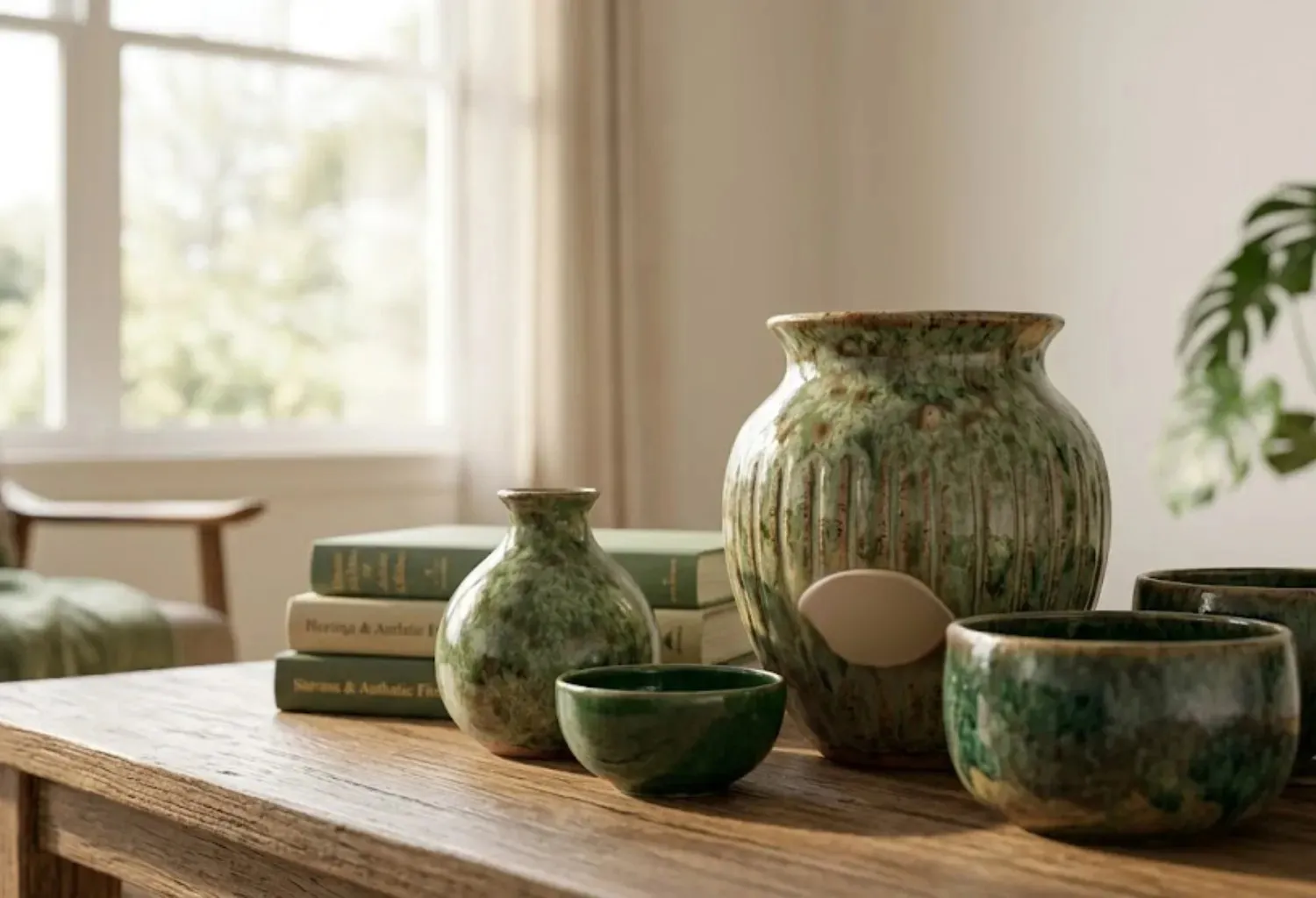
Small decorative objects are an underrated way to weave green throughout a room without a big commitment. Ceramic vases, bowls, and sculptural objects in green glazes add color at eye level and on shelves, coffee tables, and side tables, filling in the gaps between larger furniture pieces. Look for pieces with variation in the glaze—mottled or reactive finishes tend to look more artisanal than flat, uniform color—since they catch light differently and add visual texture. This is also one of the easiest ways to refresh a room seasonally, since ceramics are inexpensive to swap out compared to furniture or paint.
15. Choose a Green Accent Chair Instead of a Full Sofa
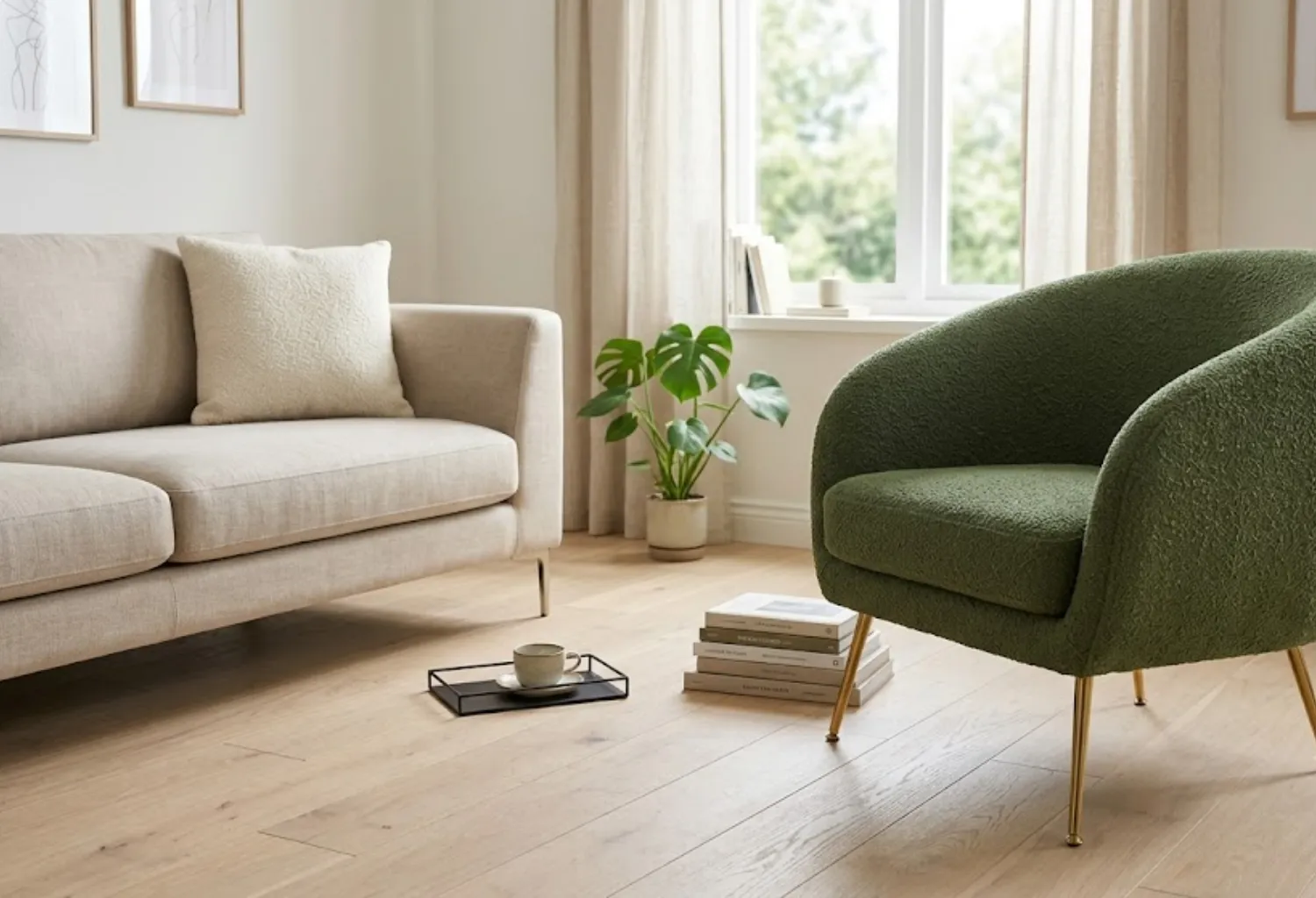
If a green sofa feels like too big a leap, a single accent chair lets you test the color in a smaller, lower-stakes way. Bouclé, velvet, and linen all work well as upholstery choices, and a curved or rounded chair shape tends to soften a bold color even further. Placing the chair at an angle to the sofa, rather than directly across from it, also makes the layout feel more relaxed and less like a matched furniture set. This approach works particularly well in rented apartments, where painting walls isn’t an option but swapping furniture is.
16. Add a Green Glass Coffee Table or Side Table
Colored glass furniture is a subtle way to bring green into a room without it dominating the space, since glass is naturally translucent and lets light pass through. A smoked green glass coffee table or a set of green glass side tables adds just enough color to tie into a broader green theme, while still feeling light and airy rather than heavy. This works especially well in smaller living rooms, where solid, opaque furniture in bold colors can start to feel cramped. Pair it with metal or wood legs rather than an all-glass base for a bit more visual grounding.
17. Use a Green Ottoman as a Flexible Accent
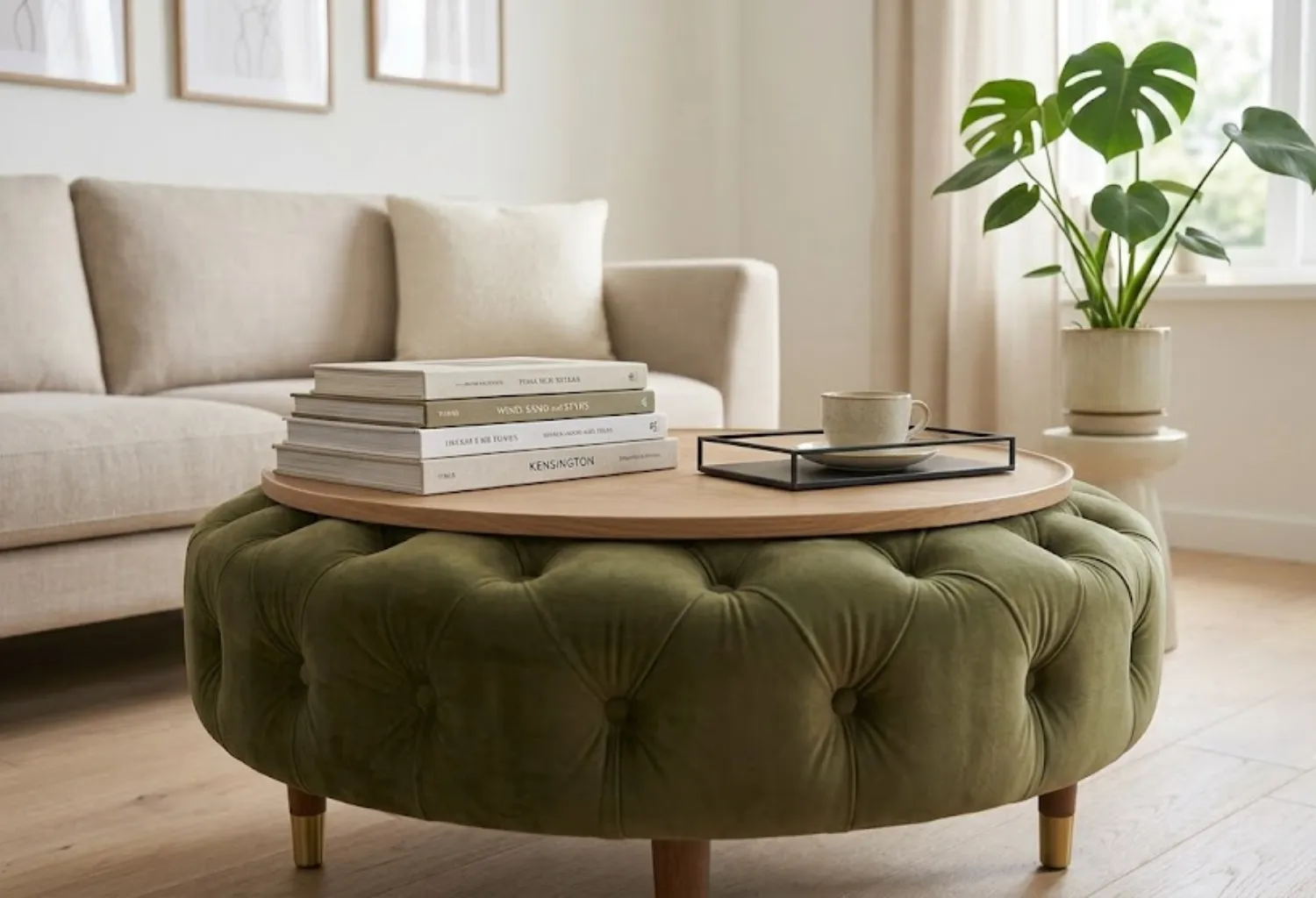
An ottoman is one of the most functional pieces you can add to a living room, and a green one does double duty as both extra seating and a color statement. Velvet or leather ottomans in olive or emerald hold up well to daily use and can be paired with a tray for coffee table duty when needed. Round ottomans, in particular, soften a room full of straight-edged furniture and make it easier to move around, especially in smaller layouts. If you already have a neutral sofa and rug, a green ottoman is often enough to signal a green living room without needing any other major changes.
18. Create a Reading Nook With a Green Chair and Plants
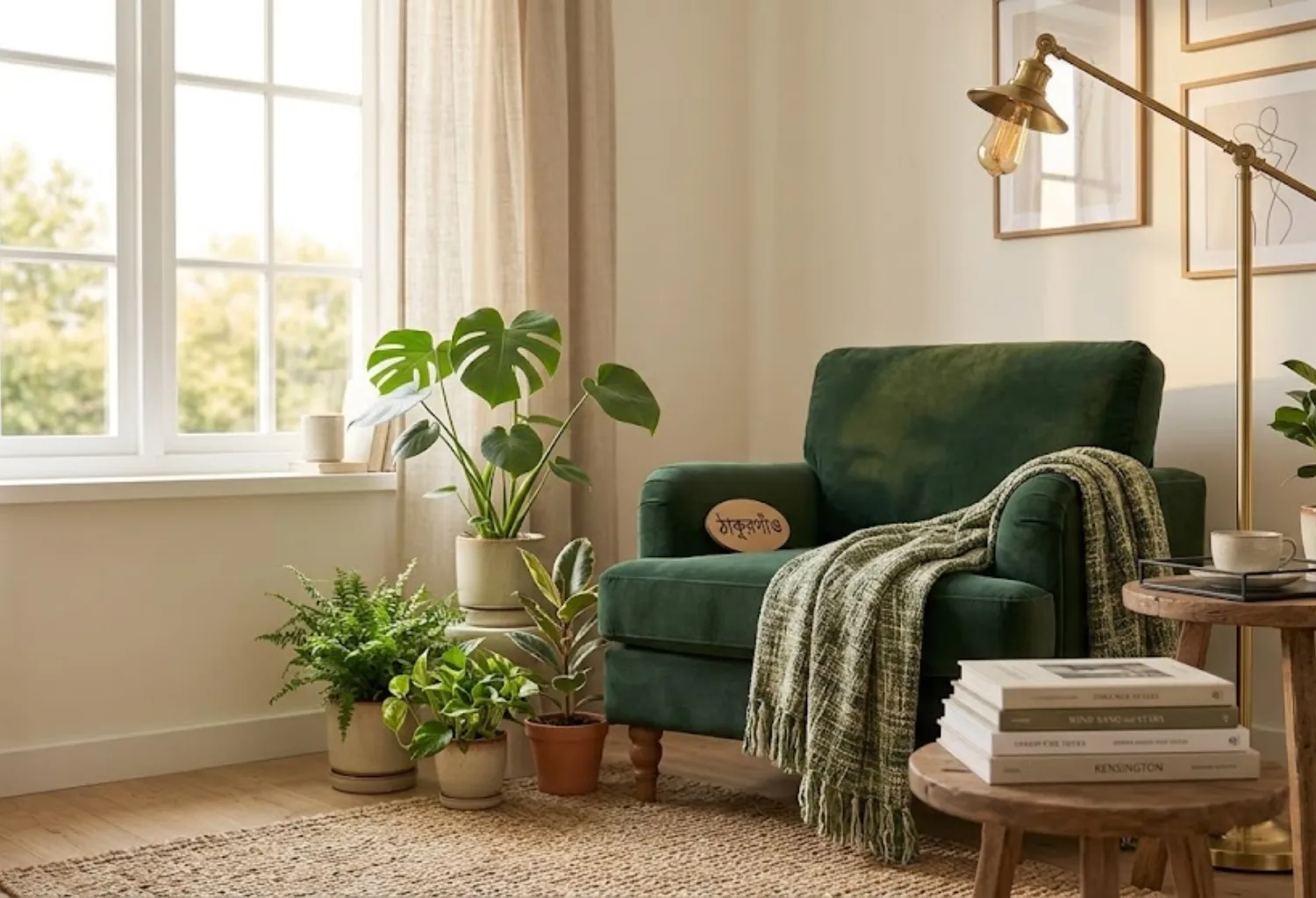
If your living room has an underused corner, turning it into a small reading nook with a green armchair, a floor lamp, and a cluster of plants makes the space feel purposeful instead of empty. Adding a small side table for a lamp and a stack of books completes the look and gives the corner a clear function. This is also a great place to experiment with a bolder green, since the smaller scale of the nook makes an intense color feel cozy rather than overwhelming. A nook like this works especially well near a window, where natural light benefits both the plants and your reading.
19. Pair Green With Terracotta for a Warm, Earthy Palette
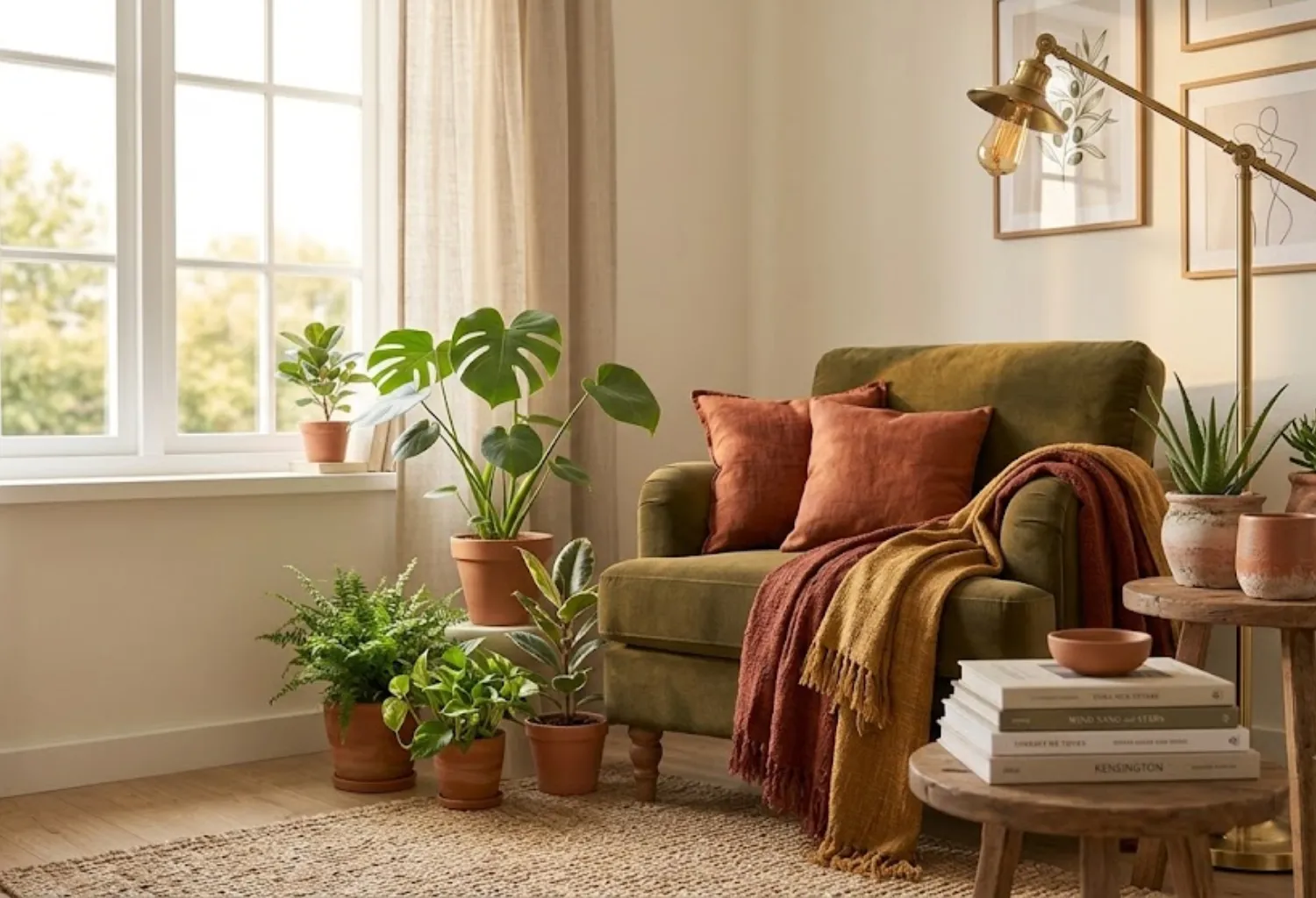
Green and terracotta is a combination borrowed from Mediterranean and Southwestern design, and it brings real warmth into a living room, especially compared to green paired with cooler grays or whites. Terracotta pots, cushions, or even a terracotta-toned accent wall alongside olive or sage green creates an earthy, sun-baked feel that works well in rooms with a lot of natural light. This palette also tends to age well stylistically, since it’s rooted in natural materials rather than a passing color trend. If you already lean toward warm neutrals in your home, this combination will likely feel more cohesive than a cooler-toned green palette.
20. Incorporate Green Through a Statement Light Fixture
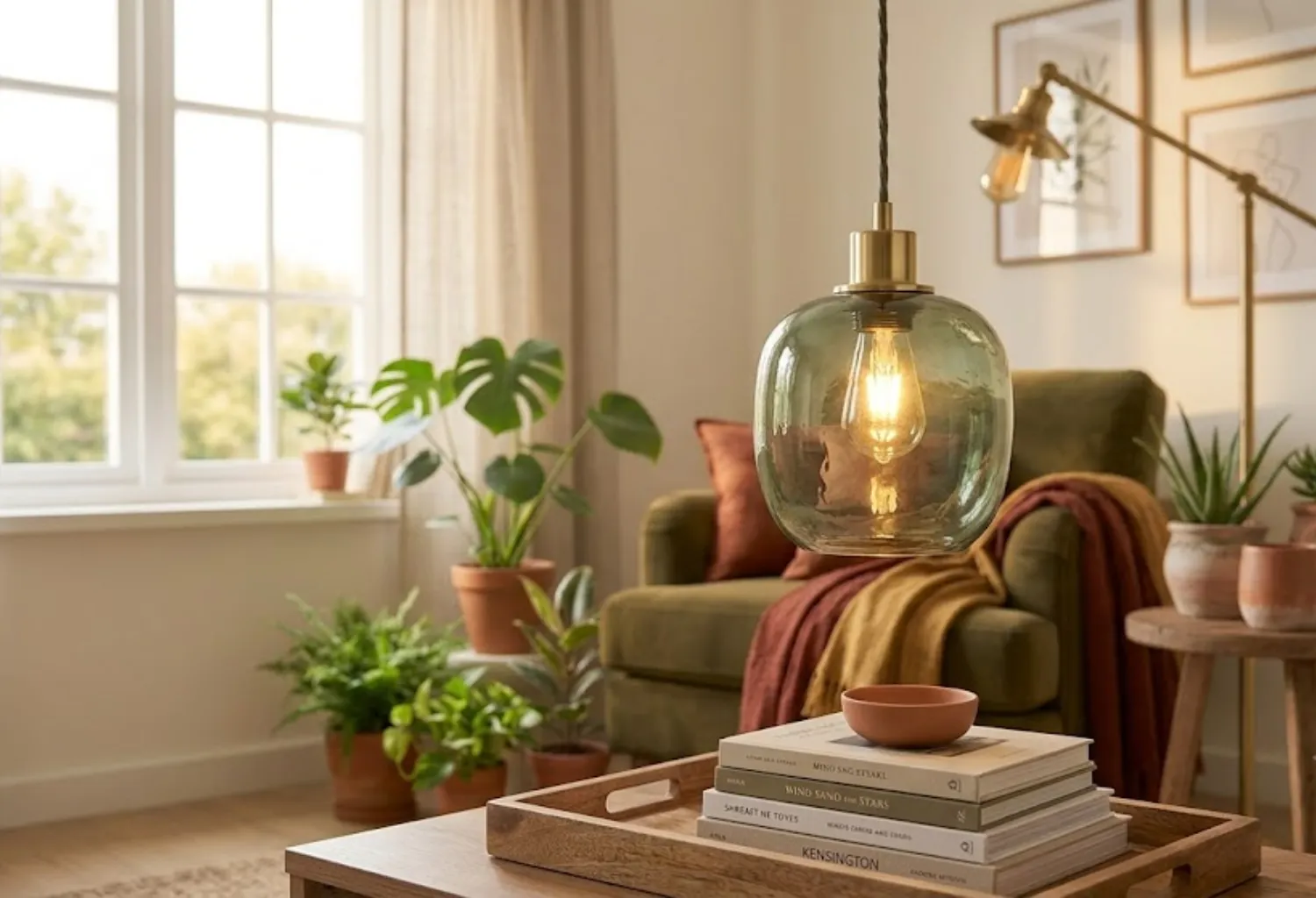
Lighting is often overlooked as a color opportunity, but a green pendant light, lamp shade, or sconce can be a striking focal point, especially over a coffee table or in a reading corner. Glass pendant lights in a smoky or sage green cast a subtle tint on the room when lit, which adds atmosphere without requiring any wall or furniture changes. This is a particularly good option for renters, since most light fixtures can be swapped without affecting a security deposit. Because lighting is functional first, it also gives you a reason to introduce a bolder or more saturated green than you might choose for a wall or sofa.
21. Use Green Wallpaper Instead of Paint
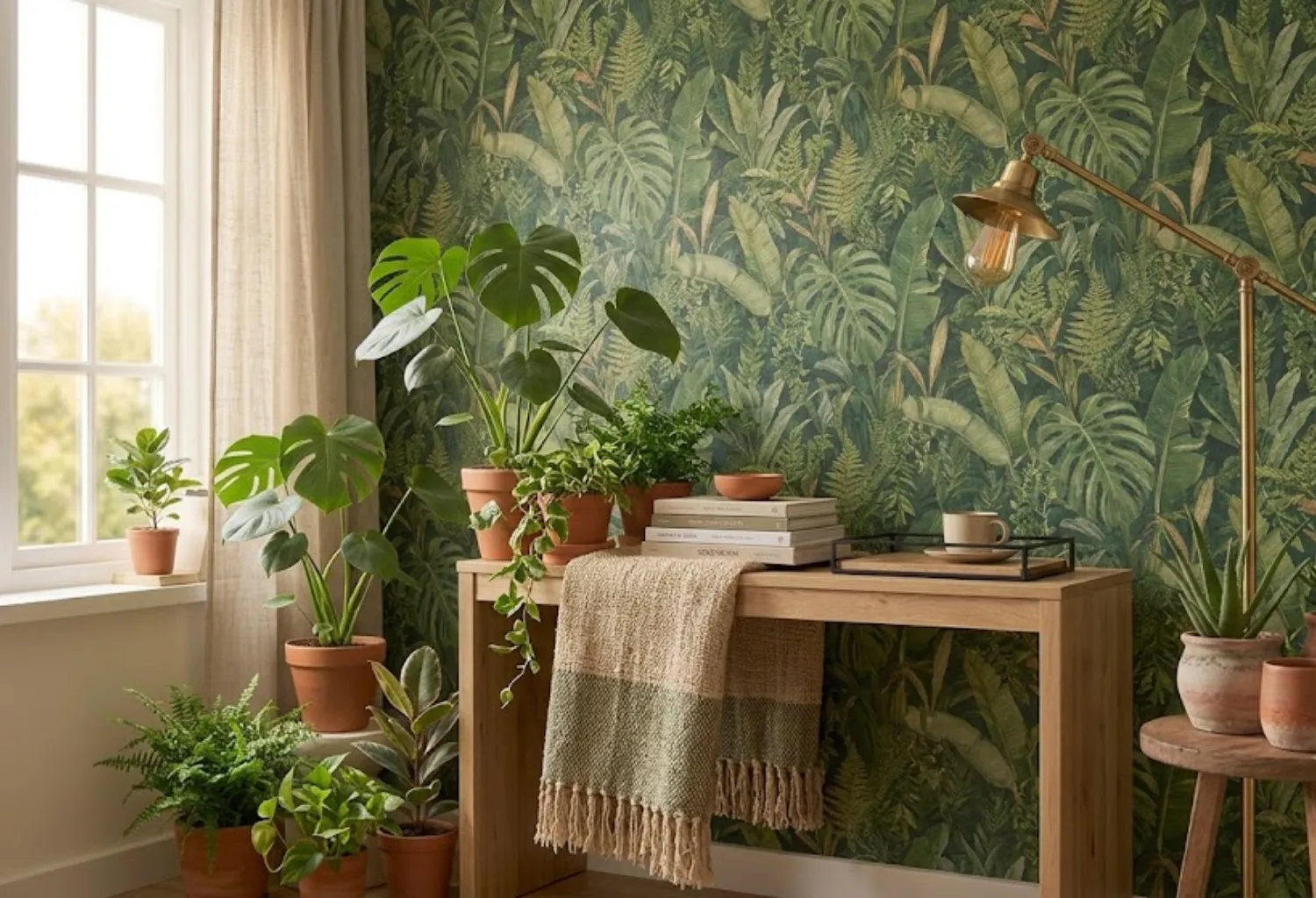
Wallpaper offers something paint can’t — pattern, texture, and often a more layered depth of color, since many green wallpapers include botanical prints, subtle textures, or tonal variations within the design itself. Leaf and jungle-print wallpapers in shades of green have remained popular for years because they bring an organic, almost mural-like quality to a wall without requiring actual plants. If a full room of wallpaper feels like too much, consider papering just one wall or the back of a built-in bookshelf, which limits the commitment while still making a visual impact. Removable wallpaper is also a solid option if you’re renting or unsure about long-term commitment.
22. Try a Two-Tone Green and White Color Scheme
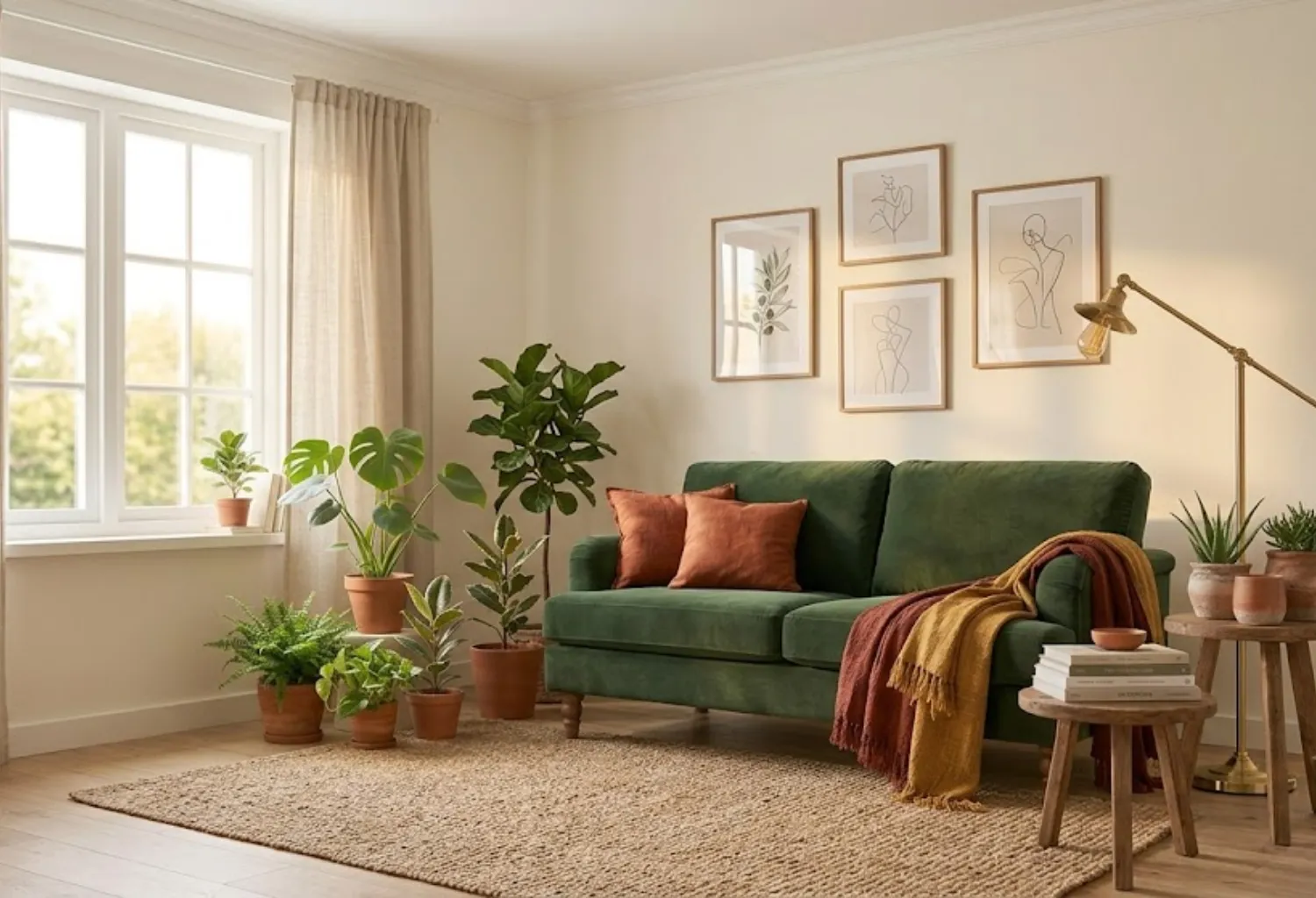
For a fresher, more modern take on a green living room, pairing green with crisp white keeps the space feeling light and airy rather than heavy or dark. White walls, trim, and ceilings let a green sofa, rug, or accent wall stand out as the clear focal point, while still keeping the overall room bright. This combination works particularly well in smaller living rooms or spaces with limited natural light, since white reflects light around the room in a way that darker neutrals don’t. Adding black accents in small doses — a picture frame, a lamp base — gives the scheme a bit of contrast without disrupting the clean, fresh feel.
23. Add Green Through a Statement Bookshelf Styling
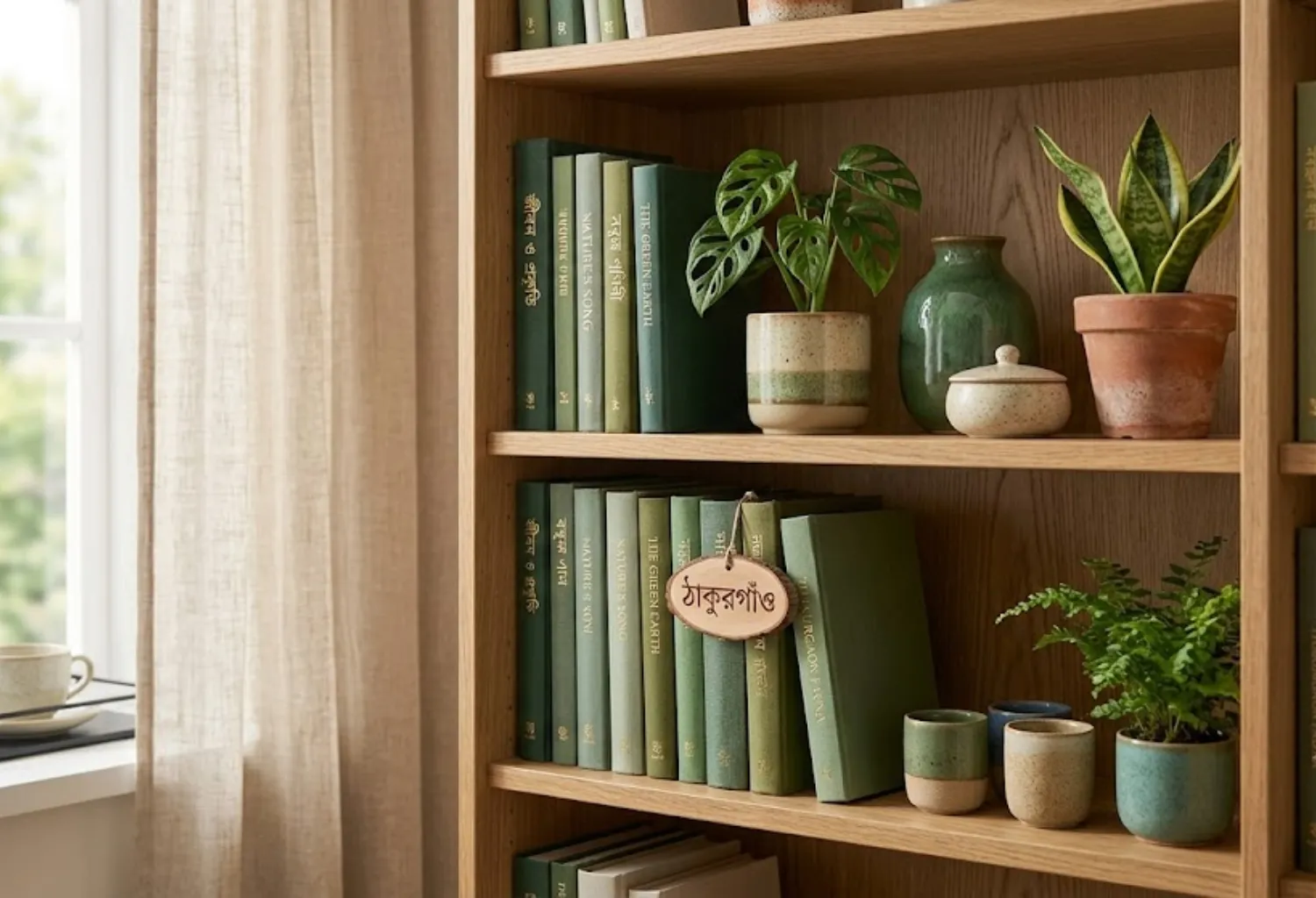
If you already have open shelving or a bookcase, styling it with green-spined books, plants, and ceramics is a simple, no-renovation way to add color throughout the room. Grouping books by color rather than alphabetically is a well-known styling trick, and clustering your green-toned titles together creates a visual anchor on the shelf. Mixing in a few plants and ceramic objects between the books breaks up the rows and keeps the shelf from looking too uniform or staged. This idea works well alongside almost any other item on this list, since it doesn’t require repainting or new furniture.
24. Use a Green Accent Rug Under the Coffee Table
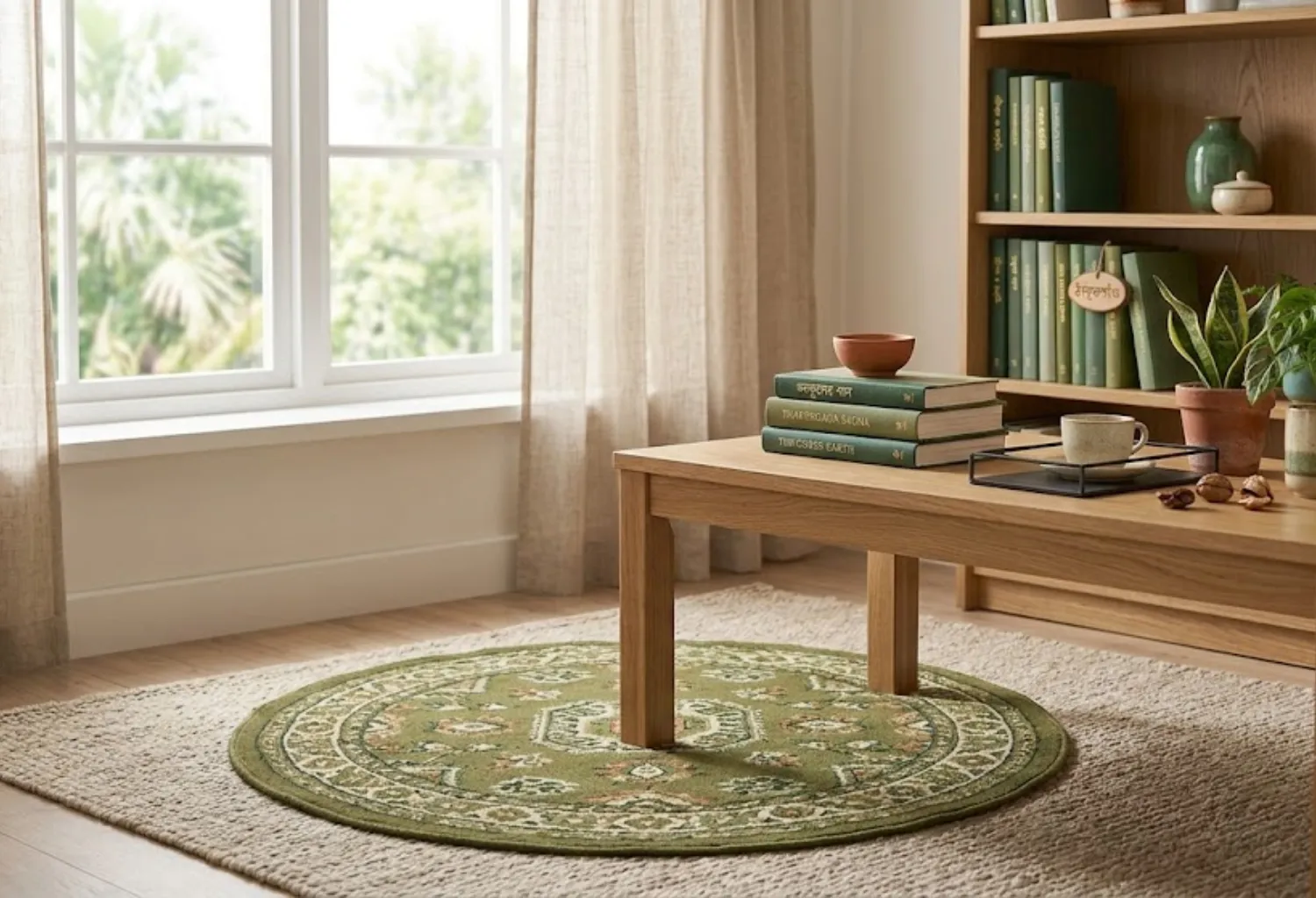
Beyond a full-room rug, a smaller green accent rug layered under just the coffee table can define a seating area within a larger, open living room. This works particularly well in open-concept spaces, where a rug helps visually separate the living room from the dining or kitchen area without needing a wall. Choosing a rug with a subtle pattern rather than a solid color also helps hide everyday wear from foot traffic and furniture legs. If you already have a neutral base rug, layering a smaller patterned green rug on top adds dimension without replacing what you already own.
25. Bring in Green Through Window Treatments Like Roman Shades
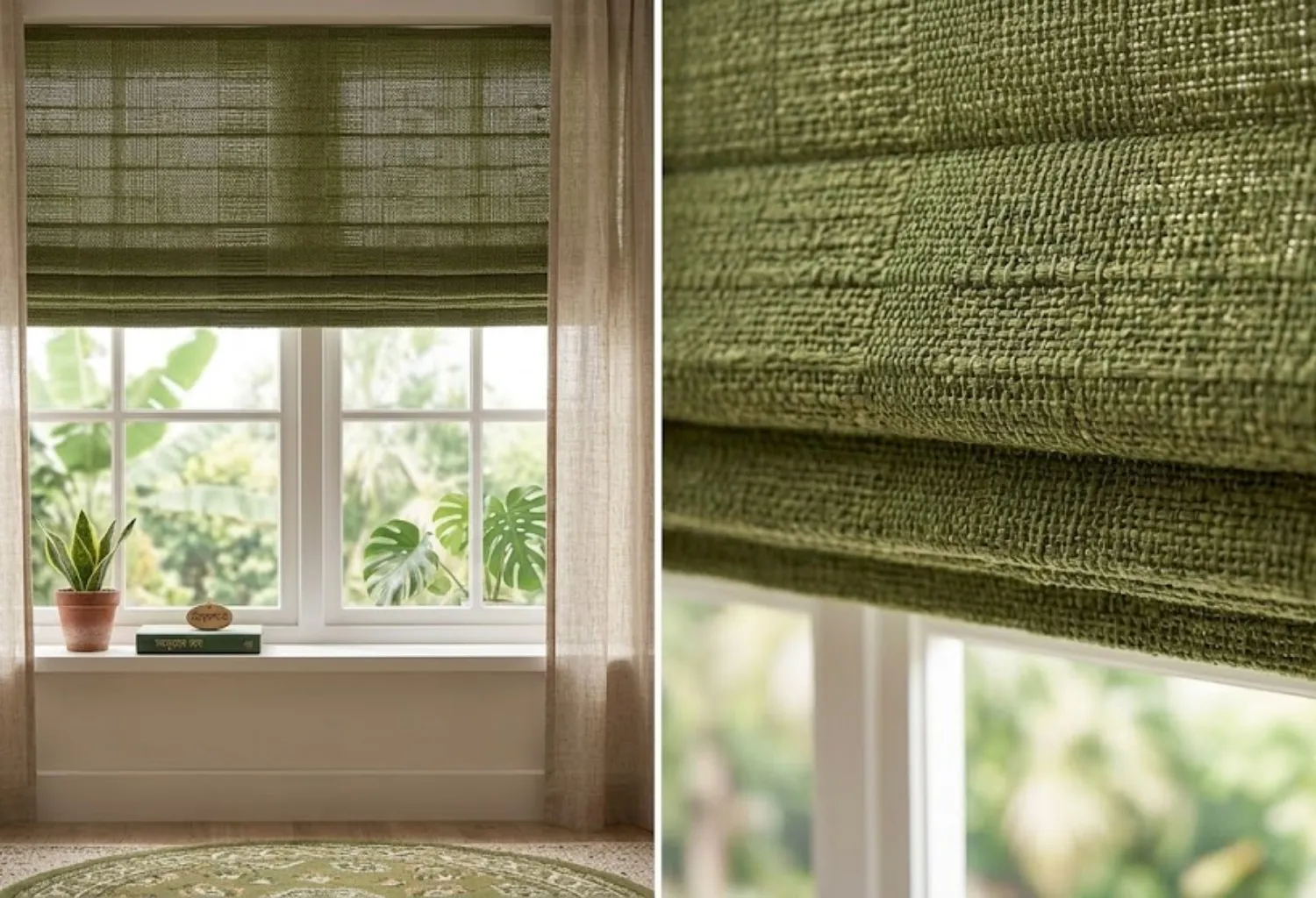
Roman shades in a woven or linen green fabric offer a softer, more tailored alternative to curtains, and they work particularly well in living rooms with a more streamlined or minimalist aesthetic. Because Roman shades sit closer to the window than flowing curtains, they’re a good option if you want to introduce green without adding visual bulk to the room. Bamboo or woven textures in a natural green tone also add a bit of organic texture, which pairs nicely with wood furniture and plants elsewhere in the space. This is a practical choice for living rooms that get a lot of direct sun, since the right fabric can also help with light control.
26. Combine Green With Black for a Moody, Sophisticated Look
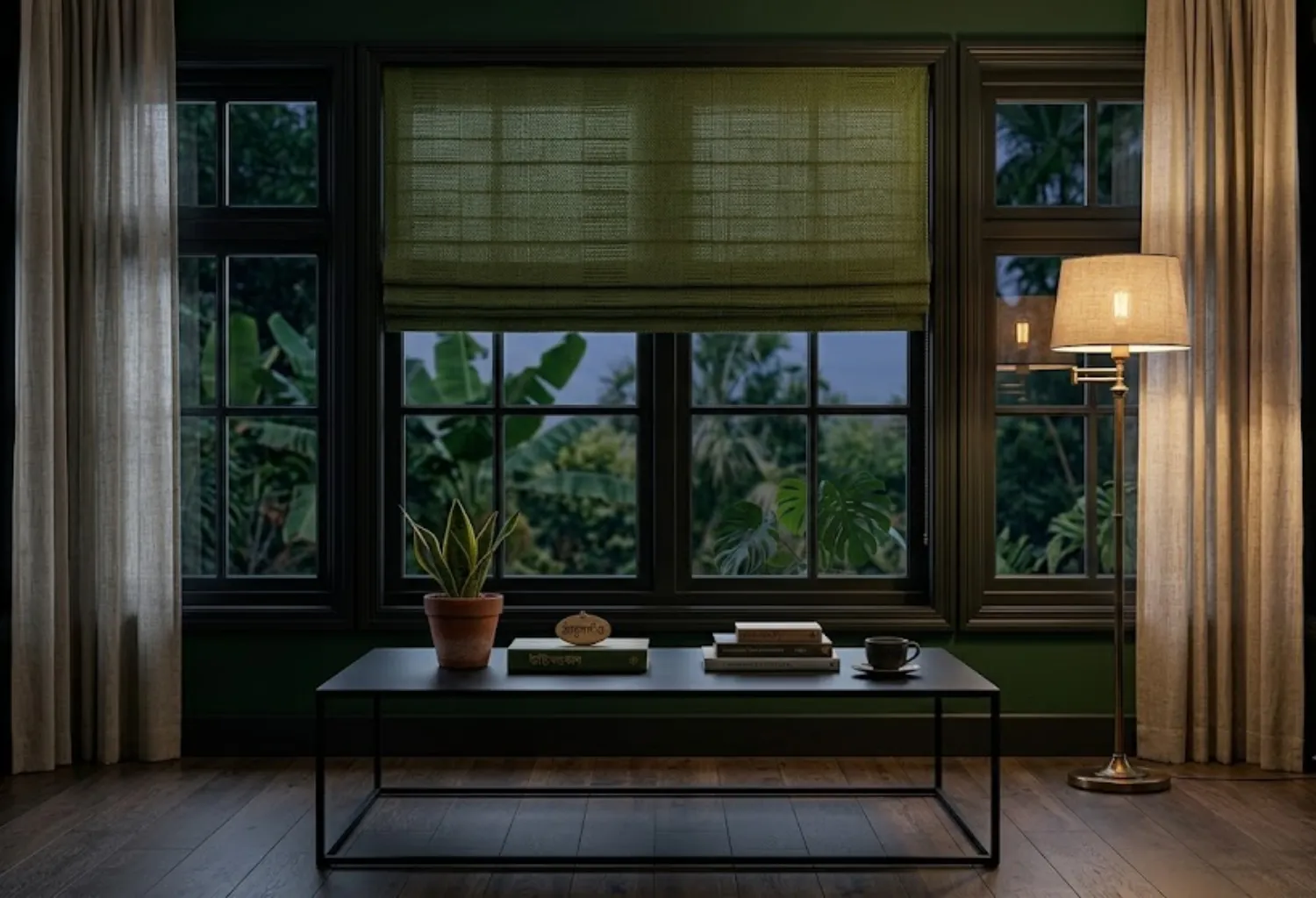
Green and black together create a rich, moody atmosphere that works especially well in living rooms used mostly in the evening or in spaces with strong artificial lighting. Black window frames, a black coffee table, or black picture frames against a deep green wall add definition and prevent the green from reading as too soft or pastel. This combination tends to work best with darker greens like forest or hunter rather than lighter shades like mint or sage, which can get visually lost next to black. Keep upholstery and larger furniture pieces lighter in tone so the room doesn’t feel too heavy or closed in overall.
27. Use a Green Accent on Just the Trim or Molding
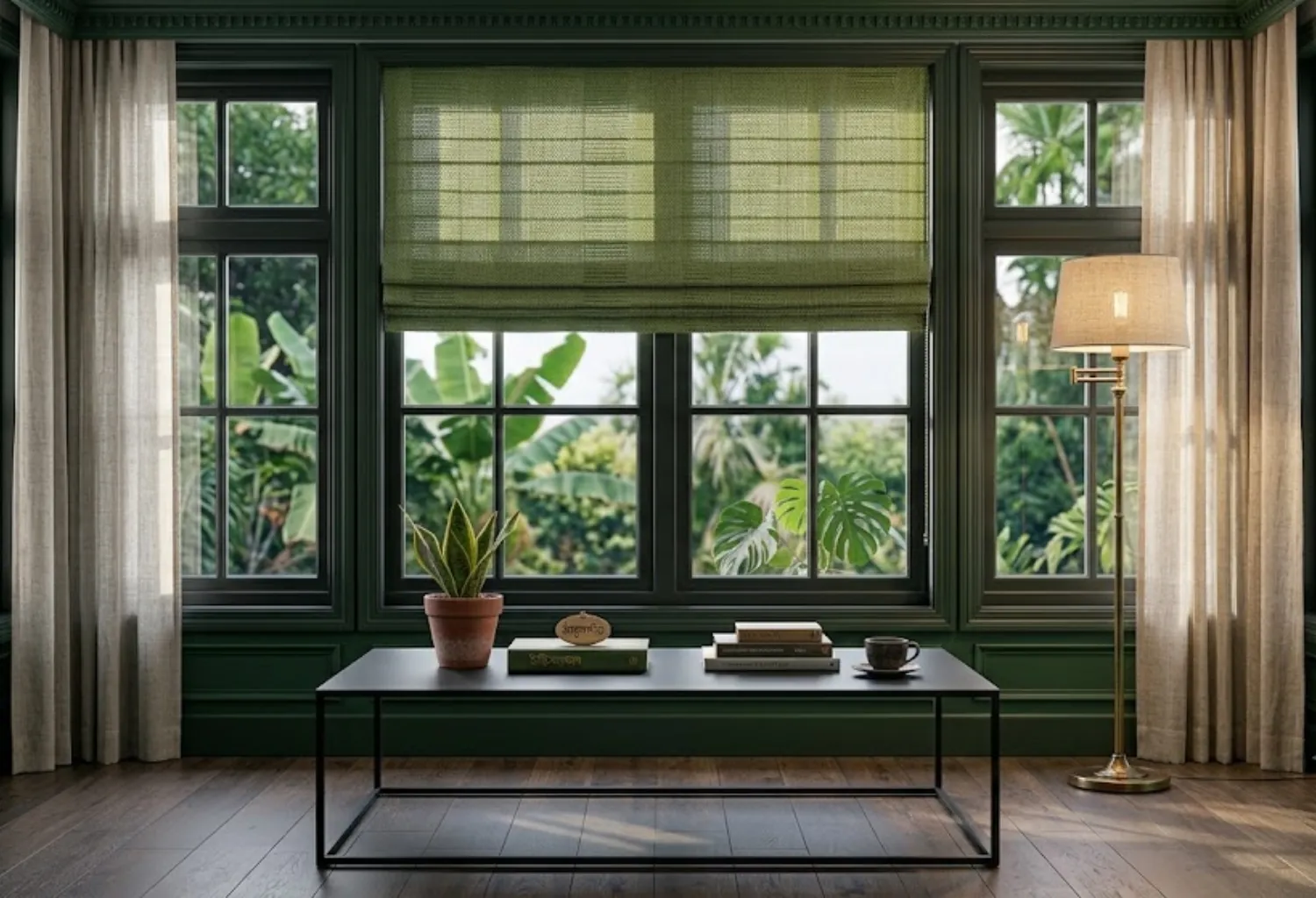
Painting only the trim, molding, or ceiling in green — while keeping the walls neutral — is a less common but effective way to introduce color without it taking over the whole room. This approach works particularly well in older homes with detailed molding or wainscoting, since the color helps highlight the architectural detail rather than compete with it. A painted green ceiling, sometimes called a “fifth wall,” adds an unexpected pop of color when you look up, which tends to surprise and delight visitors more than a standard accent wall. This is a good option for anyone who wants a distinctive look without repainting large surfaces.
28. Add Greenery Through a Living Wall or Plant Shelf
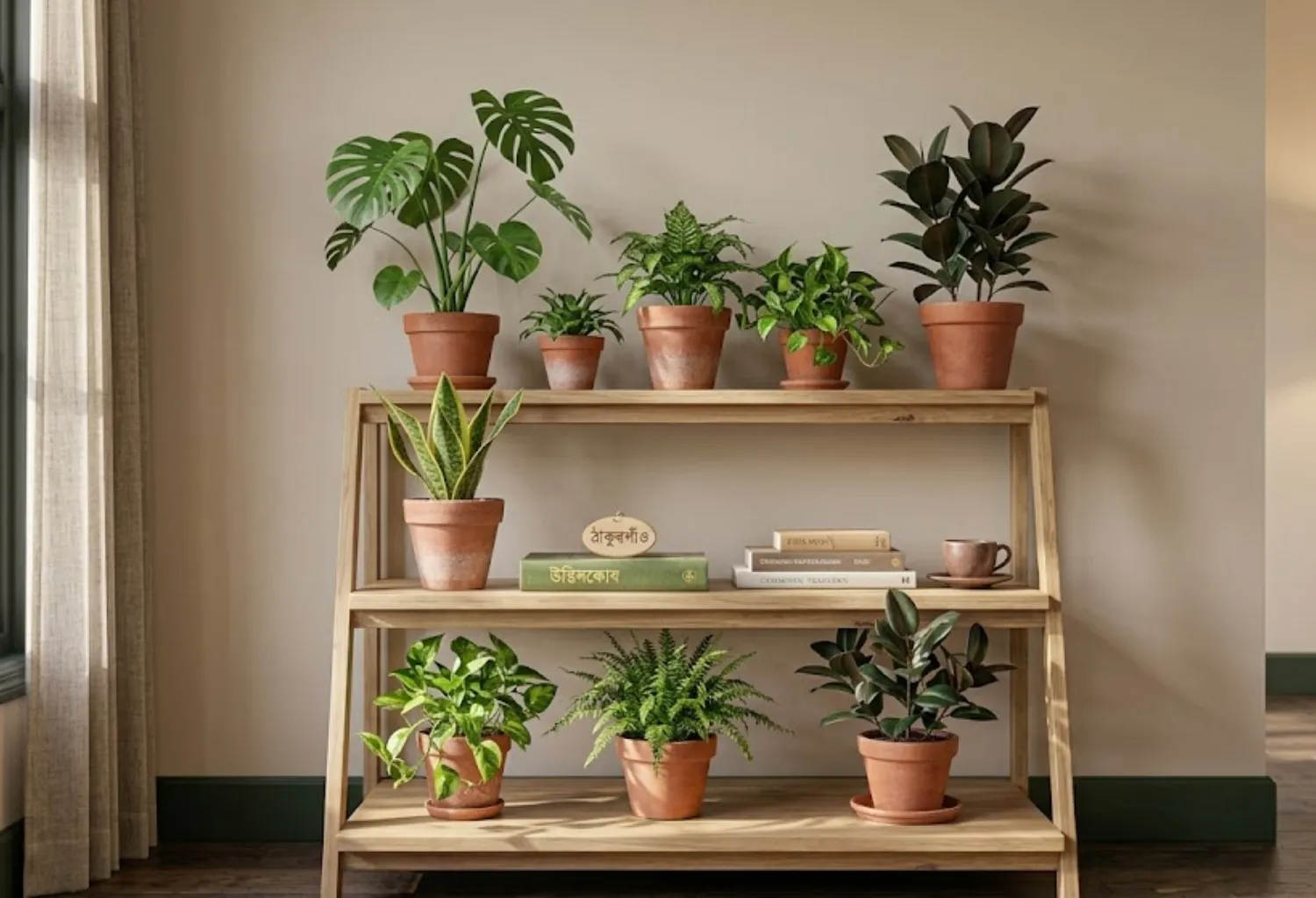
For plant lovers who want to go beyond a few potted plants, a dedicated living wall or a multi-tiered plant shelf turns greenery into the room’s main design feature. A vertical garden, even a small one, adds texture and life to an otherwise blank wall and works particularly well in living rooms that lack natural focal points like a fireplace. If a full living wall feels like too much maintenance, a tiered plant stand with five or six plants of varying heights achieves a similar visual effect on a smaller scale. This idea pairs naturally with a lot of the other items on this list, since it reinforces the organic, nature-inspired feel of a green living room.
29. Incorporate Green Through Textured Throw Rugs and Poufs
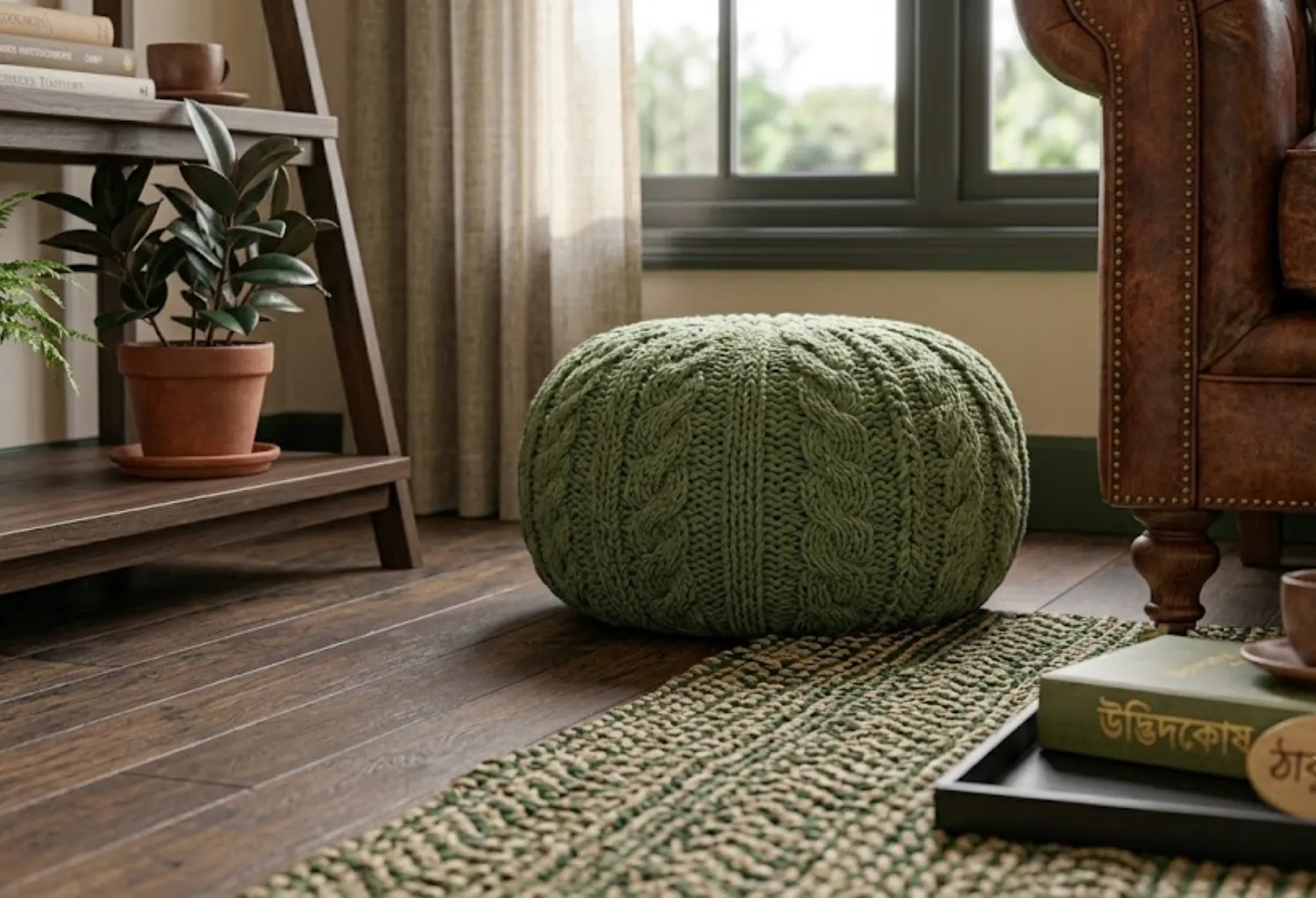
Small floor accents like a knit pouf or a sheepskin-style throw rug in a soft green add both color and texture at a low level in the room, which helps balance out taller furniture pieces. A green pouf also works as flexible extra seating or a footrest, making it a practical addition rather than a purely decorative one. Textured pieces like these are particularly effective in rooms that are otherwise mostly smooth surfaces — leather sofas, glass tables, hardwood floors — since they add a tactile contrast that makes the space feel more layered and lived-in. These pieces are also easy to move around or store, which makes them a flexible choice for smaller apartments.
30. Balance Bold Green With Plenty of Neutral Breathing Room
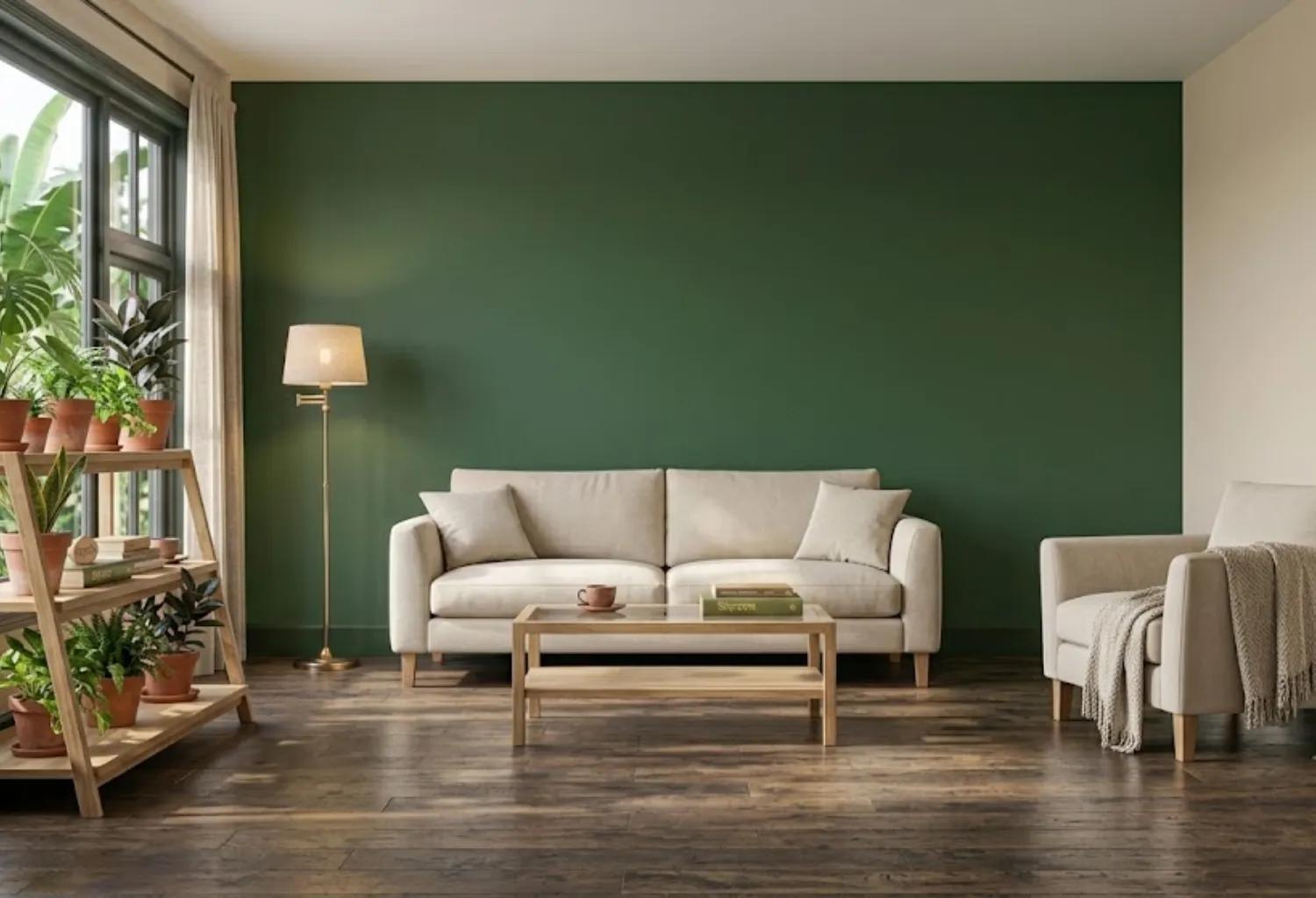
The biggest mistake people make with green living room ideas is trying to include too many of them at once, which can leave a room feeling busy rather than intentional. Whatever combination of green elements you choose—walls, furniture, textiles, plants—make sure there’s enough neutral space in between them for the eye to rest, whether that’s white walls, a light-colored rug, or simple, uncluttered surfaces. A good rule of thumb is to treat green as the accent color even if it’s used generously, and let creams, tans, grays, or whites do the quiet work of holding the room together. This balance is what separates a green living room that feels curated from one that feels like a themed room, and it’s worth keeping in mind no matter which ideas from this list you decide to use.
Final Thoughts
Green works in a living room because it’s flexible enough to go bold or subtle, warm or cool, modern or traditional, depending on how you use it. The ideas above range from small, low-cost swaps like throw pillows and ceramics to bigger commitments like accent walls and green sofas, so there’s an entry point here no matter your budget or how much of a risk you’re willing to take. The best green living room ideas usually combine a few different elements—a wall color, a textile, a plant, a metal accent—rather than relying on just one big change.
If you’re not sure where to start, pick one or two ideas from this list that feel the most natural for your space, live with them for a few weeks, and build from there. Green is forgiving enough that you can keep adding layers over time without it ever feeling overdone.
